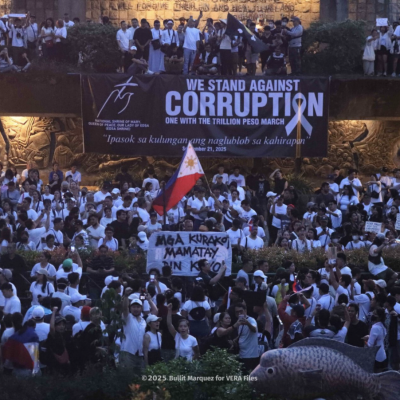

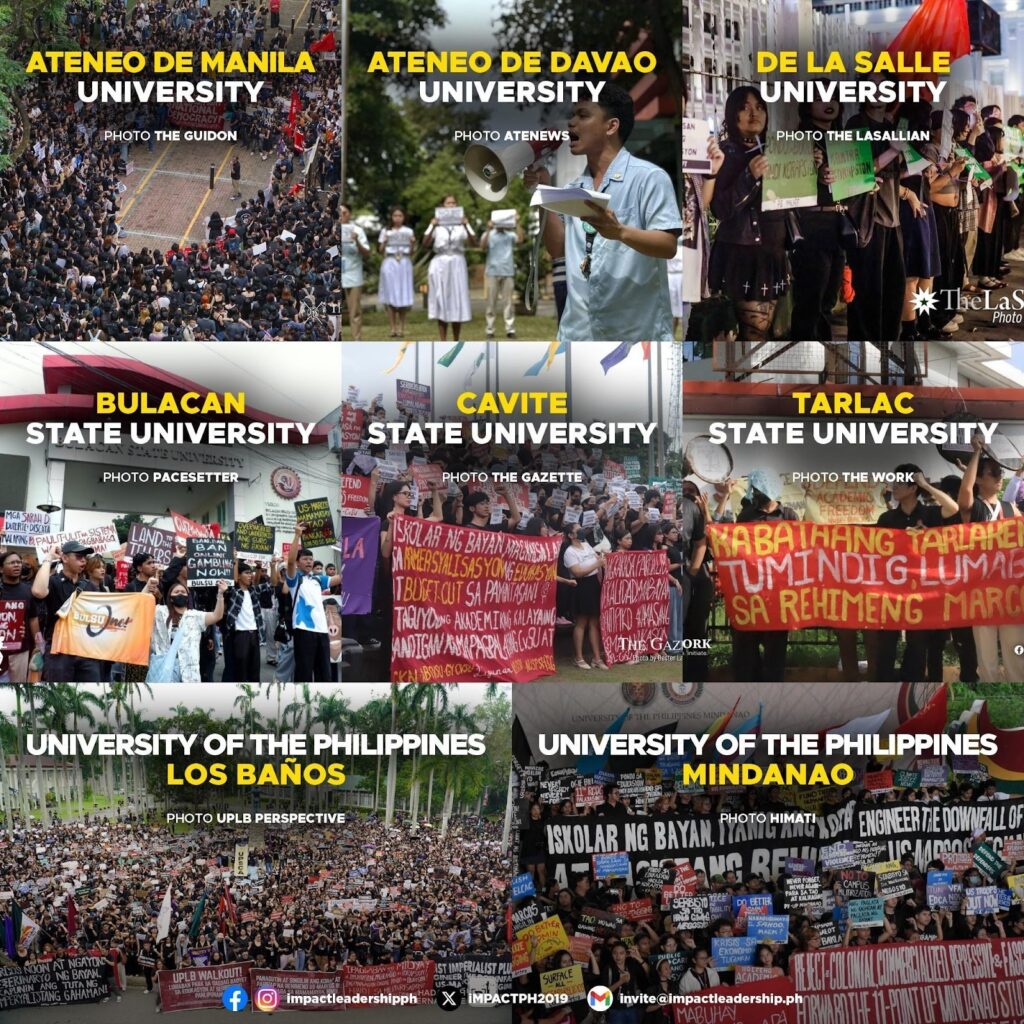
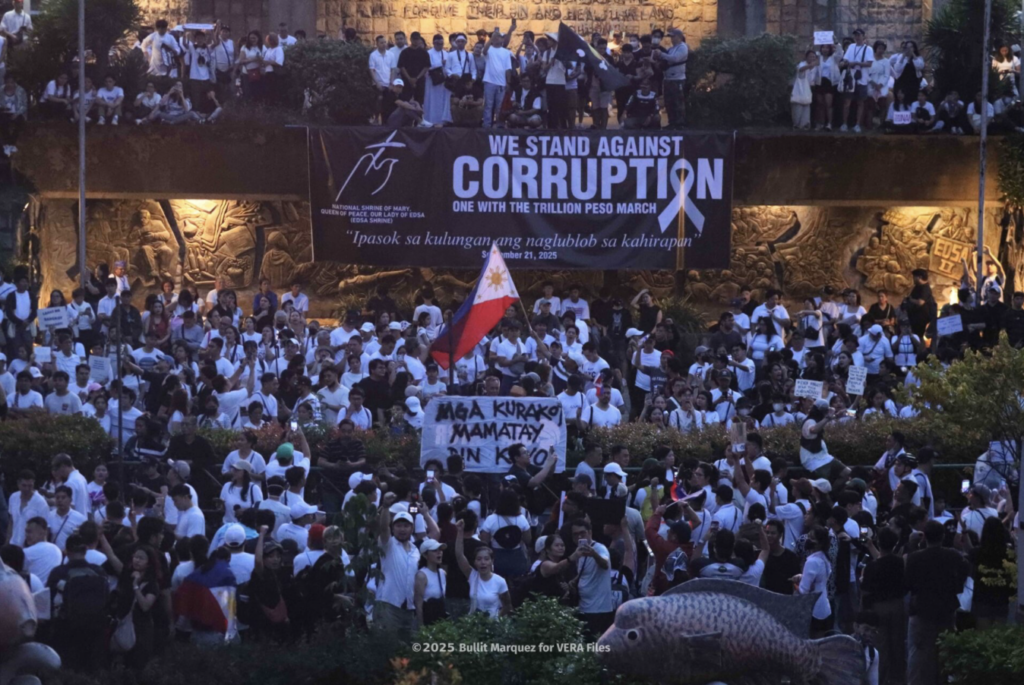
During the month of September, Filipinos across the country participated in university walkouts
and anti-corruption protests—not only to remember the past, but to confront the present in pursuit of a better future. Alongside the streets, voices resonated in the digital universe through trending hashtags like #NeverAgain and #EndCorruption, proving that activism today unfolds both on the ground and online. After all, rallies are not merely physical and political movements; they are also psychological experiences shaped by emotion and identity. With this heightened visibility comes a pressing question: how can individuals express themselves with passion while maintaining boundaries that safeguard their mental health?
Doomscrolls and Division: The Double-Edged Feed
The recent movements of activism have also highlighted social media’s risks. What begins as a simple click to reply or comment can quickly spiral into heated exchanges, especially when opposing sides clash in public threads. Excessive social media use could also contribute to heightened stress, exposure to misinformation, and even addictive consumption patterns that make it difficult for individuals to step back and recharge.
This dynamic was clearly visible across the nation. Newsfeeds were flooded not only with solidarity posts and live updates from students walking out of their classrooms, but also with misinformation campaigns that sought to discredit activists and trivialize their concerns. At the same time, continuous live streams of Senate and House hearings gave the public a sense of real-time involvement, yet they also encouraged marathon viewing and constant commentary. For many, the attempt to keep up with every update—every tweet, livestream, and headline—became mentally draining, producing more fatigue than clarity.
Social media mobilizes students, creates visibility, and sparks public discourse, but without balance it can also leave individuals overwhelmed, disillusioned, or even disengaged. When every notification feels urgent and every online debate demands a response, the mind loses the breathing room it needs to process, reflect, and recover. This is why social media care is not a luxury—it is survival.
To sustain both the movement and the mental health of those actively involved, individuals can turn to wellness practices designed to transform digital activism from a source of exhaustion into a practice of empowerment.
Four Moving Forth
This is where the concept of social media wellness becomes crucial. Filipino youth are becoming more conscious of the tension between digital empowerment and mental strain. The challenge is not to abandon platforms but to engage with them mindfully.
- Mindful Consumption – Being intentional about when and how much to scroll. Excessive online engagement through watching livestreams and prolonged periods of scrolling could leave you physically and mentally drained.
- Avoiding late-night doomscrolling
- Setting time limits for certain applications
- Turning off push notifications if necessary
This preserves mental clarity and helps us practice boundary-setting. Online feeds become a tool of learning rather than a source of stress. By curating both the time and type of content consumed, we are more likely to feel empowered rather than exhausted.
- Constructive Engagement – Our online interactions also contribute to social media wellness. Negative encounters such as trolling, misinformation, or toxic debates could lead to higher psychological distress. When we choose to purposely engage online, we build digital spaces that nourish empowerment and solidarity amongst various communities. This involves choosing to:
- Share verified information (e.g., check sources, prioritize official channels, cross-reference across different media outlets)
- Amplify marginalized voices (e.g., credit actual source, share directly though reposts or quotes)
- Foster respectful dialogue (e.g., use “I” statements, avoid trolls, discuss rather than provoke)
- Digital Rest and Recovery – Logging off after a long day of posting or moderating is not defeat but self-preservation. When we participate in physical rallies, we are likened to needing water and breaks. Similar to this, online engagements also require time away from screens.
- Strategic pauses such as device-free meals, mindful walks, or intentional disconnection after long posting sessions, allow our emotional and cognitive systems to recharge.
- Balanced routines including proper meals and enough sleep directly influence and help stabilize our energy and focus.
- Grounding activities (such as journaling, meditation, or physical exercise) sharpens focus and prevents burnout.
Without these breaks, even the most committed individuals could be susceptible to burnout or withdrawal. Rest is not then conceptualized as a retreat—it is a strategy for endurance, ensuring that our digital engagements remain a well-paced marathon rather than a sudden sprint.
- Collective Care – Filipino collectivism extends into online spaces, but it also thrives in face-to-face interactions through peer circles and community support networks. In moments of heightened activism, individuals often draw strength not only from their individual convictions but from the presence and encouragement of peers. Research underscores that social support acts as a protective buffer against depression, anxiety, and stress, reinforcing the idea that resilience is not simply an individual characteristic but a shared endeavor. Collective care can take many forms:
- Checking in on friends after emotionally and/or physically challenging rallies,
- Setting up group chats focused on well-being rather than just logistics, or
- Hosting informal debriefing sessions where people can process experiences without judgment
These practices ensure that solidarity does not remain merely symbolic but becomes genuinely restorative. In this sense, activism becomes sustained by the quiet, ongoing work of caring for one another’s mental health.
Rallying for Truth and Wellness
The recent anti-corruption protests and university walkouts remind us that activism is not only about confronting power but also about sustaining ourselves in the process. Economics provides the grievances, social media supplies the stage, psychology fuels the action—and wellness keeps it alive. The mental rally is real: it happens every time you scroll, post, argue, or march. What ensures its endurance is not only passion, but also balance—the mindful choice to care for oneself and for one another while fighting for change. By practicing mindful consumption, engaging constructively, resting intentionally, and nurturing collective care, students can ensure that their digital and physical activism remains a force for change rather than a source of burnout. In this way, the call for accountability in the nation also becomes a call for accountability to ourselves: to protect our energy, to honor our limits, and to remember that lasting change requires not just resistance, but resilience.
References:
- Boulianne, S. (2015). Social media use and participation: A meta-analysis of current research. Journal of Communication, 65(3), 524–534. https://doi.org/10.1111/jcom.12118
- Chadwick, A., & Stromer-Galley, J. (2016). Digital media, power, and democracy in parties and election campaigns: Party decline or party renewal? International Journal of Press/Politics, 21(3), 283–293. https://doi.org/10.1177/1940161216646731
- Gentzkow, M. (2019). The economics of social media. Annual Review of Economics, 11, 439–464. https://doi.org/10.1146/annurev-economics-081919-050239
- Lacap, J. P. G., Galang, J. R. F., & Torres, D. A. A. (2022). Social media wellness of the Filipino youth: A basis for policy and program development. Philippine Journal of Psychology, 55(1), 1–28. https://www.ejournals.ph/article.php?id=22783
- Mheidly, N., Fares, J., & Fares, M. Y. (2022). Coping with social media stress: A systematic review on the role of social media in mental health. PLOS ONE, 17(4), e0267555. https://doi.org/10.1371/journal.pone.0267555