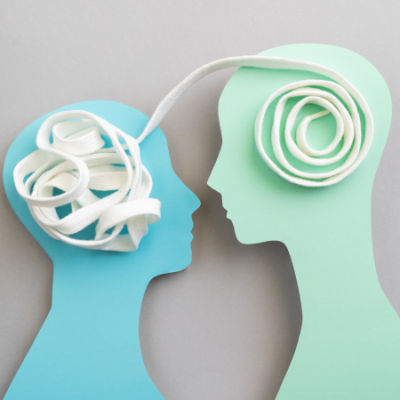

Ever walked away from a conversation feeling lighter, heard, and understood—like the connection between you and the other person just clicked? On the flip side, have you ever left an interaction feeling drained, confused, or doubting yourself? Communication isn’t just about words; it shapes how we build (or break) trust, emotional safety, and connection.
In relationships, whether romantic, familial, or friendships—the way we communicate determines whether bonds deepen or fray. In Filipino culture, where pamilya first is the norm, values like pakikisama (getting along with others), respect for elders, and keeping the peace often dictate how we talk to each other. But what happens when these values lead to avoidance, where the “bahala na” (a “let it be” or “whatever”) attitude or the dreaded “Basta sundin mo na lang” (Just follow) mindset seeps in? it makes communication difficult, and toxic patterns—like passive-aggressiveness, guilt-tripping, or emotional suppression—take root.
So how do we tell if we’re engaging in healthy or toxic communication? Let’s decode it together.
What Healthy Communication Looks Like
Healthy relationships don’t mean zero conflicts—they mean handling disagreements in a way that strengthens the bond rather than eroding it. Think of Ethan and Joy in Hello, Love, Goodbye—they had honest conversations about personal dreams and compromise, rather than resorting to manipulation or avoidance. Healthy communication can also manifest in other ways:
1. Open & Honest Expression
In a healthy relationship, both people feel safe sharing their thoughts and emotions without fear of judgment or backlash. Transparency fosters trust. One way to do this? Use “I” statements instead of accusations. Saying, “I feel overwhelmed when responsibilities aren’t discussed beforehand” is much more productive than “You never help around the house.” The first invites a conversation, while the second invites defensiveness.
2. Active Listening & Validation
Feeling heard is one of the biggest indicators of a strong relationship. This means listening without interrupting, truly trying to understand the other person’s perspective, and showing that you care. Simple phrases like “I get why that upset you” or “That makes sense” go a long way. Plus, nonverbal cues—eye contact, nodding, mirroring body language—matter just as much as words. In fact, research suggests that 60-70% of our communication is nonverbal!
3. Conflict as opportunities for Collaboration
Arguments happen, but healthy couples see them as challenges to tackle together rather than battles to win. Some strategies they use:
- Pausing before reacting – Taking a time-out when emotions run high to prevent saying something regrettable.
- Focusing on solutions – Discussing behaviors instead of attacking character (e.g., “Can we split chores more evenly?” instead of “You’re so lazy.”)
- Compromising – Finding a middle ground so that both people feel valued.
4. Emotional Support & Empathy
Empathy is the glue of strong relationships. Instead of dismissing feelings (“You’re overreacting”), validating them (“That sounds tough. How can I help?”) strengthens connection. Dr. Helen Riess, a renowned psychiatrist who has dedicated her life to understanding empathy, suggests using the E.M.P.A.T.H.Y. mnemonic to boost empathic capacity: Eye Contact, Muscles of Facial Expression, Posture, Affect, Tone of Voice, Hear the Whole Person, and Your Response—to deepen emotional understanding.
5. Actions Matching Words
In healthy relationships, verbal and nonverbal communication align. If someone says, “I love you,” but their actions consistently show indifference, the words lose meaning. Little things—like reaching for a partner’s hand during an apology—can reinforce sincerity and deepen trust. And touch, when consensual, also plays a role in healthy relationships, as it triggers the release of oxytocin, a hormone known to promote bonding and reduce stress hormones like cortisol.
So, what happens when things take a different turn? Sometimes, even with the best intentions, our conversations can slip into toxic patterns, gradually eroding trust and emotional safety. Recognizing these patterns help because what starts as minor miscommunication can build into long-term hurt.
What Toxic Communication Looks Like
It doesn’t always start with shouting or outright cruelty—it’s often subtle at first. Think about classic Filipino teleseryes where jealousy is mistaken for love, like when a character demands, “Bakit mo siya tinitingnan? Ako lang dapat!” (“Why are you looking at them? You should only look at me!”) or manipulate their partner by threatening to leave just to test their devotion. Over time, these patterns can create emotional wounds that are hard to heal. Here are some red flags to look out for:
1. Verbal Aggression & Contempt
Sarcasm, insults, and eye-rolling may seem minor, but they’re serious indicators of toxicity. Relationship expert Dr. John Gottman found that contempt—things like mockery or belittling—is the strongest predictor of divorce. Why? Because it conveys superiority rather than respect.
2. Gaslighting & Manipulation
Gaslighting is when someone distorts reality to make you doubt your own perceptions. If you often hear phrases like “You’re too sensitive” or “That never happened,” it might not just be a misunderstanding—it could be manipulation. Over time, this kind of behavior erodes confidence and can make a person feel like they’re losing their sense of self.
3. Stonewalling & Avoidance
Stonewalling—shutting down or withdrawing from conversations—is a common defense mechanism, but it’s also a relationship killer. While taking space to cool off is healthy, completely avoiding discussions creates an emotional void that leads to unresolved resentment.
4. Passive-Aggressive Behavior
Instead of openly addressing issues, toxic communication often involves backhanded comments, silent treatment, or subtle jabs. For example, “Nice of you to finally show up” instead of directly saying, “I was hurt when you were late.” These behaviors create tension and prevent honest dialogue.
5. Contradictory Nonverbal Cues
Mixed signals—like saying “I’m fine” while slamming doors—can be incredibly confusing. Aggressive gestures, turning away, or using a dismissive tone can speak louder than words and often indicate underlying hostility.
Having a hard time thinking about where your relationship stands? Here is a visual example that can help you determine the nature of how you communicate. Try to think about a pH Scale but for human communication.
First, let’s go way back—back to the basics of chemistry. One of the first things we learned was the pH scale, which measures how acidic or basic a substance is.

The more acidic something is, the more likely it is to burn. Strong acids can cause damage—it’s painful on the skin, stinging in the eyes.
But what does this have to do with the way we communicate?
People often talk about how conversations can be “too negative” or how we should be “more positive.” It sometimes feels like we measure communication on a scale like this:

More positive = better. But that’s not always true. If we go back to chemistry, highly basic substances can burn just as much as acids. In other words, if we only judge communication as either “positive” or “negative,” we miss the bigger picture.
But if we factor in HONESTY, the picture becomes clearer. Let’s use the following as examples:
- Cruel lies – These are obviously harmful. Luckily, they don’t happen too often in direct conversations.
- Toxic positivity – This one is trickier. It sounds nice, but it dismisses real struggles. Think of phrases like “Everything happens for a reason!” or “Bahala na!” While well-meaning, these statements can make people feel unheard rather than comforted.
- Brutal honesty – This is another extreme. It values truth but at the cost of kindness. Sometimes, people justify hurtful words by saying, “I’m just being honest.” But honesty without compassion can be just as damaging as a lie.

Both toxic positivity and brutal honesty shut down meaningful conversations before they even begin. Hence, finding the Balanced pH is key!

In chemistry, a balanced pH would fall between 6 and 8—not too acidic, not too basic. In communication, we should aim for the same balance. It can manifest in these ways:
- Be honest, but with empathy.
- Be positive, but without dismissing reality.
- Listen, not just speak.
In the end, balanced communication isn’t just about being positive or negative (healthy or toxic)—it’s about being real while still being kind. And being aware of these patterns are equally important because the way we communicate doesn’t only impact our relationships—it affects our mental well-being too. Remember, healthy communication strengthens emotional resilience, reduces stress, and boosts overall life satisfaction and well being. While toxic communication triggers chronic stress responses in the brain, increasing anxiety, depression, and even symptoms similar to PTSD.
So when we prioritize healthy dialogue, we foster deeper connections, trust, and emotional security. But when toxic communication takes hold, it creates cycles of harm that can be tough to break. To be honest, it does sound daunting and possibly exhausting to constantly keep this in check.The good news? Every conversation is a chance to do better.
Even Millennials and Gen Z-ers are growing with this mindset in hand—choosing open dialogue over the old “tiisin mo na lang” (just endure it) mentality. Whether that means pausing before reacting, listening more attentively, or setting firmer boundaries, small shifts in communication can lead to massive changes in our relationships. Because in the end, the quality of our conversations is the quality of our connections.
So, what kind of conversations do you want to have?
References:
- Calm Editorial Team. (2024, February 8). 7 tips on how to communicate your needs in a relationship — Calm Blog. Calm Blog. https://www.calm.com/blog/how-to-communicate-your-needs-in-a-relationship
- Dana, L. (2022, November 17). Understanding your partner’s communication style is key to strengthening your Relationship—Here’s where to start. Well+Good. https://www.wellandgood.com/communication-styles-relationships/
- Dionysopoulos, C. (2023, July 20). Honest Communication: Finding balance between brutal honesty and toxic positivity. Joomla Community Magazine. https://magazine.joomla.org/all-issues/july-2023/honest-communication
- Dolan, E. W. (2024, May 5). Decades of data show toxicity is a staple of online conversations. PsyPost – Psychology News. https://www.psypost.org/decades-of-data-show-toxicity-is-a-staple-of-online-conversations/
- Donné, L., Jansen, C., & Hoeks, J. (2017). Uncovering factors influencing interpersonal health communication. Global Qualitative Nursing Research, 4, 233339361771160. https://doi.org/10.1177/2333393617711607
- Helen Riess: Seven Keys to Increase Empathy – Sounds true. (2020, August 23). Sounds True. https://resources.soundstrue.com/transcript/helen-riess-seven-keys-to-increase-empathy/
- Jessj. (2022, May 26). Mental health – What does healthy communication look like? All Points North. https://apn.com/resources/what-does-healthy-communication-look-like
- Sly, C. T. (2024, April 17). Understanding and overcoming toxic communication styles in relationships after kids. Insight & Connection. https://insightconnection.uk/couples/toxic-communication-styles/
- Warren, C. (2023, August 16). 10 Toxic communication patterns in highly dysfunctional romantic relationships. YourTango. https://www.yourtango.com/heartbreak/toxic-communication-patterns-relationships
- Why Honesty is the Cornerstone of Healthy Relationships. (n.d.). Humans. https://vocal.media/humans/why-honesty-is-the-cornerstone-of-healthy-relationships