Categories
Blog Wellbeing Practices

Dancing Through Life: Integrating Mindfulness and Movement in Daily Living

When people ask me how long I’ve been dancing, I usually start counting the years from my freshman year in high school. In reality though, I’ve been dancing and moving for as long as I can remember. Whether it was recreating dance sequences from music videos, pretending that I was a popstar, or needing to dance for field demonstrations at school, I was always moving and grooving. 

This might be why I used to be intimidated by mindfulness exercises. As someone who loves moving around, and as someone whose mind endlessly wanders, the thought of having to sit still and meditate wasn’t something that particularly excited me. I had this impression that maybe mindfulness just wasn’t my thing, and that I would have to find other ways to work on my mental health. But the more that I started to grow and evolve in dance, and the more that I actually understood mindfulness, the more that I discovered that the two aren’t actually very different. In fact, all this time, I was unknowingly developing mindfulness through dance.

Let me share how I developed the attitudes of mindfulness through dance: 

A form of dance that I’ve come to love is freestyle – basically a form of improvisation. No choreographed routine, no planning ahead, just pure reliance on how your body naturally moves to the music. Admittedly, having to do freestyles used to make me self-conscious. In the beginning, it was something that seemed so intimidating to me. Over time though, I opened myself up, and it eventually became one of my favorite things to do. I found freedom and expression in not questioning or judging the choices my body was making, ultimately allowing myself to fully immerse in the moment.

Typically, we’re taught to stay on beat by using counts of 8. And while this method isn’t necessarily incorrect, it can be harder to apply to more intermediate and advanced choreographies. Even so, dancers can also sometimes get lost in their concentration and count intuitively, rather than actually listening and paying to the music. There’s a term that’s used, “dancing in the pocket” which basically means dancing in reaction to the music, rather than anticipating it. As I tried to get better and better at dancing in the pocket, I made intentional efforts to not rely on just counting in my head, but to actually listen to the music. It challenged me to become more patient and really exercise control over my mind and body.

For almost 15 years now, without fail, every dance team I’ve joined starts every new training cycle with going back to very similar basic foundational drills. Whether the rookie or the senior, we all go back to the same drills. By doing these drills over and over again, and by embodying a beginner’s mindset, I’ve been able to develop a strong foundation that has allowed me to be stronger and more versatile. By adapting a beginner’s mindset, I also learned to appreciate every learning opportunity, and not take for granted all the small steps of hard work that I put in. Most importantly though, keeping a beginners’ mind keeping me curious, and keeps me excited to learn and grow.

One of the things that I’m most thankful for is that in all the years that I’ve been dancing is that I’ve never encountered a major injury that required me to be sidelined for an extended period of time. Sure, I might have sprained my ankle, strained a couple muscles, and I might have also dislocated my elbow once (although that wasn’t actually from dance!), but for the most part, I’ve been able to take care of my body. One of the biggest reasons why I’ve been able to do this is because I’ve learned how to listen and trust my body. I know when to push my body, and when to give it rest. And whenever I’m nervous, I’ve also learned to trust my body, and trust the training I’ve put in to prepare my body as best as I can.

I’m not going to pretend that I’m not competitive and that I never had dance ambitions. However, I was also lucky to have coaches and mentors who, more than winning, instilled the importance of enjoying the moment, and simply putting the best version of yourself on stage. Although we could be extremely competitive during training, come actual competition day, all of that would be thrown out the window. Nothing else mattered than pouring our hearts out and enjoying the moment. Ironically, non-striving has helped me stay in the competitive scene longer. I’ve actually been able to maintain a healthy and sustainable relationship with the demands of competing because my focus is centered around the process, and not the outcomes. 
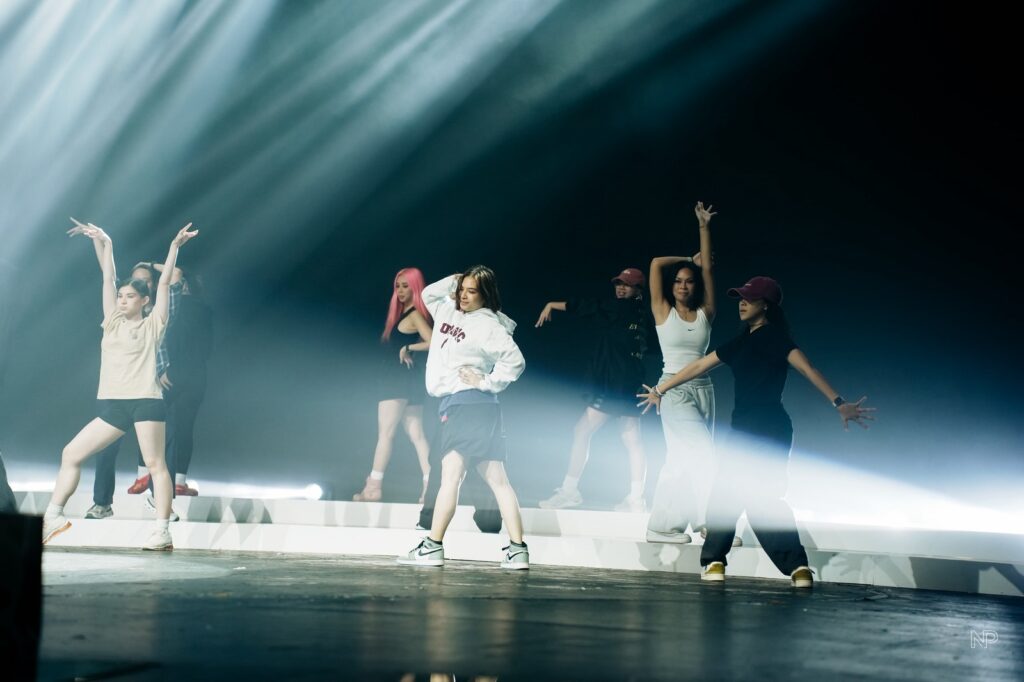
I used to think that dance was universal. And by this, I thought that dance could mold the body to move in very specific ways. Over the years, a frustration I frequently encountered was: “why don’t I look like them?” I realized though, that as much as there are ways our bodies can move similarly, ultimately, every body works and moves differently. Our individual and unique movement is a power and a strength, and not a limitation. I came to discover that it’s not about exactly copying other people’s movements, but it’s about recognizing your own body, and understanding your own movement. By embracing and accepting your body and how it moves, it gets easier to actually understand how you can grow and improve.

To this day, and even after years of experience, I’m still hit with waves of panic and anxiety before stepping on stage. And even in the simpler things like running choreography at the end of class, I will still feel moments of nervousness and uncertainty. But once your cue and the music starts, once you actually start moving, nothing else matters. You find yourself letting go and submitting to the music. And at the end of a stressful day or a stressful week, there’s no better feeling than having a few precious moments of just letting go of your inhibitions, and releasing all that stress. 
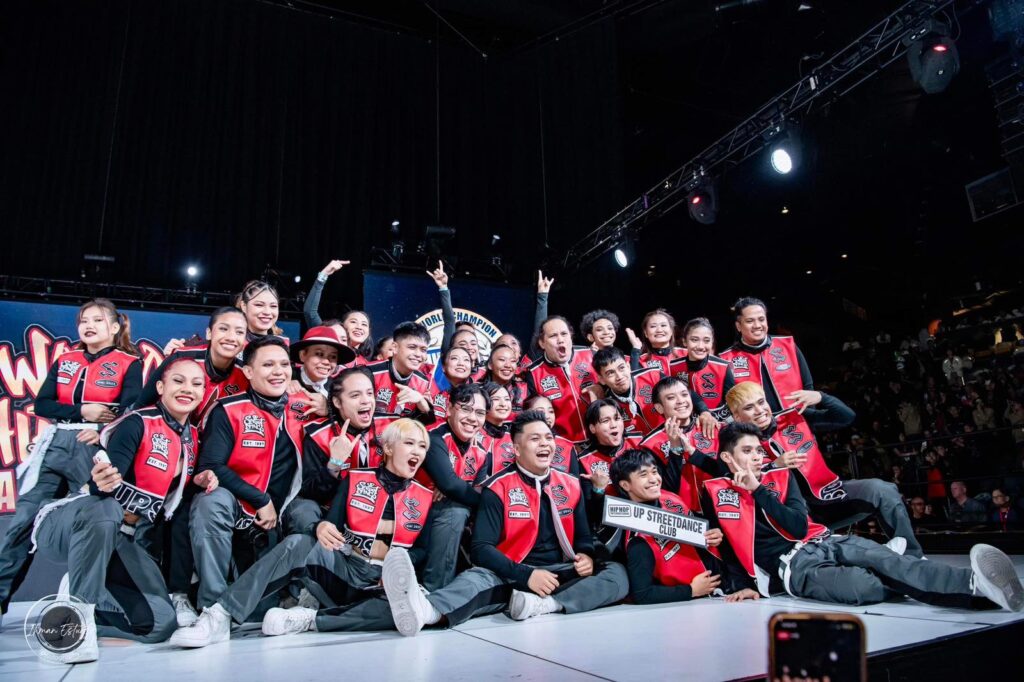
Over the past couple years, more and more dance studios have popped up across Metro Manila. There’s also been a lot more beginner classes of various styles. It’s been really fulfilling seeing dance become more accessible and approachable. And I guess this shouldn’t be a surprise since dance has always been a great form of exercise not only for our physical health but also our mental wellbeing. Not only this, but dance helps provide safe spaces and builds connection and communities. So if you’re curious, or even maybe just looking for a new activity to explore, I highly encourage exploring dancing through life!


Categories
Blog Everyday Thriving Thrive at Work

I can HEAR you: Practicing Co-Regulation in the Workplace

Humans are social beings, and we are hardwired to connect. We intuitively scan our surroundings for cues of safety and danger. In order to survive, we observe, process, and respond to what is going on in our environment. Being aware of what makes our own nervous system responses, as well as those of others, kick in, can help us build healthier communities.

-Sofie Malm

I recently was involved in a difficult situation at work. The project lead had a lot of ideas that he wanted to implement without taking into consideration the amount of work and effort it would take to set these up. Apart from that, there were loose ends of the project that were not properly communicated leaving the team at a loss on how to navigate the completion of the project. I found myself very upset about this and instead of having a challenging conversation about how I felt about it, I made passive-aggressive comments and felt checked out about the whole project. Fortunately, one of our team members sensed the tension and encouraged us to take a deep breath in and out for a few minutes to practice mindfulness, to take things one task at a time, and offered support if anyone needed any. 

Have you ever found yourself in a similar situation? Have you ever wondered why even though we know what we need to rationally do, we still end up doing the irrational one that could possibly hurt our relationships? Don’t fret because this is more normal than you thought and can be explained by how our brain circuitry works. 

Our brain constantly scans for threats in our environment and this happens subconsciously or what we call neuroception. If it perceives a threat, our autonomic nervous system (ANS) gets activated and prepares our body (increases our heart rate, blood pressure, and breathing, and slows down digestion) to respond. According to the Polyvagal Theory (PVT) our body can respond in three ways. These are influenced by the evolutionary structures of the brain. The oldest structure, the reptilian brain, causes us to be immobilized. It’s when we tend to be frozen, numb, or shut down. The next structure or the mammalian brain moves us to mobilization. When this is activated, we feel the adrenaline rush that helps us either stay and fight or run away from the threat. The newest structure, or the neocortex, allows us to stay engaged, connected, safe, calm, and creative in the present moment. 

Imagine these responses on a ladder with the immobilized state at the bottom rung and the engaged state at the highest rung. As we are presented with different experiences, we move up and down the ladder depending on how our brains interpret the situation at hand. Going back to our example, as more demands were given for the project that exceeded the resources available, I found myself moving up and down the mobilized and immobilized state unable to reach the socially engaged state. 

At work, we are faced with different experiences such as an increase in work demand, unclear expectations, and implementation of new systems to name a few, which can be detected as a threat by our nervous system. These provoke different responses in individuals and can cause us to be emotionally dysregulated. This explains why some, me included, may respond in a manner that is not productive for the situation. If this is not managed, it can cause problems in the long run. It can impact productivity and even relationships in the workplace. What do we do now? 

Co-regulation is the “interactive and dynamic process of mutual emotional regulation, where two individuals seek to help each other actively in order to manage their emotional expression and states.” This is made possible by our mirror neurons. Mirror neurons are specialized brain cells that help us recognize the emotional state of another person. When we embody calmness, our mirror neurons show this message to another person’s mirror neurons which brings them from a state of dysregulation to regulation. 

In the workplace, whenever you feel that there you or your teammates are in the immobilized or fight or flight state, you can practice co-regulation by following the acronym HEAR. As an example, I included what our teammate said to practice co-regulation. 

When emotions are very high, we need to give ourselves and others an opportunity to step back, stop what we are doing, and hold space for the emotions that we are feeling. In this step, we want to avoid overidentifying and downplaying our emotions. It is a time to notice what we are feeling and where we are feeling it in our body. We want to pull ourselves in the present so that we can be attuned to our own and other’s emotions without judgement. 

In this step, we can do grounding techniques such as a body scan and different breathing exercises. This can help us be aware of the physical and emotional warning signs of our body. 

“Once you read this, I want everyone to breathe in and breathe out for a few minutes and practice a little bit of mindfulness. Close the tabs that are open if your windows are full.” 

Once we have calmed down, we can proceed to the next step which is to empathize. Empathizing can be shown through establishing eye contact to make a person feel seen or creating physical contact if possible. This can be as simple as sitting near the distressed person or just being with them in a video call. In this step, we should also take into consideration the level of comfortability of the person. 

Apart from establishing contact, this is where we can express our observations about the behaviors that we were seeing and the tension we were feeling. It is also helpful to ask for feedback if what you were observing and sensing were correct. 

“I know things have been very busy and tense for the past couple of weeks especially now that our tasks and projects are piling up.” 

When your teammates are giving feedback and expressing their emotions, thoughts, and concerns, practice active listening. Make sure that as you hear them out, there are no distractions present. To ensure that you understood them, try to use your own words to explain what they just shared. This gives them a signal that you are attuned to what they are feeling and saying. This gives them a sense of validation which increases their feelings of safety. 

“I completely understand this and I appreciate you opening up to me. I also would love to comment this vulnerability. It’s been a very tough few weeks for everyone especially for your unit. I really understand where you are coming from. If I feel kept in the dark for tasks that I need to do, I would also feel the same way” 

As the team enters the socially engaged state, it is important to remind each and everyone that it’s normal to feel upset, that things at work may sometimes feel like a threat to us. What’s important is that we are able to notice when our emotional states and resulting behaviors are going against our own values and hurting our relationships and productivity in the process. When we notice, we are able to pull one another into a regulated state. After all, we are working towards a common goal. 

After our teammate practiced HEAR, I felt safe and more comfortable to have the challenging conversation I was avoiding. I was able to express where the pain point was coming from, what values were being violated that caused me to be uneasy about the progress of the project. To date, we are working on fixing the pain points that we are facing and are more open in airing out similar concerns in upcoming projects. 

We spend a third of our lives at work and spend at least eight hours a day, five times a week with our workmates. We can leverage our collective power to rewire our brains so that despite challenges, we are able to maintain a regulated state that can enhance not only our own productivity but also develop positive and meaningful relationships with our colleagues as well. 

References: