
Categories
Blog General

How to Pace Yourself During A Mental Rally

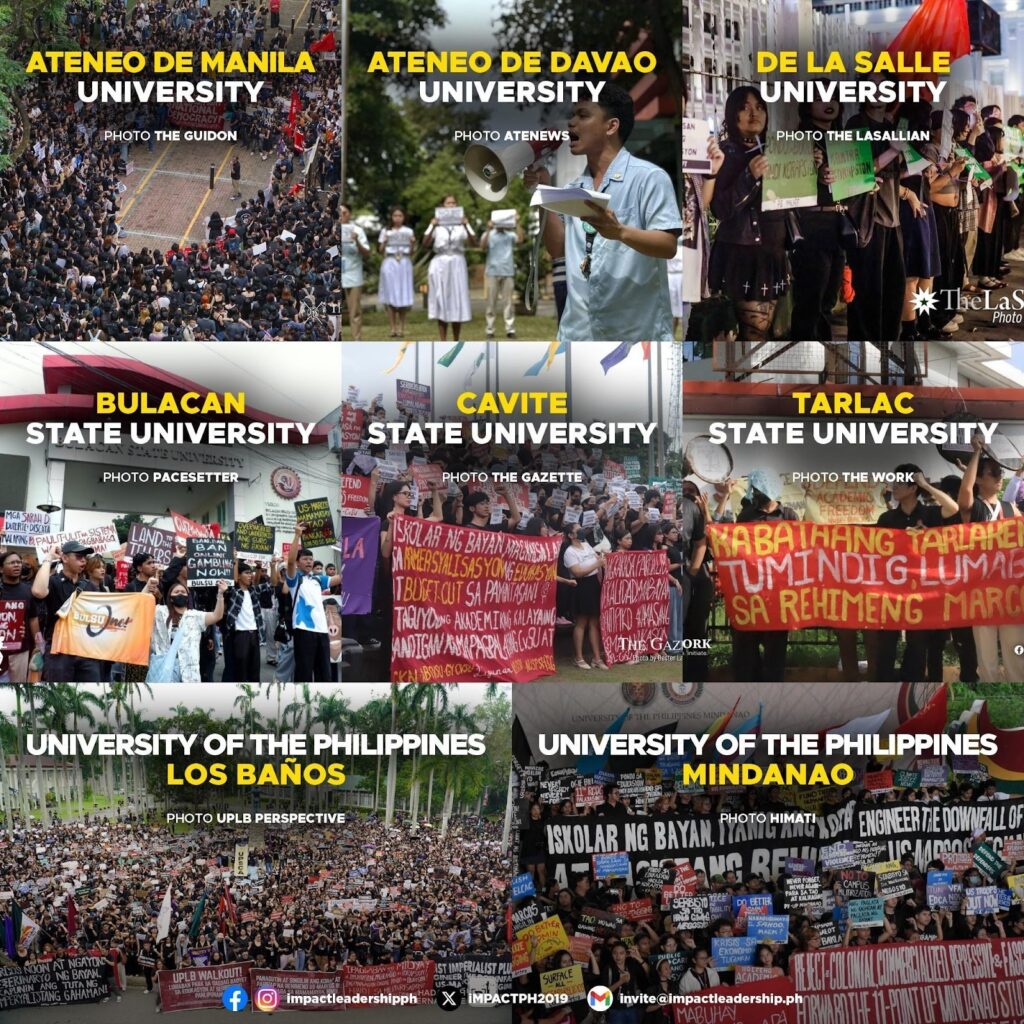
During the month of September, Filipinos across the country participated in university walkouts

and anti-corruption protests—not only to remember the past, but to confront the present in pursuit of a better future. Alongside the streets, voices resonated in the digital universe through trending hashtags like #NeverAgain and #EndCorruption, proving that activism today unfolds both on the ground and online. After all, rallies are not merely physical and political movements; they are also psychological experiences shaped by emotion and identity. With this heightened visibility comes a pressing question: how can individuals express themselves with passion while maintaining boundaries that safeguard their mental health?

The recent movements of activism have also highlighted social media’s risks. What begins as a simple click to reply or comment can quickly spiral into heated exchanges, especially when opposing sides clash in public threads. Excessive social media use could also contribute to heightened stress, exposure to misinformation, and even addictive consumption patterns that make it difficult for individuals to step back and recharge.

This dynamic was clearly visible across the nation. Newsfeeds were flooded not only with solidarity posts and live updates from students walking out of their classrooms, but also with misinformation campaigns that sought to discredit activists and trivialize their concerns. At the same time, continuous live streams of Senate and House hearings gave the public a sense of real-time involvement, yet they also encouraged marathon viewing and constant commentary. For many, the attempt to keep up with every update—every tweet, livestream, and headline—became mentally draining, producing more fatigue than clarity.

Social media mobilizes students, creates visibility, and sparks public discourse, but without balance it can also leave individuals overwhelmed, disillusioned, or even disengaged. When every notification feels urgent and every online debate demands a response, the mind loses the breathing room it needs to process, reflect, and recover. This is why social media care is not a luxury—it is survival.

To sustain both the movement and the mental health of those actively involved, individuals can turn to wellness practices designed to transform digital activism from a source of exhaustion into a practice of empowerment.

This is where the concept of social media wellness becomes crucial. Filipino youth are becoming more conscious of the tension between digital empowerment and mental strain. The challenge is not to abandon platforms but to engage with them mindfully.

  1. Mindful Consumption – Being intentional about when and how much to scroll. Excessive online engagement through watching livestreams and prolonged periods of scrolling could leave you physically and mentally drained.
    • Avoiding late-night doomscrolling
    • Setting time limits for certain applications 
    • Turning off push notifications if necessary

This preserves mental clarity and helps us practice boundary-setting. Online feeds become a tool of learning rather than a source of stress. By curating both the time and type of content consumed, we are more likely to feel empowered rather than exhausted. 

  1. Constructive Engagement – Our online interactions also contribute to social media wellness. Negative encounters such as trolling, misinformation, or toxic debates could lead to higher psychological distress. When we choose to purposely engage online, we build digital spaces that nourish empowerment and solidarity amongst various communities. This involves choosing to:
    • Share verified information (e.g., check sources, prioritize official channels, cross-reference across different media outlets)
    • Amplify marginalized voices (e.g., credit actual source, share directly though reposts or quotes)
    • Foster respectful dialogue (e.g., use “I” statements, avoid trolls, discuss rather than provoke)
  2. Digital Rest and Recovery – Logging off after a long day of posting or moderating is not defeat but self-preservation. When we participate in physical rallies, we are likened to needing water and breaks. Similar to this, online engagements also require time away from screens.
    • Strategic pauses such as device-free meals, mindful walks, or intentional disconnection after long posting sessions, allow our emotional and cognitive systems to recharge.
    • Balanced routines including proper meals and enough sleep directly influence and help stabilize our energy and focus.
    • Grounding activities (such as journaling, meditation, or physical exercise) sharpens focus and prevents burnout. 

Without these breaks, even the most committed individuals could be susceptible to burnout or withdrawal. Rest is not then conceptualized as a retreat—it is a strategy for endurance, ensuring that our digital engagements remain a well-paced marathon rather than a sudden sprint.

  1. Collective Care – Filipino collectivism extends into online spaces, but it also thrives in face-to-face interactions through peer circles and community support networks. In moments of heightened activism, individuals often draw strength not only from their individual convictions but from the presence and encouragement of peers. Research underscores that social support acts as a protective buffer against depression, anxiety, and stress, reinforcing the idea that resilience is not simply an individual characteristic but a shared endeavor. Collective care can take many forms:
    • Checking in on friends after emotionally and/or physically challenging rallies,
    • Setting up group chats focused on well-being rather than just logistics, or
    • Hosting informal debriefing sessions where people can process experiences without judgment

These practices ensure that solidarity does not remain merely symbolic but becomes genuinely restorative. In this sense, activism becomes sustained by the quiet, ongoing work of caring for one another’s mental health.

The recent anti-corruption protests and university walkouts remind us that activism is not only about confronting power but also about sustaining ourselves in the process. Economics provides the grievances, social media supplies the stage, psychology fuels the action—and wellness keeps it alive. The mental rally is real: it happens every time you scroll, post, argue, or march. What ensures its endurance is not only passion, but also balance—the mindful choice to care for oneself and for one another while fighting for change. By practicing mindful consumption, engaging constructively, resting intentionally, and nurturing collective care, students can ensure that their digital and physical activism remains a force for change rather than a source of burnout. In this way, the call for accountability in the nation also becomes a call for accountability to ourselves: to protect our energy, to honor our limits, and to remember that lasting change requires not just resistance, but resilience.

References:

  • Boulianne, S. (2015). Social media use and participation: A meta-analysis of current research. Journal of Communication, 65(3), 524–534. https://doi.org/10.1111/jcom.12118
  • Chadwick, A., & Stromer-Galley, J. (2016). Digital media, power, and democracy in parties and election campaigns: Party decline or party renewal? International Journal of Press/Politics, 21(3), 283–293. https://doi.org/10.1177/1940161216646731
  • Gentzkow, M. (2019). The economics of social media. Annual Review of Economics, 11, 439–464. https://doi.org/10.1146/annurev-economics-081919-050239
  • Lacap, J. P. G., Galang, J. R. F., & Torres, D. A. A. (2022). Social media wellness of the Filipino youth: A basis for policy and program development. Philippine Journal of Psychology, 55(1), 1–28. https://www.ejournals.ph/article.php?id=22783
  • Mheidly, N., Fares, J., & Fares, M. Y. (2022). Coping with social media stress: A systematic review on the role of social media in mental health. PLOS ONE, 17(4), e0267555. https://doi.org/10.1371/journal.pone.0267555

Categories
Blog Dialectical Behavior Therapy (DBT) Everyday Thriving General

What about now? A journal on surviving the Adulting stage

Somewhere along the way of finding out what to put in my CV and what to wear for my job interview, or maybe in between deciding whether to resign or not, up to paying my monthly bills and attending social events and date nights. I just happened to find myself in the middle of the fast-paced wave of life, unable to utter a word to begin answering the question of my friend, “Kumusta ka?” Then, I realized how adult life has really struck me hard and for real.

According to studies, emerging adulthood or the transition period from adolescence to adulthood, whose age ranges from 18 to 29 years old, is one of the most crucial and challenging periods an individual undergoes. After graduating from college, individuals are faced with a reality that is usually uncertain and unstable. Coming from the structured environment of school where next steps are defined and established, suddenly, you are expected to decide on which path to take, or what kind of job you would want to pursue or engage in. Being independent in aspects of financial, physical and mental health has also become one of the expectations as you become an adult. However, what makes this life period interesting and concerning is the recent trends in statistics showing the increasing stress levels and mental health concerns among young adults over the years. Statistics show that the stress levels of young adults across generations are increasing, with an average of 3.4 to 5.8, now at 6 out of 10 ratings. According to Dr. Chelsea Dudley, a clinical psychologist at Coastal Therapy Group, California, while the developmental demands of the early adulthood stage continues to be the same, i.e., financial and career and relationship-related concerns, other environmental and societal factors in the present such as inflation, political instabilities, and other health-related concerns that has surfaced as a result of the post pandemic era, aggravated the stress levels of these individuals (Medaris, 2023). These compounding factors, together with the fast-paced and competitive era of technology and social media, have left young individuals overwhelmed as they try to navigate their lives. No wonder, numbers also show that across age ranges, 18 to 25-year-olds have been the ones with the highest prevalence rate of mental illness at 33%, and with about 75% of these young individuals reporting having mental health problems related to depression and anxiety, peaking at 24 years of age (Parvin et al., 2025; Mozafaripour, 2025).

While we also recognize that these numbers may have been influenced by several factors, surveys and reports have been consistent in saying how challenging it is to transition to being an adult (Gordon & Gordon, 2023); Significantly challenging that in the past decade that the term “Adulting” has been invented, to refer to the act of being or behaving as an adult–living up to the expectations and responsibilities of life. This makes us wonder, how do we really survive and work on this challenging phase of life? Here is an outline of life skills we hope to work on to survive the adulting phase:

Most self-help articles and journals would actually highlight the importance of time management skills, including executive functions such as planning and prioritization, to become more productive. However, in the book of James E. Loehr and Tony Schwartz titled “The Power of Full Engagement,” they pointed out that while time is an important element in being productive, energy is also a vital factor that can actually drive efficiency (Morgan, 2024). This is also in recognition that in this fast-paced culture, our
energy and motivation may fluctuate and that is something we cannot fully control. This also shifts our understanding of ourselves to becoming more self-aware since energy is internal while time is
conceptually external; that in managing our commitments, we can be more conscious of our own capabilities at a certain point in time, lessening the tendency of being overwhelmed by demands in the
long run. In a more practical sense, energy management looks like creating a personalized schedule for oneself in a day, gauging when the peak of your energy and matching the most demanding tasks in that moment. It is about taking short and meaningful breaks in between to prevent energy depletion. With that, energy management entails taking care of physical health also, knowing that the energy level is crucial in achieving efficiency and productivity. In managing both time and energy, we hope to maximize our full capabilities while not being pressured and swept away by the business of life and may end up compromising our well-being (Morgan, 2024).

As we recognize how overwhelming things can be in this adulting phase, we cannot spare ourselves from having reactions to particular changes in our daily lives. As a consequence, we may actually find ourselves feeling frustrated, disappointed, anxious, confused and sad along the way. These difficult emotions, just like any emotion, when not regulated and processed, may actually affect psychological well-being. In regulation, it is vital that young individuals are able to pause and label their own emotions to better manage them. Oftentimes, our emotions and reactions are tied to our own sets of
values we assign to situations and ourselves. For instance, emotions of anger and frustration may usually spring from situations where your limits and boundaries may have been crossed, or perhaps when you feel unjustly towards some situations. Sadness, on the other hand, may mean that you have lost something or someone, which is usually accompanied by guilt. These emotions, when understood, give us insights and enlighten us about our own tendencies and ultimately our own values. This understanding of oneself is vital, knowing that identity formation and engaging in stable and fruitful relationships are the developmental tasks needed to be achieved during the early adulthood stage (Munsey, 2006).

Additionally, emotion regulation skills are also relevant in this phase because it is the time and space for exploration, given the availability of opportunities. In a sense, having good regulation skills
means equipping oneself with the capability to explore with ease, knowing how to self-soothe, cope and maneuver in the face of unpredictable situations. With this, we remember that one good practical example of an unpredictable situation is in the context of dating. This, as we mentioned, has been one of the developmental milestones identified at this stage of life – deciding whether to engage and be committed to a romantic relationship. For most young adults, dating has been a complex process of knowing oneself and the other person (potential partner) that can surface a lot of insights, stir up values and beliefs and confront wounds and triggers (Munsey, 2006). As such, to survive and become successful in this adulting phase, there is really a need to understand oneself, our preferences and values first in order to better manage our emotions and reactions, and eventually be able to deal with life decisions.


As we’ve established the importance of a deeper understanding of oneself, the next skill that needs to be developed is the ability to communicate and express oneself. This is especially true as young
adults engage in conversations and daily encounters with family, work and other relationships. Communication skills are relevant as young adults start to form and solidify their sense of self and set boundaries with other people. Remember that the emerging adulthood phase is also a transition towards becoming independent and self-reliant (Munsey, 2006). Sometimes, the challenge is when we know what we want to do and who we want to become and be with, but we can’t primarily work on it because we cannot speak and express ourselves better,. There is also that consideration of outcomes or consequences should we choose to express ourselves.

A Psychologist named Marsha Linehan described in her dialectical behavioral approach that in terms of developing our communication skills, there can be three situations to look at depending on what is your goal and priority in the context of relationships. That is: a) those situations where we need to assert our needs to other people b) those situations where you may want to communicate something but you want to maintain the quality of relationship you have with the person/people or c) you just simply want to communicate but also maintain your self-respect.

In the first situation, she presented the acronym D-E-A-R M-A-N to be used in asserting one’s needs (Eist, 2015). Describe the Situation – Stick to the facts and state them as they are, without the interpretations. Express – state your own feelings about the situation. With this, it is relevant that we use I-statements (I feel…, I am…) to communicate a sense of accountability on one’s own feelings. Assert – Clearly say and describe your needs and Reinforce – propose how the situation can be to their favor also to them if they choose to grant your request and cooperate. In doing this, Linehan also reminded us that it is very important that we stay mindful of the objective, appear confident and be willing to negotiate to arrive at a win-win situation (Eist, 2015).

Meanwhile, in the second situation, Linehan proposed the acronym G-I-V-E when we may want to communicate having the goal and priority of maintaining the quality of the relationship we have with
other people (Eist, 2015). She said that it is essential that we become Gentle in our delivery and that we show Interest in their dispositions. We may also need to be Validating in the way we see their views without the need to agree with them. It is also relevant that we do this in an Easy and respectful manner (Eist, 2015).

Lastly, Linehan also gave the acronym F-A-S-T when it comes to situations where we want to preserve our self-respect. She said that it is necessary that we become Fair not just to ourselves but also to
others. There shall be no taking advantage of the other and of oneself. This also means that there shall be no over-Apologizing on your end; that sorry shall only be said in sincerity and on when it is truly warranted. Sticking to one’s own Values relative to the situation is also a must as that is also a reflection of becoming Truthful and not making excuses and being of ill intention (Eist, 2015).

Truly, life transitions are one of the most crucial and great wonders of human nature. As Jeffrey Jensen Arnett, a psychologist, described, “Emerging adulthood is a time of life when a lot of important turning points are reached, so it’s endlessly dramatic and fascinating.” (Munsey, 2006). While it is undeniably overwhelming, it is also a period of growth and possibilities.

References:

  • Eist, H. I. (2015). DBT Skills Training Manual, 2nd Ed. Marsha M. Linehan (2015) New York. The Journal of Nervous and Mental Disease, 203(11), 887. https://doi.org/10.1097/nmd.0000000000000387
  • Gordon, J. A., & Gordon, J. A. (2023, April 10). Quarterlife crisis among emerging Adults: a phenomenological study – the IAFOR Research Archive. The IAFOR Research Archive -https://papers.iafor.org/submission66173/
  • Medaris, A. (2023). Gen Z adults and younger millennials are “completely overwhelmed” by stress. In American Psychological Association. https://www.apa.org/topics/stress/generation-z-millennials-young-adults-worries
  • Munsey, C. (2006). Emerging adults: The in-between age. American Psychological Association, 37(7). https://www.apa.org/monitor/jun06/emerging
  • Morgan, M. (2024, October 15). Understanding time and energy management strategies for peak productivity. Herrmann Singapore. https://herrmann.com.sg/understanding-time-and-energy-management-strategies-for-peak-productivity/
  • Mozafaripour, S. (2025, May 16). Mental Health Statistics [2024]. University of St. Augustine for Health Sciences. https://www.usa.edu/blog/mental-health-statistics/#:~:text=Mental%20illness%20can%20affect%20anyone%2C,14%2C%20and%2075%20percent%20experienced
  • Parvin, M., Etienne, A., & Wagener, A. (2025). Investigating lifestyle risk and protective factors for depression in young Adults: Insights from a Large-Scale Cross-Sectional study. American Journal of Lifestyle Medicine, 15598276251347226. https://doi.org/10.1177/15598276251347226
Categories
General

Leadership Commitment: The Heartbeat of Mental Health and Wellbeing

In every organization, school, community, and family, leaders set the tone for how people show up, relate, and thrive. We often speak of policies, benefits, and programs as drivers of wellbeing, but these efforts will only carry weight when leadership commitment is visible and embodied. The way leaders model care and connection becomes the living culture that tells people: you are safe here, you belong here, you matter here.

We Thrive’s CPR-SFA framework—Connect, Protect, Restore Stress First Aid—reminds us that in times of pressure, crisis, or daily demands, human beings look for cues of safety. Leaders are those cues. When leaders pause to connect, protect their teams from unnecessary harm, and restore balance by creating space for recovery, they are not just managing—they are healing.

Commitment to mental health is not a line in a policy manual. It is a choice that shows up in daily gestures: the director who checks in with an overwhelmed staff member, the teacher who validates a student’s emotions rather than dismissing them, the community leader who listens deeply to stories of struggle, the parent who regulates their own stress so their children can borrow calm.

Mental health and wellbeing are contagious—both in their struggle and in their strength. Leaders who normalize conversations about stress, admit when they are struggling, and model healthy coping invite others to do the same. When leaders practice boundary-setting, take breaks, and show compassion, they give permission for the people around them to embody those same practices.

Role modeling is not about perfection; it is about authenticity. When a leader says, “I don’t have all the answers, but I want us to work through this together,” it creates a ripple of safety. That ripple builds trust, and trust is the soil in which resilience grows.

Thích Nhất Hạnh often told the story of how, during the war in Vietnam, young monks and nuns would go into bombed villages not only to rebuild homes, but to sit quietly with families in grief. “Sometimes,” he said, “the most important thing we could do was not to say anything at all, but simply to breathe, to be fully present, and to let people know they were not alone.”

This is leadership: presence as protection, attention as connection. In his words, “When you plant lettuce, if it does not grow well, you do not blame the lettuce. You look for reasons it is not doing well. It may need fertilizer, or more water, or less sun. You never blame the lettuce.”

Leaders, too, are gardeners of human wellbeing. When we approach our people with compassion and curiosity instead of judgment, we create the conditions for growth.

Psychologist Dr. Darcia Narvaez reminds us that for 99% of the human genus story, we lived in small-band hunter-gatherer societies. In these communities, survival depended on deep cooperation, shared caregiving, and constant connection. Infants were carried and responded to promptly. Food and resources were shared. Decision-making was collective. These conditions shaped the human nervous system to expect connection, belonging, and mutual care.

Today, our modern institutions often push us in the opposite direction—toward isolation, hyper-competition, and disconnection. But our bodies and minds still long for what our ancestors practiced daily: safety in togetherness. Leaders who commit to cultivating belonging are not imposing a new demand on people; they are simply aligning with what human beings have always needed to thrive.

To lead with connection, then, is to return to an ancient wisdom: that we are interdependent, and that our strength emerges from caring for one another.

At its core, leadership is about building spaces where people can breathe and belong. This is not a soft add-on to productivity—it is the foundation of sustainable performance. Without safety and connection, the human nervous system remains on alert. But when leaders anchor connection—through presence, empathy, and consistent care—people can settle into the sense that they are held.

Whether we are leading a company, a classroom, a neighborhood, or a family, the invitation is the same:

  • Connect by showing up with genuine attention.
  • Protect by creating environments free from unnecessary harm, stigma, or shame.
  • Restore by nurturing rhythms of rest, repair, and renewal.

When leaders live these principles, they weave cultures of belonging where every person has the chance not only to survive but to thrive.

The commitment to mental health begins with us. It is not a side project; it is the heart of how we lead. Each of us has the power to embody connection in the spaces we hold, to make wellbeing not just a value written on paper but a reality experienced in daily life.

In this moment of collective stress and uncertainty, what our people need most is not a perfect leader, but a present one. A leader who connects. A leader who protects. A leader who restores.

By drawing from both modern science and ancestral wisdom, we can reimagine leadership as a return home—to the truth that we flourish in safety, in belonging, and in connection. That is the leadership our world longs for.

Thích Nhất Hạnh reminds us that true leadership is presence—being there so others know they are not alone. Dr. Darcia Narvaez shows us that for 99% of human history, our nervous systems were shaped by conditions of safety, cooperation, and interconnection. To lead well today is to bridge these truths: to create spaces of care that echo both timeless wisdom and modern need.

Pause with these questions:

  • When was the last time I offered my presence as a form of care—listening without fixing, sitting with someone without rushing?
  • Our ancestors thrived in communities where every voice mattered. Do people in my organization, school, or family feel this same sense of belonging?
  • How might my leadership shield people from unnecessary stress, judgment, or shame?
  • In what ways do I unintentionally perpetuate disconnection—and how might I restore trust instead?
  • What rhythms of rest and renewal do I model, so that my people know it is safe to pause?
  • How can I normalize recovery—not as weakness, but as part of sustainable growth?