
Categories
Blog Everyday Thriving General Wellbeing Practices

Chat, Are We Cooked? AI Is Literally Giving Us Brainrot!

Tralalero Tralala! Tung Tung Tung Sahur!

Honestly and seriously, what do these mean and where did they come from? If one tries to search about it, results would say that it’s AI-generated content originating from Italy. What’s interesting is that it’s filed under the “brainrot” memes of the younger generation. The term is defined as low quality digital content or media that is excessively consumed and causes a decline in one’s cognitive state such as attention and critical thinking. Usually, it comes in short form content like TikTok videos, Facebook and Instagram reels, and YouTube shorts—basically, videos under 10 seconds with visuals and audios that leave a lasting impression on you after rewatching it a few times or consistently seeing/hearing them when you scroll through your feed. It gets to the point where it eventually gets stuck in your brain and you resort to that response in any given situation. 

Globally as of the moment, we have the audios from the songs Sugar on My Tongue by Tyler, the Creator. The catchiness of the song eventually brought about a trend where people film themselves from the POV of a refrigerator. Another example is Predador de Prereca, a Spanish song so upbeat you would think the lyrics are harmless and fun, but when you translate its lyrics to English, you’d be surprised how obscene and lewd the song actually is. Now, you might be thinking why I’m taking the time to give these specific examples and explain it to you. Well, it’s because when we obsessively and mindlessly scroll through social media, we tend to absorb anything we see and hear without giving it a second thought. While some content may be innocent and harmless, some content may also have sexual innuendos and themes of violence, aggression, suicide, and so on and so forth. For younger adults and older, perhaps they’ll be able to discern what’s right or wrong and what’s moral or not. But for teens and younger children, they could cluelessly absorb it, internalize it, and sometimes even embody what they see. Trust me, I’ve seen what kids talk about in their discord group chats and servers, and it’s honestly pretty terrifying. 

A number of studies have recently been conducted to study how the excessive consumption of short-form content impacts one’s attention span, and as expected, it significantly and negatively affects one’s cognitive functioning. This is because the brain gets conditioned for constant stimulation, instant gratification, and rushes of dopamine. When this happens, we start to have trouble accomplishing tasks that require sustained attention because we’re not getting any immediate feelings that are rewarding, satisfactory, amusing, or pleasurable. And this can definitely and especially be a problem for the younger generations. Now you might be wondering, “How does brainrot from short-form content connect to brainrot from the use of AI?”. Well, exercise your ability to concentrate and patiently wait because we’re getting there! 

When children become accustomed to fast-paced sensory-stimulating information, their academic performance can be compromised because this affects their ability to sit through hours of lectures, reduces their academic interest, and causes them to have lower grades. Tendencies to procrastinate become higher too, which can lead to experiencing symptoms of depression and anxiety overtime (Jochmann et al., 2024). Not only will they have difficulty listening in class, but they will also have difficulty accomplishing assignments, homework, and projects, as doing these necessitates much time and concentration. And this is where AI learning tools come in and exacerbate the problem. ChatGPT is probably the most widely used AI learning tool as of the moment. Using it is just so simple, quick, and easy. You just type in a prompt–may it be a question or a statement, and in just a few seconds, you get a substantial amount of information. Does this sound familiar? While ChatGPT is extremely useful and helpful, recent studies have shown that becoming heavily reliant on it actually makes you… dumber. Through EEG scans, Kosmyna et al. (2025) examined the brain activity of users and non-users of AI tools in essay writing and found that those who wrote essays without any tools had the most active and well-connected brain networks. Meanwhile, those who solely relied on AI had the least brain activity especially in areas connected to attention and critical thinking. It has also been observed that those who heavily rely on AI show poor memory as some participants in the student reported not remembering what they wrote. 

You’d be surprised that not only do individuals rely on ChatGPT for academic related work, but they also rely on it for decision-making and companionship. From people I personally know, they resort to ChatGPT when they need help deciding where and what to eat. Some even resort to it for a quick therapy session as ChatGPT is designed to be agreeable and to validate you. Knowing this is actually quite frustrating and perhaps, the younger generation’s brain must truly be rotting because the first thing that comes to their mind when something happens or a thought occurs is to message a robot. 

Now, what can we do to address this problem? 

  1. Engage in activities or games that stimulate your brain and encourage you to practice your critical thinking and problem solving skills (Dresler et al., 2018). Such games that encourage strategic thinking include crossword puzzles, sudoku, scrabble, and chess. There are also mobile applications now that are designed to enhance your quantitative reasoning, memory, attention, and verbal comprehension through mini games. 
  2. Don’t forget your physical health! Engaging in physical activities have been found to prevent age-related declines in cognitive functioning such as dementia. Physical exercise, especially aerobic exercises, have been found to expand the volume of the hippocampus, the part of the brain that plays a significant role in memory, learning, and spatial awareness (Erickson et al., 2011. 
  3. Eat healthy! Nutrients such as Vitamin B, Omega-3, antioxidants, and choline all contribute to memory functioning so it’s best to stock up on food rich in these such as leafy green vegetables, nuts, eggs, fatty fish, and fruits (Puri et al., 2023). 
  4. Aim to have a restful 8 hours of sleep. Doing so allows us to have better cognitive capacity and functioning. Feeling well-rested enhances our ability to think, focus, and remember better. Add in some meditation or any relaxation techniques or activities that can help to release stress in your body as well (Dresler et al., 2018). 

If it were up to me, I would personally add in a fifth method which is to delete ChatGPT! But no worries if not. What’s important is that you are able to exercise discipline, self-awareness, and self-control when it comes to slowly being less dependent on AI learning tools. As tempting as it is to receive an instant response, solution, or answer, how quick and constant we get an answer from AI contributes to how long and lasting its impact will be on our cognitive health.

References:

  • Dresler, M., Sandberg, A., Bublitz, C., Ohla, K., Trenado, C., Mroczko-Wąsowicz, A., Kühn, S., & Repantis, D. (2018). Hacking the Brain: Dimensions of Cognitive Enhancement. ACS Chemical Neuroscience, 10(3), 1137–1148. 
    https://doi.org/10.1021/acschemneuro.8b00571 
  • Erickson, K. I., Voss, M. W., Prakash, R. S., Basak, C., Szabo, A., Chaddock, L., Kim, J. S., Heo, S., Alves, H., White, S. M., Wojcicki, T. R., Mailey, E., Vieira, V. J., Martin, S. A., Pence, B. D., Woods, J. A., McAuley, E., & Kramer, A. F. (2011). Exercise training increases size of hippocampus and improves memory. Proceedings of the National Academy of Sciences, 108(7), 3017–3022. https://doi.org/10.1073/pnas.1015950108 
  • Kosmyna, N., Hauptmann, E., Yuan, Y. T., Situ, J., Liao, X.-H., Beresnitzky, A. V., Braunstein, I., & Maes, P. (2025, June 10). Your Brain on ChatGPT: Accumulation of Cognitive Debt when Using an AI Assistant for Essay Writing Task. ArXiv.org. https://arxiv.org/abs/2506.08872 
  • Puri, S., Shaheen, M., & Grover, B. (2023). Nutrition and cognitive health: A life course approach. Frontiers in Public Health, 11(11). https://doi.org/10.3389/fpubh.2023.1023907
Categories
Blog Everyday Thriving General

IG: Instant Gratification and Social Media

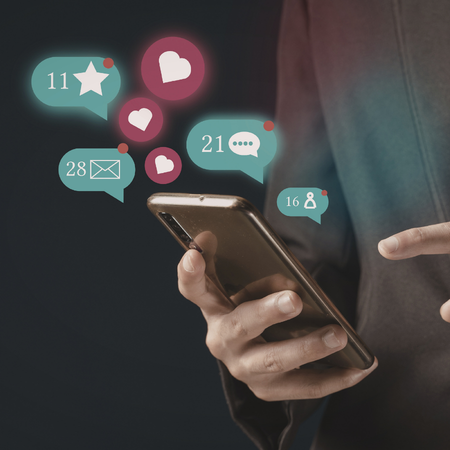
Ding! Someone liked your post. Ding! You have a new message. These familiar notifications

from the different social media platforms may often spark a small rush of excitement. What
people might not know is that these alerts are doing more than just updating us—they trigger the release of dopamine in our brains, which is the reward system and creating a pleasurable sensation (UC Davis Health, 2024). Over time, this cycle can condition us to crave such interactions, reinforcing us to check for likes, comments, and shares. When these signals of approval are absent, however, the opposite effect may occur. Instead of pleasure, people may experience feelings of rejection, inadequacy, or self-doubt.

To better understand these dynamics, it is important to first define social media, then examine how it intersects with instant and delayed gratification. By doing so, we can better understand
the potential impacts social media has on mental health.

Social media refers to a collection of online platforms that allow individuals to interact, connect, and share content within digital networks (Bashir & Bhat, 2017). Examples include Facebook,
Instagram, TikTok, YouTube, and X (formerly Twitter).

Researchers define social media as a system that enables people to create, exchange, and engage with diverse forms of content such as messages, photos, videos, and articles (Ahmed, Ahmad, Ahmad, & Zakaria, 2019). It allows for individuals to maintain relationships, build communities, and share ideas regardless of distance.

However, while social media brings undeniable benefits in terms of connectivity and information-sharing, it also affects one’s mental health. The contents of these platforms are curated in such a way that triggers dopamine to be released and leads to instant gratification.

The effects of social media are wide, influencing how people perceive themselves, interact with others, and make daily decisions. Many studies have highlighted both positive and negative outcomes. On one hand, social media can support mental health by providing access to social support networks, educational resources, and opportunities for creative self-expression. On the other hand, its design and constant availability may foster dependency and compulsive use.

A central reason why social media feels so compelling is its connection to dopamine. Dopamine is a neurotransmitter that plays a key role in motivation, learning, and reward-seeking behavior. Each “like,” comment, or share triggers a small dopamine release, producing a sense of satisfaction called instant gratification (Flex, 2023). Over time, this repeated reinforcement conditions users to continue engaging, hoping for the next rewarding interaction.

The danger is that this process can lead to an endless cycle of checking, posting, and seeking validation (Flex, 2023). Users may start to measure their self-worth by online approval, making them more vulnerable to negative emotions when engagement is low.

Going deeper, what is Instant gratification? This refers to the tendency to prefer immediate rewards over larger but delayed benefits (Goldfield, 2025). In the context of social media, this increases the temptation of instant gratification by offering continuous and easy access to small rewards. This desire for instant gratification affects a person’s decision-making process, creating the choice between immediate pleasures and future benefits (Yin & Shen, 2024). Given the age of social media and technology, most individuals tend to go for fast paced rewards. What makes social media more concerning is that it presents an endless supply of these rewards, making it difficult to exercise restraint.

When people consistently prioritize immediate rewards, several consequences can arise. First, people tend to become more impulsive (Flex, 2023). Rather than taking time to weigh long-term benefits, individuals may opt for “quick fixes.” A person might find it increasingly difficult to resist urges, leading to habits like compulsive scrolling or checking phones at inappropriate times. In some cases, this can escalate into problematic use, where social media begins to interfere with sleep, productivity, or face-to-face relationships.

Second are the emotional effects where individuals who rely heavily on social media for validation may become more vulnerable to mood swings, irritability, or even anger when the desired engagement fails to appear (Flex, 2023). Over time, this lack of emotional regulation can contribute to stress and dissatisfaction.

Social media is uniquely positioned to fuel instant gratification because of its design. Platforms employ algorithms that deliver personalized and fast-paced content, maximizing user engagement. Some of the main features that encourage this gratification include:

  • Likes, Shares, and Comments: These act as immediate markers of approval, giving users a sense of recognition and belonging.
  • Messages and Notifications: Alerts about direct messages or mentions increase feelings of connectedness, providing social reassurance.
  • Short-form Content (e.g., TikTok, Instagram Reels, YouTube Shorts): Quick, entertaining videos deliver immediate stimulation and are often consumed in rapid succession.

While these features are not harmful in isolation, prolonged use may contribute to a range of negative effects, such as (Naslund, et. al., 2020).:

  • Fear of Missing Out (FOMO)
  • Social comparison and envy
  • Burnout and fatigue from constant engagement
  • Sleep disruption due to late-night scrolling
  • Anxiety and depression linked to validation-seeking
  • Exposure to cyberbullying and online harassment
  • Strained offline relationships
  • Dissatisfaction with body image

These outcomes underscore the importance of learning to balance the use of social media.

While social media is not inherently bad, its impact depends on how it is used. Like many tools, it can be beneficial when approached with moderation and harmful when consumed excessively. Some ways to counteract the pull of instant gratification is by intentionally cultivating delayed gratification.

Here are some ways which one can promote delayed gratification in terms of social media use:

  1. Slowing Down and Taking Breaks
    Pausing from social media creates mental space to reflect on habits and choices. Breaks can weaken the automatic cycle of checking for notifications and allow individuals to re-engage with
    activities that provide long-term satisfaction.
  2. Setting Social Media Boundaries
    Boundaries can include time limits, app restrictions, or “tech free” hours during the day. By reducing availability, users can protect their focus and emotional well-being.
  3. Limiting Short-form Content
    Choosing to consume longer forms of media—such as articles, documentaries, or podcasts—can help retrain attention spans and reduce reliance on constant novelty.
  4. Practicing Mindfulness
    Mindfulness involves cultivating present-moment awareness without judgment. When applied to social media, mindfulness helps individuals notice urges, reflect on whether to act on them, and engage more intentionally. Over time, this increases self-control and reduces dependency on dopamine-driven reinforcement (Flex, 2023).

Social media has transformed human interaction, offering opportunities for connection, entertainment, and knowledge sharing. At the same time, it poses risks of dependency on instant gratification. The dopamine-driven cycle of likes, comments, and short-form content can fuel impulsivity, emotional instability, and even mental health struggles.

Yet, social media itself is not the enemy—it is our relationship with it that determines its impact. By slowing down, setting boundaries, choosing more mindful forms of engagement, and practicing delayed gratification, individuals can enjoy the benefits of social media while safeguarding their wellbeing. In doing so, we shift from being passive consumers of digital validation to intentional consumers.

References:

  • Bashir, H., & Bhat, S. A. (2017). Effects of social media on mental health: A review. International Journal of Indian Psychology, 4(3), 125-131.
  • Flex, A. (2023, July 5). The rise of instant gratification culture: How smartphones and social media contribute. Medium. https://medium.com/@neonmaxima/the-rise-of-instant-gratification-culture-how-smartphones-and-social-media-contribute-33bfa3a43ab4
  • Goldfield, G. (2025, March 4). I want it now! The psychology of instant gratification. Psychology Today. https://www.psychologytoday.com/us/blog/no-more-fomo/202503/i-want-it-now-the-psychology-of-instant-gratification
  • Naslund, J. A., Bondre, A., Torous, J., & Aschbrenner, K. A. (2020). Social media and mental health: benefits, risks, and opportunities for research and practice. Journal of technology in behavioral science, 5(3), 245-257.
  • Sadagheyani, H. E., & Tatari, F. (2021). Investigating the role of social media on mental health. UC Davis Health. (2024, May 10). Social media’s impact on our mental health and tips to use it safely. Cultivating Health. https://health.ucdavis.edu/blog/cultivating-health/social-medias-impact-our-mental-health-and-tips-to-use-it-safely/2024/05
  • Yin, B., & Shen, Y. (2024). Development and validation of the compensatory belief scale for the internet instant gratification behavior. Heliyon, 10(1).