Psychological research across families from all ethnic backgrounds suggests that fathers’ affection and increased family involvement help promote children’s social and emotional development.
American Psychological Association
The concept of a modern day father has garnered a lot of interest not just within the context of day-to-day life but in research as well.
At We Thrive, we believe in the father’s important role in human development and the wellbeing of the family as a whole. And we also acknowledge that mental health and wellbeing needs of fathers are not as talked about as that of their children’s
Dr. Carlos has an established career as a dentist and a mental health clinician. Outside of work, Dr. Carlos is a family man, an active leader in church and non-profit organizations and he is also a musician. Learn more from his insights on fatherhood, self-care and skills for everyday thriving:
What are your practices for Everyday Thriving?
We Thrive celebrates all the men in our lives wearing different hats, our first superheroes, and guides, this day is for you. Happy Father’s Day!
Sources:
American Psychological Association. (2009, September 8). The changing role of the modern day father. http://www.apa.org/pi/families/resources/changing-father
Stambor, Z. (2005, December). Meet the renaissance dad. Monitor on Psychology, 36(11). http://www.apa.org/monitor/dec05/renaissance
Hazlegreaves, S. (2020, February 19). Why mental health for modern day dads is a hidden but fast-growing issue. Open Access Government. https://www.openaccessgovernment.org/mental-health-for-modern-day-dads/82686/
Here is an excerpt of that address, highlighting the ABC’s of Resilience:
“You’ve probably heard the word resilience many times over the course of the pandemic. We are told that we need to develop our resilience. Resilience means the ability to bounce back from difficulties—like when you drop a ball on the ground, and it comes right back up instead of staying on the ground. How do we become resilient? The good news is that neuroscientists tell us that we can train our brains, our minds, to be resilient. If we practice resilience, it grows stronger and becomes part of who we are. So, let’s get to our ABC’s of resilience.
The A of resilience is Awareness and Acceptance.
We talked about all those big feelings we’re having about the pandemic. We need to turn to our feelings with awareness and acceptance. Not pushing our feelings away, not blaming ourselves for having feelings, not being harsh to ourselves when we’re not feeling ok.
Resilience is not about feeling ok all the time. It’s more about being aware of our internal weather patterns—our moods and emotions and being compassionate to ourselves.
We can say to ourselves, I hear you my sadness, I hear you my boredom, I hear you my fear…let me take care of you. We might want to give our feelings some soothing breaths, in and out. Our breath is a powerful tool for calming feelings. When our feelings are calm, we can think more clearly and make better choices. And perhaps we can reach out to our parents, family members, friends and tell them about how we feel so we are not alone with our emotions.
The B of resilience is Building Competency.
Awareness allows us to see where we are. Building competency means strengthening our muscles—that is mentally and psychologically, to adopt a mindset and perspective that help us grow. I have a favorite quote from Jon Kabat-Zinn, a famous Mindfulness teacher. He said,
We can’t stop the waves, but we can learn how to surf.
Many times, we are not in control of situations that come up in our lives, big situations just like this pandemic, or everyday things, like getting through schoolwork. But we have a choice to get on our surfboard and not drown. Adopting a growth mindset is an important competency for resilience. Growth mindset means, changing how we talk to ourselves when we make mistakes or face challenges. Instead of saying to ourselves, “I’m not as good as others”, “I won’t try because I might fail”, “I can’t do this, it’s too hard” we can say, “I can learn and practice,” “I will succeed with effort and finding the right strategy,” “If I fail, I can try again until I make it.” People who learn to talk to themselves in this way, become more successful in accomplishing their goals in life. Start practicing now. When negativity arises, open the door of possibility. Your mind has the power to change reality when you choose the right angle to see things from—that is the angle of growth and possibility. Lastly,
The C of resilience stands for Connection.
Strong connections with our friends, our families, our teachers, and even our human family around the world is so essential to our wellbeing. We as human beings are wired to connect, to empathize, to care. While this is a time for physical distancing, it is not a time for social distancing. On the other hand, it is a time for presence and compassion, making each other feel we are here, and we are together. Reach out for support when you’re feeling lonely. Make it a habit to have meaningful connections everyday with your family by putting your gadgets aside during mealtimes and be 100% present. Reach out to your friends who you think might be having a hard time, listen and simply be there.
When we feel connected with one another, we feel safe, calm, and collected.
We can also practice connecting with our goals and our sense of purpose and take small actions to contribute to the greater good—it can be cheering up a friend, helping with chores at home, baking treats for your grandparents, offering a prayer for those who are sick.
Your small actions can have big impact. Do not underestimate your power to make this world a better place.
As Dr. Jabby emphasized in her commencement address, resilience is a skill that can be learned and practiced. Want to learn more about resilience and other wellbeing practices? Reach out so we can help get you started.
Lather, rinse, repeat. What used to be three words at the back of a shampoo bottle has become descriptive of day-to-day life in lockdown. Some of my clients compared it to living in the 1993 movie “Groundhog Day” where everyday seems to just go on a loop. Have we all just succumbed to living the life of a hamster on its wheel? Tired yet spinning, nonetheless?
Earlier this month, the New York Times released an article providing us a name for what we are collectively feeling. Adam Grant, an organization psychologist and author of the said article, revealed the word that perfectly encapsulated our “blah’s”, “meh’s” and “oof’s”: Languishing. Languishing is the uncomfortable in between, the waiting room in a dentist’s clinic, the pause before announcing the winner to your favorite reality TV contests, the days between the next episode of your favorite Disney + Marvel series, and more specifically, the moment we are in: the race between COVID-19 vaccines rolling out and COVID-19 variants creeping in.
SCIENCE SAYS…
So if languishing is the middle with mental illness and mental wellness on either end, how do we tilt the scale towards wellness? First, let’s understand why it’s so easy to slide towards mental unwellness in the midst of the pandemic.
According to the Polyvagal Theory by Dr. Stephen Porges, our nervous system works like an alarm system. When it detects a threat (e.g. a global pandemic), it raises the alarm that awakens our fight, flight, or freeze responses.
When we are in these states, we may find ourselves in a constant state of fear or worry, agitation, and even anger. Our thoughts become primed towards increased negativity, and we may experience feelings of distrust and hopelessness. Physically, we might experience being exhausted, restless, or numb. When we get stuck in these states for long periods of time, it may lead to not only mental illness, but also physical diseases.
Fortunately, our nervous system has also evolved to survive these kinds of threats. Together with the alarm system is a connection system or a social engagement system, which helps us respond to threats in a less defensive way. This is the evolutionary piece of gold that tilts the scale towards wellness. When we have an activated connection system, we can build resilience in the face of stress.
Simple ways to turn on your connection system and beat languishing:
1. Connect with your mind and body
Use your senses: engage your senses during various activities- smell, see, feel, taste, and listen.
Move your body: go for a run, do stretching exercises, dance!
Use your hands: create something, paint, write
2. Connect with others
Reach out to loved ones: make a quick call to a family member/ friend/ colleague you haven’t spoken to in a while
Help others: What are your talents and skills that may be used to help others? Listen to a friend in need, cook for neighbors, reach out to less fortunate community members.
3. Connect with nature
Spend time with your pets
Care for your plants
Go outside for a walk (with proper precautions, of course!) and observe the trees, listen to the birds, and feel the warmth of the sun.
These are some easy tips and tricks to engage our connection system but don’t be fooled, their benefits go a long way. Every time you connect, pay attention to how your body feels. Be aware of how it feels when you start to relax. How slow/fast or shallow/deep is your breathing? Do your muscles feel tense or at ease? Savor this feeling and know that you can always come back to it when you need to.
Together, let’s convert languishing to connecting. From here on out, let’s breathe in the fragrance of the lather, let’s feel the bubbles slide down our skin as we rinse, and let’s engage our connection system and keep it on repeat.
Improving your social connection system is just one of the wellbeing practices we teach at We Thrive. Contact us to learn more about how we can help you and your team achieve your wellbeing goals.
Source:
Porges, S. W. (2020). The COVID-19 Pandemic is a paradoxical challenge to our nervous system: a Polyvagal Perspective. Clinical Neuropsychiatry, 17(2),135-138.
Everyday Thriving is not just a concept we teach in our webinars and corporate training programs—it is a set of practices we live by on a daily basis.
As a Mother’s Day feature, we turn the spotlight on Techie Duran-Dy, one of our We Thrive consultants.
Techie is a wife, mom of three daughters (Myca-26, Cara-22, Anica-21), mental health clinician, businesswoman, PhD student–and she is also active in church and socio-civic duties. How does she do it all? Watch Techie’s insights on Everyday Thriving:
In this heartwarming video, Techie talks about the biggest challenges and rewards of motherhood. She also shares her Everyday Thriving practices such as gratitude, prayer, mindfulness, communing with nature, nurturing connections, finding purpose and doing things with love.
What are your practices for Everyday Thriving? Which ones did you learn from you mom?
We Thrive celebrates and appreciates the strength of all mothers who have nurtured us in many wonderful ways. Happy Mother’s Day!
Between stimulus and response there is a space. In that space is our power to choose our response. In our response lies our growth and our freedom.
-Dr. Viktor Frankl (Austrian Neuropsychiatrist, Author, and Holocaust Survivor)
Over the past year that we have been continuing to face the demands of severe disruption and ongoing threats to our health and safety, it is inevitable (even if only at times) to find ourselves feeling battered by the winds and the waves of this pandemic storm. These turbulent times have brought the conversation about resilience to the forefront, becoming a buzzword, with its accompanying misconceptions. Some common inaccurate notions of resilience are that it means “being ok all the time,” “toughening up in the face of adversity,” and “powering through.” These misconceptions can lead to an unhealthy relationship with our emotions and inner experiences, as we might push away or resist connecting with our moments of vulnerability. As most theories on resilience would posit, acceptance of reality is key to resilience (On Emotional Intelligence, Harvard Business Review, 2015). Rose-colored thinking and sweeping emotions under the rug in order to “stay optimistic” does not amount to resilience. In fact, at times, it can actually lead to danger when we avoid facing down reality.
Resilience is a practice of awareness, connection, and wise action. Instead of being mindlessly dragged by external and internal forces into habits of reactivity that undermine our ability to thrive, we stop to create what Dr. Frankl describes as “the space” from which we can become mindful and look deeper into the choices we make.
Resilience involves the intention and practice of putting ourselves in the zone of thriving where we can be our best self.
In essence, it involves learning to understand and befriend our nervous system so that we don’t unconsciously linger in our fight-flight-freeze zones, which then compromises our physical and mental health, as well as our relationships.
We cannot fight or avoid the storm, but we can develop the capability to inhabit a sense of calm and groundedness that protects us from giving in to impulsive and short-sighted actions. Reaching in to our true strength and deeper wisdom enables us to come out of the storm having evolved for the better.
We offer you these six P’s of thriving as a guide to neuro-scientifically informed practices that we can cultivate in our everyday lives. Most of these practices consist of micro-steps that are meant to build habits of conscious living. We don’t rise to the level of our aspirations, we drop down to the level of our actions–that is how we embody our commitment to live our best life in whatever circumstances we find ourselves in.
The Six P’s of Thriving through Turbulence
1. PAUSE
The ability to pause, step back, and reflect, enables us to shift perspectives, create options and choose wisely (Linda Graham, Bouncing Back: Re-Wiring Your Brain for Maximum Resilience and Wellbeing). Practice pausing by creating a routine that includes time for unplugging and relaxation. Taking mini-breaks during the work day help us restore and replenish our mental energy, thereby making us more productive than if we were to work non-stop. We can also pause through the practice of mindful breathing. Whenever your mind becomes scattered, use your breath as the means to take hold of your mind again.
2. PERSPECTIVE
The perspective we choose to take defines how we experience reality. Nothing exists outside of how we interpret or perceive what is happening around us. When our stress response is activated, the brain leans toward a negativity bias that shifts our focus on what’s not working well, thereby constricting our sense of possibility. We can practice perspective by asking ourselves What else is true? What reality am I taking for granted? Am I looking at the whole picture? How can I widen my perspective? What can I do right now? Among the things I can control, what can I take action on in the present?
3. PRESENCE
Presence means being open and kind toward ourselves and others. Establishing a compassionate internal connection with ourselves activates a self-soothing response that regulates us back into safety. Self-validation is a practice of presence that involves turning to our feelings and internal experiences with understanding and compassion. We can also be more intentional in giving our genuine presence to others through supportive listening, which means making space for others to feel held in our presence. It’s listening to understand instead of trying to fix what’s wrong.
According to Victor Stretcher, behavioral scientist and author of Life on Purpose,
“The strength of one’s life purpose—which involves a combination of living according to your values and goals, and striving to make a positive difference in the world—can be measured, and it correlates highly with psychological wellness and even markers of physical health and longevity.”
Crisis points can become turning points when we dare to look within, grounding our choices and actions in what truly matters to us. Instead of merely reacting to external circumstances, consciously connect with your intention and deeper purpose. A micro-practice in directing attention to purpose is through intention-setting, pausing to set an intention at the beginning of each day and returning to that intention again and again as we engage in our daily activities.
5. PARTICIPATE
Research suggests that when we recognize our common humanity and show compassion, we are more likely to pull together and to solve issues that may be complex in nature.
Helping or assisting others can empower us to overcome the gravity of helplessness and hopelessness. Practice participate through everyday acts of kindness. Research shows that when we practice kindness and generosity toward others, our brains light up in areas associated with pleasure and reward. Kindness is an act that benefits both the giver and receiver.
6. POSSIBILITY
We can only fuel our efforts if we have the faith, vision, and imagination to get to our desired destination. While the temptation might be to focus on fear and everything going wrong, we can redirect our attention to cultivating a mindset that sees growth and possibilities beyond problems.
Resistance can block possibility.
When we resist reality, whether it’s an external situation or the reality of our own feelings, our struggle increases. It’s important to gently and compassionately observe our resistance, what are we resisting and how does the resistance affect us?
To the extent that we can, practice turning the mind towards acceptance and notice what opens up. We can also embody acceptance by smiling to what we are resisting or opening our palms as a gesture of willingness.
The 6P’s of Thriving Through Turbulence has been an anchor for us at We Thrive—as a wellbeing guide we started to share even at the start of the pandemic last year (when we first started with 5P’s). We even talked about it in Bianca Gonzalez‘s Paano Ba ‘To series:
The 6P’s of Thriving through Turbulence is part of what we teach in our webinars and training sessions for organizations. You may download the free infographic here or contact us to learn more about We Thrive’s mental health and wellbeing services.
The majority of you are most likely thinking “not at all.”
Having worked as an operational air traffic controller at a high-density facility for 40 years+ I’ll nevertheless reveal there is most likely a relationship if you are willing to cut mindfulness down to, for example “focus and concentration”.
Being an outspoken advocate for mindfulness and self-compassion, I decided to discover if a program targeted at this specific audience would have an effect on dropouts. In particular I was curious if trainees within this domain might benefit from training focused at lowering their self- criticism.
I left the operational environment a couple of years ago. Teaching mindfulness of various kinds to operational air traffic control personnel, health care staff as well as to those suffering from chronic pain is what I now focus on.
For quite some time during the 40 years+ in air traffic control I was part of the team recruiting trainees, later I became Head of Training. So, I have insight to what is required from the trainees and what the typical obstacles are while going through training.
I was fortunate to start collaboration with a private training institute which offers ab initio as well as refresher and continuation training to national and international customers, GATE Aviation Training, in Copenhagen.
The signature of all training at GATE is first and foremost devoted to excellence within training. But it struck me to realize they in fact dare to challenge the educational culture in their form of training methods.
Having known the industry for as long as I have, I knew a door might open for me to try out a program targeted at what I know is of utmost relevance; focus and concentration.
Thanks to Dr. Steve Hickman, Executive Director, The Center for Mindful Self-Compassion, for granting me the permission to deviate from a standard SC-MSC. With Steve’s encouragement the door became open for me to write the curriculum. “FoCon – The Resilient Personnel” became the program’s title.
Session 1 was 90 min., the remaining 6 sessions were all 75 min.
From the onset it was my intention to follow the SC-MSC curriculum with only a few variations of which one would be a body scan as an add on to each session. Along the way real life for “FoCon” turned out to be a lot more than only a few variations.
I started off with what is in fact comparable to an introductory session of the 8-week MSC. I.e., general “house rules & guidelines” for our next many hours together, “How do I treat a friend-exercise,” the felt experience of mindfulness, common humanity and kindness and “Self- Compassion in Daily Life.”
But my point of departure for the unusual training became the UN 17 Goals for Sustainable Development, more specifically goal no. 3 about good health and wellbeing.
Way down in that paragraph it’s mentioned that before 2030 well-being must be promoted.
They just don’t come up with any definitions of what’s included in mental well-being, let alone methods of measuring improvements.
So, with what I took as a free ticket to elaborate further, I included how the mindfulness movement, and later the compassion movement too, for more than 30 years has proven to:
enhance general well-being
lower blood pressure
improve quality of sleep
lessen chronic pain, anxiety and stress and more
overall increase life satisfaction through fostering happiness
I mentioned a few of the scientific studies to back up the statements.
This is undoubtedly the first time ever any Air Traffic Control Training facility has had mindfulness and compassion training on the agenda with the sole purpose of enhancing focus and concentration.
By including the UN 17 Goals for Sustainable Development, everyone, including management who were present at the intro session, appeared to realize “Ah ha, we’re really among the forerunners for doing something big here!”
So, from there on the path of the course really turned into Hanne paving the road ahead of each session, looking at what do the students really need right now?
I started off with the “Compassionate Body Scan” but after just 2 sessions, I shifted to the body scan we use in the MBSR program.
Some other exercises I included were “Soothing Touch,” “Self-Compassion Break,” “The STOP-Practice,” “Soles of the Feet,” “Soften – Soothe – Allow,” “Compassionate Friend,” “Self-Compassion Stone,” and finally “Setting an Intention”.
All in all, “FoCon” has been a valuable process for trainees as well as for me being the facilitator.
I do think it’s very noteworthy that by the time they received their first progress report, i.e., after “FoCon” Session 4, one third of the trainees said they experienced enhanced concentration capabilities when studying for their exams.
After “FoCon” Session 6 half of the trainees said they felt generally lighter, less stressed when they were in the simulator and felt more overall happiness.
A formal feedback survey was carried out by completion of the “FoCon” program.
That gave me insight to what the trainees actually felt they benefited from most. It didn’t come in as a surprise the body scan was their high time favorite.
“Is “FoCon” something you’ll recommend GATE to have as part of our future training programs?”
On a scale 1 – 5, 5 being the best, the question scored 4.8.
So yes, I firmly believe GATE is among the forerunners offering “FoCon – The Resilient Personnel” as part of their training.
The course has proven to induce trainees with a dose of confidence: YES, I can complete my simulator and on the job training because I have learned I don’t need to bully myself with self- criticism.
For the first time ever, we will be fostering a new generation of personnel for the aviation industry who are being trained to motivate themselves with encouragement rather than criticism and to tackle stressful situations with greater ease.
When a student learns how to soften the inner critic, a successful outcome of training is more likely to become the result.
Learn more about mindfulness and register for our upcoming eight-week Mindful Self-Compassion online course here.
Association (IMTA) to write about my own experiences with mindfulness and here is what I shared:
Could you please briefly tell us about your mindfulness meditation background and the population that you serve?
I got very sick toward the end of 2012. I contracted a virus on a business trip and, consequently, experienced chronic health issues. 5 years later, I was diagnosed with an autoimmune disorder. The practice of Mindfulness was initially introduced by my doctor In 2012. He told me about a book called Mindfulness for Beginners by Dr. Jon Kabat-Zinn. I was hesitant in the beginning. I tried practicing, and found myself running out of my own room after sitting for 2 minutes. I was running away from my own thoughts – racing, too many, and too much for me to handle at that time. Little by little, I practiced and read more books on Mindfulness. The 2 minutes became 5, then 7, then 20 and 30 minutes. One of the most impactful books for me was beautifully written by Thich Nhat Hanh called “ Peace In Every Step”. I was ill, anxious, depressed and suffered from insomnia.
In 2013, I took the 8-week Mindfulness Based-Stress Reduction (MBSR) program and in 2015, Mindful Self-Compassion ( MSC) came into my life. During my 15 year career in Education, the thing I enjoyed doing most was handling conflicts. Thus, when I retired, I pursued teacher training in both MSC and MBSR, as well as Conflict Resolution.
How does secular mindfulness look in the Philippines?
As I became an accredited mediator for both the private sector and the Office of Alternative Dispute Resolution under the Department of Justice In the Philippines, little did I know how much transformation Mindfulness-Based programs brought to the world of mediation and conflict resolution training. I currently serve on different departments of the Philippine government such as Natural Resources, Agrarian Reform, Overseas Employment Agency, Civil Service, Bureau of Corrections, Education, Grievance units of Navy, Armed Forces, Air Force and Marines, and other agencies. I continue to offer Mindfulness programs to different companies, schools and other mental health centers.
There is now more awareness of Mindfulness and the benefits of continued practice in the Philippines. More and more people are gaining a better and deeper understanding that it has everything to do with being human.
Please share with us ways in which you share Mindful Self-Compassion in conflict resolution.
As I continue my own practice of MSC, I see the value in bringing these practices to mediation training. MSC practices weave beautifully into Interest-Based Mediation and Values-Based Mediation. From meeting our inner critic, our difficult emotions, and our unmet needs with compassion and equanimity – these teachings of Dr. Kristin Neff and Dr. Christopher Germer flow seamlessly with practices in negotiations. The skills taught in Non-Violent Communication (NVC) by Dr. Marshall Rosenberg, supports early evaluation of a third party neutral, consensus building and the mediation process itself.
In the heart of conflict resolution is the relationship among equals with compassion for self and others. There is so much honoring of diversity, human needs and values. These are all shared by us, human beings. In the 3 components of MSC: Mindfulness, Common Humanity and Self-Kindness, it is my commitment to bring Loving Connected Presence (as beautifully taught in MSC) both to myself and to the ones I serve in each dispute process and the trainees in mediation.
Learn more about mindfulness here or register for our eight-week Mindful Self-Compassion online course here.
It was such an honor for us at We Thrive to have one of our founders, Dr. Jabby Herrera invited as a speaker to #REFRAME: The #SheTalksAsiaSummit 2021!
Last March 27, 2021, Dr. Jabby Herrera sat down for a virtual panel discussion with She Talks Asia co-founders Lynn Pinugu and Iza Calzado for the segment “Reframe Your Life”.
The panel discussion focused on revisiting messages sold to women, how these messages contribute to shaping what we know of the world and how we make decisions.
It was a very lively and fruitful discussion that included topics such as happiness, unconscious biases, relationships and falling in love with ourselves and our lives.
The experience of stress and anxiety have become so prevalent in our lives as a result of these prolonged conditions of threat and minimal social engagement. Human nervous systems are designed to thrive in conditions of safety and connection. Conversely, our continued exposure to crisis makes us vulnerable to internal dysregulation, which can manifest in persistent worrying, heightened anxiety and fear, frustration, anger, mental confusion, and exhaustion. If you have not experienced these moments in the past year, you might not have been living on this planet. We have all been emotionally affected by the pandemic in one way or another. Though perhaps viewed from a different angle, this shared vulnerability that we are experiencing has given us an opportunity to be kinder to ourselves when we’re going through difficult emotions. And it has also opened the door for us to care for each other and extend compassion to alleviate the suffering that we see in people around us.
About 78% of the global workforce reported negative mental health impact from the pandemic (www.thriveglobal.com). This probably does not surprise us. Now more than ever, it has become essential to build a compassionate workplace environment that capitalizes on our common humanity and our inherent human capacity for empathy and connection. We can all be part of cascading support in our workplace community. If everyone is acting on the intention of mutual care, the ripple effect of compassion will become wider and wider, reversing the contagion of toxic stress into that of collective resilience. It does not take extraordinary effort to have a significant impact. But it’s important to keep a few guidelines in mind so that our compassion can become an effective bridge that takes the other person to a state of emotional safety and agency.
The 3 R’s, Regulate-Relate-Reason/Reflect (adapted from Dr. Bruce Perry), is a brain-wise approach to helping co-workers and other people who might be experiencing emotional distress.
Stress reactivity and dysregulation occur when our brain senses danger (real or imagined), triggering an internal alarm state. In a state of heightened arousal, the brain has difficulty engaging its higher capacities of reflecting and reasoning.
When the person seeking support is in an emotionally dyresgulated place (i.e. anxious, angry/frustrated, helpless and stuck) we can be more effective in helping them by responding in a way that brings their nervous system back into safety.
STEPS TO RESTORING SAFETY AND CALM:
1. REGULATE
Calm the flight-fight-freeze response by making the person feel you are fully present and available to listen. Reinforce the help-seeking behavior by saying you’re glad he/she reached out to you. Use a tone and body language that communicates comfort and reassurance. Our nonverbal presence is key to regulation. This includes using a warm and accepting tone of voice, nodding to signal you are actively listening, showing that you are focused and paying attention, and not interrupting what they are saying. When the other person is very agitated, regulating could also take the form of inviting the other person to take a few mindful breaths with you, “How about we take a minute to just breathe to settle our minds?”
2. RELATE
Instead of jumping into problem-solving or advice-giving, focus on listening, providing empathy, and making the other person feel validated. Our anxiety and helplessness can get activated in the face of someone else’s suffering. When this happens, we often push for an immediate resolution to the distress by offering solutions and advice. This can make the person in distress feel invalidated. While they might politely take your suggestions, they are not likely to act on it if there was no genuine sense of being understood or empathized with. Take the time to simply acknowledge and normalize their feelings. Use reflective statements such as, “You’re really feeling isolated and it’s been hard for you to stay motivated with work in this situation.” It is possible to validate the emotion without necessarily agreeing with their perspective, “I understand that it was frustrating when you had to take on more work than you expected.”
3. REASON AND REFLECT
When the person has felt listened to and connected with, the higher parts of the brain become more available to reflect and reason. You may help the person think about concrete steps to address their situation or link them with needed resources. For example, you can help a co-worker figure out how to communicate in a constructive way with their manager or supervisor. You may also invite the person to brainstorm self-care practices that build their inner resource for coping with difficulties. Sometimes it might help to ask a person experiencing a challenging situation to consider what they value and how their actions and choices can be aligned with what truly matters to them. Don’t hesitate to recommend seeking support from a mental health professional especially when there are safety concerns that require immediate attention. Seeing a mental health professional does not have to be the last resort, it can be a resource to tap into to prevent problems from escalating.
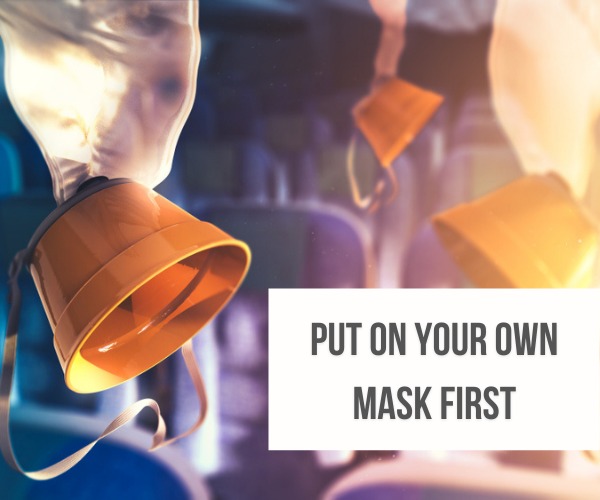
There is so much that a compassionate conversation can do for someone who is experiencing pain and difficulty. We are wired to respond with empathy and care to our fellow human beings. And as we provide support to others, it is of UTMOST importance to keep our oxygen masks on. Check-in with yourself after assisting another person, take a pause to pay full attention to how you feel, be intentional in renewing yourself by doing something that restores your energy. Compassion only becomes complete when you don’t leave yourself out of the circle.
Contact us to learn more about trainings in providing safety and support in the workplace.
We are marking one year since COVID-19 became a pandemic, causing unprecedented disruption to lives and economies. By now we have all realized that there is no quick fix to this global crisis, and that despite the availability of vaccines, we would have to cope with a world that will look and feel very different from the one we left behind. Social distancing and masking will continue in the foreseeable future, livelihoods need to be rebuilt, and work systems redesigned. There is no denying, we are facing hard realities ahead. Yet, these challenges are most certainly not beyond us to embrace and overcome. These pivotal moments of change give us the opportunity to step out of living on autopilot mode, and to rediscover life by digging deeper into our whys and connecting with a sense of meaning that is larger than ourselves. When the outside world is shaking with uncertainty and change, we can always turn into our inner world for the grounding power of purpose.
The UC Berkeley Greater Good Science Center defines purpose as “an abiding intention to achieve a long-term goal that is both personally meaningful and makes a positive mark on the world.” Researchers have discovered that a sense of purpose is linked to a number of good outcomes, across the lifespan, including:
Higher levels of happiness and life satisfaction
Better educational outcomes
Physical agility
Greater cognitive functioning
Lower stress levels
Greater personal growth, integrity, and health
Boosts work experience and wellbeing
Greater longevity
It is clear that purpose is vital to our wellbeing and resilience. Especially when we are experiencing suffering or difficulty, enlarging our perspective allows us to redefine our experience so that instead of caving in to helplessness and despair, we are held by a vision of the greater good that empowers us to SEE and BE beyond our adversity. Spiritual teacher Michael Bernard Beckwith urges us “to make goals that are worthy of our souls.” He says:
“We are here in this world to let something unfold from within us.”
This way of looking at purpose invites us to seek outside conditioned expectations and goals that are externally defined and imposed upon us, and instead to really pause and consider, “What am I a commitment to? What difference do I want to make in this planet? How is life manifesting through me?” When we connect with our purpose, we always find others traveling the same path which also decreases our feelings of separateness and isolation. Purpose draws us into the greatness of humanity, the seeds of which are in each one of us, waiting to be nurtured.
Studies show that purpose is not a fixed goal or destination, but something that evolves throughout our lifespan. Purpose is a journey and a practice. We can tap into the power of purpose at any time in our life, if we’re willing to explore what matters to us, what kind of person we want to be, and act in alignment with the person we want to become (greatergood.berkeley.edu). There are many ways to practice stepping back and gaining a better view of our North Star. We are in the best of times to discover the inextinguishable light within us and to hold this up boldly as walk forward to our future.
Practices for Cultivating Purpose
1. Identify your values
The first step in cultivating purpose is understanding what is deeply important to you. These are your values and motivations. Give some thought to your values and write them down. Notice how they show up in your day-to-day life. When you uncover what values are most important to you and keep them front and center in your mind, it can transfer even the most mundane tasks into a more meaningful experience.
2. Pause
Once you clarify your core values, the next step is to find ways to apply them in a range of situations. How do you do this? Take a moment to pause. Make a habit of pausing for short moments throughout the day. A great opportunity for this time of reflection is when you’re transitioning to other activities. Take a mindful breath and bring yourself back into the moment. Then think about the next activity you will be doing and how it connects with your deeper values. Noticing how you apply your values to everyday tasks helps strengthen them in the mind and deepen your sense of purpose.
3. Reflect and reframe
When you find yourself in a challenging situation, reframing your experience within the lens of your purpose can help shift your perspective. Even small annoyances and daily frustrations can help us sharpen this skill, and that prepares us to weather the big storms of life. In a stressful or challenging situation, bringing our values to mind can put us back in the driver’s seat, shifting our focus to the things we can control. Instead of powerless, we feel empowered, and as a result, we are less defensive and better able to manage our feelings and reactions. The one thing that is always within your control is your perspective, and with the right perspective, even the most challenging situations in life can become deeply meaningful.
4. Act with you purpose in mind
Lead by example. Sometimes the problems happening every day in the world seem insurmountable. When you find yourself caught up in diagnosing the world’s problems, consider what you can do to lead by example. Is there a small step you can take that would help in this moment? Or, is there a simple shift in perspective that can help you see things in a new light? Use your values as a guiding principle in the things you do, leading by example. This can help reinforce your connection to your values and your higher purpose.