
Categories
Blog Everyday Thriving General Wellbeing Practices

Chat, Are We Cooked? AI Is Literally Giving Us Brainrot!

Tralalero Tralala! Tung Tung Tung Sahur!

Honestly and seriously, what do these mean and where did they come from? If one tries to search about it, results would say that it’s AI-generated content originating from Italy. What’s interesting is that it’s filed under the “brainrot” memes of the younger generation. The term is defined as low quality digital content or media that is excessively consumed and causes a decline in one’s cognitive state such as attention and critical thinking. Usually, it comes in short form content like TikTok videos, Facebook and Instagram reels, and YouTube shorts—basically, videos under 10 seconds with visuals and audios that leave a lasting impression on you after rewatching it a few times or consistently seeing/hearing them when you scroll through your feed. It gets to the point where it eventually gets stuck in your brain and you resort to that response in any given situation. 

Globally as of the moment, we have the audios from the songs Sugar on My Tongue by Tyler, the Creator. The catchiness of the song eventually brought about a trend where people film themselves from the POV of a refrigerator. Another example is Predador de Prereca, a Spanish song so upbeat you would think the lyrics are harmless and fun, but when you translate its lyrics to English, you’d be surprised how obscene and lewd the song actually is. Now, you might be thinking why I’m taking the time to give these specific examples and explain it to you. Well, it’s because when we obsessively and mindlessly scroll through social media, we tend to absorb anything we see and hear without giving it a second thought. While some content may be innocent and harmless, some content may also have sexual innuendos and themes of violence, aggression, suicide, and so on and so forth. For younger adults and older, perhaps they’ll be able to discern what’s right or wrong and what’s moral or not. But for teens and younger children, they could cluelessly absorb it, internalize it, and sometimes even embody what they see. Trust me, I’ve seen what kids talk about in their discord group chats and servers, and it’s honestly pretty terrifying. 

A number of studies have recently been conducted to study how the excessive consumption of short-form content impacts one’s attention span, and as expected, it significantly and negatively affects one’s cognitive functioning. This is because the brain gets conditioned for constant stimulation, instant gratification, and rushes of dopamine. When this happens, we start to have trouble accomplishing tasks that require sustained attention because we’re not getting any immediate feelings that are rewarding, satisfactory, amusing, or pleasurable. And this can definitely and especially be a problem for the younger generations. Now you might be wondering, “How does brainrot from short-form content connect to brainrot from the use of AI?”. Well, exercise your ability to concentrate and patiently wait because we’re getting there! 

When children become accustomed to fast-paced sensory-stimulating information, their academic performance can be compromised because this affects their ability to sit through hours of lectures, reduces their academic interest, and causes them to have lower grades. Tendencies to procrastinate become higher too, which can lead to experiencing symptoms of depression and anxiety overtime (Jochmann et al., 2024). Not only will they have difficulty listening in class, but they will also have difficulty accomplishing assignments, homework, and projects, as doing these necessitates much time and concentration. And this is where AI learning tools come in and exacerbate the problem. ChatGPT is probably the most widely used AI learning tool as of the moment. Using it is just so simple, quick, and easy. You just type in a prompt–may it be a question or a statement, and in just a few seconds, you get a substantial amount of information. Does this sound familiar? While ChatGPT is extremely useful and helpful, recent studies have shown that becoming heavily reliant on it actually makes you… dumber. Through EEG scans, Kosmyna et al. (2025) examined the brain activity of users and non-users of AI tools in essay writing and found that those who wrote essays without any tools had the most active and well-connected brain networks. Meanwhile, those who solely relied on AI had the least brain activity especially in areas connected to attention and critical thinking. It has also been observed that those who heavily rely on AI show poor memory as some participants in the student reported not remembering what they wrote. 

You’d be surprised that not only do individuals rely on ChatGPT for academic related work, but they also rely on it for decision-making and companionship. From people I personally know, they resort to ChatGPT when they need help deciding where and what to eat. Some even resort to it for a quick therapy session as ChatGPT is designed to be agreeable and to validate you. Knowing this is actually quite frustrating and perhaps, the younger generation’s brain must truly be rotting because the first thing that comes to their mind when something happens or a thought occurs is to message a robot. 

Now, what can we do to address this problem? 

  1. Engage in activities or games that stimulate your brain and encourage you to practice your critical thinking and problem solving skills (Dresler et al., 2018). Such games that encourage strategic thinking include crossword puzzles, sudoku, scrabble, and chess. There are also mobile applications now that are designed to enhance your quantitative reasoning, memory, attention, and verbal comprehension through mini games. 
  2. Don’t forget your physical health! Engaging in physical activities have been found to prevent age-related declines in cognitive functioning such as dementia. Physical exercise, especially aerobic exercises, have been found to expand the volume of the hippocampus, the part of the brain that plays a significant role in memory, learning, and spatial awareness (Erickson et al., 2011. 
  3. Eat healthy! Nutrients such as Vitamin B, Omega-3, antioxidants, and choline all contribute to memory functioning so it’s best to stock up on food rich in these such as leafy green vegetables, nuts, eggs, fatty fish, and fruits (Puri et al., 2023). 
  4. Aim to have a restful 8 hours of sleep. Doing so allows us to have better cognitive capacity and functioning. Feeling well-rested enhances our ability to think, focus, and remember better. Add in some meditation or any relaxation techniques or activities that can help to release stress in your body as well (Dresler et al., 2018). 

If it were up to me, I would personally add in a fifth method which is to delete ChatGPT! But no worries if not. What’s important is that you are able to exercise discipline, self-awareness, and self-control when it comes to slowly being less dependent on AI learning tools. As tempting as it is to receive an instant response, solution, or answer, how quick and constant we get an answer from AI contributes to how long and lasting its impact will be on our cognitive health.

References:

  • Dresler, M., Sandberg, A., Bublitz, C., Ohla, K., Trenado, C., Mroczko-Wąsowicz, A., Kühn, S., & Repantis, D. (2018). Hacking the Brain: Dimensions of Cognitive Enhancement. ACS Chemical Neuroscience, 10(3), 1137–1148. 
    https://doi.org/10.1021/acschemneuro.8b00571 
  • Erickson, K. I., Voss, M. W., Prakash, R. S., Basak, C., Szabo, A., Chaddock, L., Kim, J. S., Heo, S., Alves, H., White, S. M., Wojcicki, T. R., Mailey, E., Vieira, V. J., Martin, S. A., Pence, B. D., Woods, J. A., McAuley, E., & Kramer, A. F. (2011). Exercise training increases size of hippocampus and improves memory. Proceedings of the National Academy of Sciences, 108(7), 3017–3022. https://doi.org/10.1073/pnas.1015950108 
  • Kosmyna, N., Hauptmann, E., Yuan, Y. T., Situ, J., Liao, X.-H., Beresnitzky, A. V., Braunstein, I., & Maes, P. (2025, June 10). Your Brain on ChatGPT: Accumulation of Cognitive Debt when Using an AI Assistant for Essay Writing Task. ArXiv.org. https://arxiv.org/abs/2506.08872 
  • Puri, S., Shaheen, M., & Grover, B. (2023). Nutrition and cognitive health: A life course approach. Frontiers in Public Health, 11(11). https://doi.org/10.3389/fpubh.2023.1023907

Categories
Blog Everyday Thriving General

IG: Instant Gratification and Social Media

Ding! Someone liked your post. Ding! You have a new message. These familiar notifications

from the different social media platforms may often spark a small rush of excitement. What
people might not know is that these alerts are doing more than just updating us—they trigger the release of dopamine in our brains, which is the reward system and creating a pleasurable sensation (UC Davis Health, 2024). Over time, this cycle can condition us to crave such interactions, reinforcing us to check for likes, comments, and shares. When these signals of approval are absent, however, the opposite effect may occur. Instead of pleasure, people may experience feelings of rejection, inadequacy, or self-doubt.

To better understand these dynamics, it is important to first define social media, then examine how it intersects with instant and delayed gratification. By doing so, we can better understand
the potential impacts social media has on mental health.

Social media refers to a collection of online platforms that allow individuals to interact, connect, and share content within digital networks (Bashir & Bhat, 2017). Examples include Facebook,
Instagram, TikTok, YouTube, and X (formerly Twitter).

Researchers define social media as a system that enables people to create, exchange, and engage with diverse forms of content such as messages, photos, videos, and articles (Ahmed, Ahmad, Ahmad, & Zakaria, 2019). It allows for individuals to maintain relationships, build communities, and share ideas regardless of distance.

However, while social media brings undeniable benefits in terms of connectivity and information-sharing, it also affects one’s mental health. The contents of these platforms are curated in such a way that triggers dopamine to be released and leads to instant gratification.

The effects of social media are wide, influencing how people perceive themselves, interact with others, and make daily decisions. Many studies have highlighted both positive and negative outcomes. On one hand, social media can support mental health by providing access to social support networks, educational resources, and opportunities for creative self-expression. On the other hand, its design and constant availability may foster dependency and compulsive use.

A central reason why social media feels so compelling is its connection to dopamine. Dopamine is a neurotransmitter that plays a key role in motivation, learning, and reward-seeking behavior. Each “like,” comment, or share triggers a small dopamine release, producing a sense of satisfaction called instant gratification (Flex, 2023). Over time, this repeated reinforcement conditions users to continue engaging, hoping for the next rewarding interaction.

The danger is that this process can lead to an endless cycle of checking, posting, and seeking validation (Flex, 2023). Users may start to measure their self-worth by online approval, making them more vulnerable to negative emotions when engagement is low.

Going deeper, what is Instant gratification? This refers to the tendency to prefer immediate rewards over larger but delayed benefits (Goldfield, 2025). In the context of social media, this increases the temptation of instant gratification by offering continuous and easy access to small rewards. This desire for instant gratification affects a person’s decision-making process, creating the choice between immediate pleasures and future benefits (Yin & Shen, 2024). Given the age of social media and technology, most individuals tend to go for fast paced rewards. What makes social media more concerning is that it presents an endless supply of these rewards, making it difficult to exercise restraint.

When people consistently prioritize immediate rewards, several consequences can arise. First, people tend to become more impulsive (Flex, 2023). Rather than taking time to weigh long-term benefits, individuals may opt for “quick fixes.” A person might find it increasingly difficult to resist urges, leading to habits like compulsive scrolling or checking phones at inappropriate times. In some cases, this can escalate into problematic use, where social media begins to interfere with sleep, productivity, or face-to-face relationships.

Second are the emotional effects where individuals who rely heavily on social media for validation may become more vulnerable to mood swings, irritability, or even anger when the desired engagement fails to appear (Flex, 2023). Over time, this lack of emotional regulation can contribute to stress and dissatisfaction.

Social media is uniquely positioned to fuel instant gratification because of its design. Platforms employ algorithms that deliver personalized and fast-paced content, maximizing user engagement. Some of the main features that encourage this gratification include:

  • Likes, Shares, and Comments: These act as immediate markers of approval, giving users a sense of recognition and belonging.
  • Messages and Notifications: Alerts about direct messages or mentions increase feelings of connectedness, providing social reassurance.
  • Short-form Content (e.g., TikTok, Instagram Reels, YouTube Shorts): Quick, entertaining videos deliver immediate stimulation and are often consumed in rapid succession.

While these features are not harmful in isolation, prolonged use may contribute to a range of negative effects, such as (Naslund, et. al., 2020).:

  • Fear of Missing Out (FOMO)
  • Social comparison and envy
  • Burnout and fatigue from constant engagement
  • Sleep disruption due to late-night scrolling
  • Anxiety and depression linked to validation-seeking
  • Exposure to cyberbullying and online harassment
  • Strained offline relationships
  • Dissatisfaction with body image

These outcomes underscore the importance of learning to balance the use of social media.

While social media is not inherently bad, its impact depends on how it is used. Like many tools, it can be beneficial when approached with moderation and harmful when consumed excessively. Some ways to counteract the pull of instant gratification is by intentionally cultivating delayed gratification.

Here are some ways which one can promote delayed gratification in terms of social media use:

  1. Slowing Down and Taking Breaks
    Pausing from social media creates mental space to reflect on habits and choices. Breaks can weaken the automatic cycle of checking for notifications and allow individuals to re-engage with
    activities that provide long-term satisfaction.
  2. Setting Social Media Boundaries
    Boundaries can include time limits, app restrictions, or “tech free” hours during the day. By reducing availability, users can protect their focus and emotional well-being.
  3. Limiting Short-form Content
    Choosing to consume longer forms of media—such as articles, documentaries, or podcasts—can help retrain attention spans and reduce reliance on constant novelty.
  4. Practicing Mindfulness
    Mindfulness involves cultivating present-moment awareness without judgment. When applied to social media, mindfulness helps individuals notice urges, reflect on whether to act on them, and engage more intentionally. Over time, this increases self-control and reduces dependency on dopamine-driven reinforcement (Flex, 2023).

Social media has transformed human interaction, offering opportunities for connection, entertainment, and knowledge sharing. At the same time, it poses risks of dependency on instant gratification. The dopamine-driven cycle of likes, comments, and short-form content can fuel impulsivity, emotional instability, and even mental health struggles.

Yet, social media itself is not the enemy—it is our relationship with it that determines its impact. By slowing down, setting boundaries, choosing more mindful forms of engagement, and practicing delayed gratification, individuals can enjoy the benefits of social media while safeguarding their wellbeing. In doing so, we shift from being passive consumers of digital validation to intentional consumers.

References:

  • Bashir, H., & Bhat, S. A. (2017). Effects of social media on mental health: A review. International Journal of Indian Psychology, 4(3), 125-131.
  • Flex, A. (2023, July 5). The rise of instant gratification culture: How smartphones and social media contribute. Medium. https://medium.com/@neonmaxima/the-rise-of-instant-gratification-culture-how-smartphones-and-social-media-contribute-33bfa3a43ab4
  • Goldfield, G. (2025, March 4). I want it now! The psychology of instant gratification. Psychology Today. https://www.psychologytoday.com/us/blog/no-more-fomo/202503/i-want-it-now-the-psychology-of-instant-gratification
  • Naslund, J. A., Bondre, A., Torous, J., & Aschbrenner, K. A. (2020). Social media and mental health: benefits, risks, and opportunities for research and practice. Journal of technology in behavioral science, 5(3), 245-257.
  • Sadagheyani, H. E., & Tatari, F. (2021). Investigating the role of social media on mental health. UC Davis Health. (2024, May 10). Social media’s impact on our mental health and tips to use it safely. Cultivating Health. https://health.ucdavis.edu/blog/cultivating-health/social-medias-impact-our-mental-health-and-tips-to-use-it-safely/2024/05
  • Yin, B., & Shen, Y. (2024). Development and validation of the compensatory belief scale for the internet instant gratification behavior. Heliyon, 10(1).

Categories
Blog Everyday Thriving General Restorative Practices Wellbeing Practices

Sweat the Stress Out: The Science of Beating Burnout by Working Out 

Have you ever caught yourself spacing out while finishing a task at work, juggling multiple things at once, or even just feeling so monotonously stuck inside a routine? More often than not, we’ve all noticed ourselves feeling drained to the core while carelessly attending to our demands. Manifested as symptoms of exhaustion (i.e. physical and psychological), dissociation, as well as a lack of motivation, burnout commonly occurs among individuals with stressful roles and this work-related fatigue encompasses one’s well-being as it affects productivity, commitment, and morale (Celestin & Vanitha, 2017; Naczenski et al., 2017). The consequences of burnout might tempt us to engage in certain activities that might not be helpful to us (e.g. drinking, smoking, etc.) (Muteshi & Kamya, 2024). While there are different ways for us to poorly cope with this, there are alternative ways for us to positively fight it as well and such is through the productive movement of our bodies. Exercise, whether cardio, resistance training, or other forms, is actually a strong weapon against burnout and here are its benefits (Basso & Suzuki, 2016; Bretland & Thorsteinsson, 2015; Gerber et al., 2020; Naczenski et al., 2017): 

  • Clearer thinking 
  • More positive mood 
  • Lower stress levels 
  • Improved well-being 
  • Better sense of accomplishment 
  • Reduced emotional exhaustion 
  • Decreased perceived stress 

Exercise was also found to be a significantly helpful component in therapy-oriented approaches in order to recover from burnout (Ochentel et al., 2018). Furthermore, studies show that engaging in movements that are involved with rhythm, breath work, and grounding strategies can help calm our nervous systems down and make us more resilient in the face of stress (Porges & Dana, 2018). That said, we can view exercise as an accessible way to tolerate or cope with distress and its related feelings or phenomena such as burnout (Linehan, 2015). 

We don’t have to go to such physically strenuous lengths for us to recover from burnout. Studies have shown that even just a bit of exercise can help yield the benefits that were mentioned earlier (Basso & Suzuki, 2016; Star, 2023). Here are some types of exercises you can try out (Basso & Suzuki, 2016; Bretland & Thorsteinsson, 2015; Ochentel et al., 2018; Star, 2023): 

  • Cardio and aerobic – Running, cycling, brisk walking, swimming, 
  • Resistance training – Lifting weights, making use of bodyweight 
  • Social activities – Dancing, yoga, tai-chi
  • Sports – Individual or team sports 

Additionally, even doing these for just a short period of time can already release a significant amount of endorphins in order to improve our moods right away just on its own (Basso & Suzuki, 2016). When deciding on which activity/ies to do, it helps that you actually want to do or enjoy that type of exercise as this builds consistency in the long run (Star, 2023). So whether it’s dancing, swimming, strengthening your muscles through weights, or building stamina through cardio – know that you’ll more likely get further if you’re happy with what you’re doing. The world is your oyster! You’re not just limited to one type of exercise. For instance, doing cardio together with lifting weights actually maximizes the likelihood of you yielding positive results not just psychologically, but also physically (Bretland & Thorsteinsson, 2015). Thus, know that the type, intensity, and duration of exercise really depends on what works best for you. Lastly, it’s important that you tailor your workout to the status of your health, lifestyle practices, and personal preferences in order to build an exercise routine that is both safe and successful (Gerber et al., 2020). 

To beat burnout, of course, it is vital that we commit ourselves into doing so – even with what little motivation we have left. You might feel a little less confident and unmotivated at first before building these through time, or vise-versa, you may feel ready to start a new routine but might lose interest after a while. That’s okay and completely normal! Here are some tips that might help as you go through your journey (Bretland & Thorsteinsson, 2015; Celestin & Vanitha, 2017; Ochentel, Humphrey, & Pfeifer, 2018; Porges & Dana, 2018): 

  • Move forth with compassion: Allow yourself some kindness and patience as you start your fitness journey and know that progress is not linear. 
  • Baby steps: Try to build consistency until your routine becomes a habit – slowly yet surely, and the smallest effort on your most tiring days still does count. 
  • A healthy life is a happy life: Don’t forget that exercise must be accompanied by other healthy habits (e.g. proper rest, healthy diet, avoid unhealthy substances, etc.).
  • Switch it up when you feel stuck: Try new exercise routines or find a buddy or group to make work-outs seem more enjoyable and uplifting. 

Working out is merely a piece of the puzzle in the grander scheme of tools to help us take care of ourselves mentally and physically, yet has immensely impactful effects when done properly. Not only is it good for our body, it also helps us balance how we respond to stress by bringing us back down to what feels safe (Porges & Dana, 2018). Finally, seek the professional help you need should things get really tough (e.g. training coach, therapist, etc.). Remember, baby steps and your body will thank you tomorrow in ways that might surprise you.

References:

  • Basso, J. C., & Suzuki, W. A. (2016). The effects of acute exercise on mood, cognition, neurophysiology, and neurochemical pathways: a review. Brain Plasticity, 2(2), 127-152.
  • Bretland, R. J., & Thorsteinsson, E. B. (2015). Reducing workplace burnout: the relative benefits of cardiovascular and resistance exercise. PeerJ, 3, e891. 
  • Celestin, P., & Vanitha, N. (2017). From burnout to balance: Managing mental health in high-stress projects. 
  • Gerber, M., Schilling, R., Colledge, F., Ludyga, S., Pühse, U., & Brand, S. (2020). More than a simple pastime? The potential of physical activity to moderate the relationship between occupational stress and burnout symptoms. International Journal of Stress Management, 27(1), 53. 
  • Linehan, M. M. (2015). DBT skills training handouts and worksheets (2nd ed.). Guilford Press. Muteshi, C., Ochola, E., & Kamya, D. (2024). Burnout among medical residents, coping mechanisms and the perceived impact on patient care in a low/middle income country. BMC Medical Education, 24(1), 828. 
  • Naczenski, L. M., de Vries, J. D., van Hooff, M. L., & Kompier, M. A. (2017). Systematic review of the association between physical activity and burnout. Journal of occupational health, 59(6), 477-494. 
  • Ochentel, O., Humphrey, C., & Pfeifer, K. (2018). Efficacy of exercise therapy in persons with burnout. A systematic review and meta-analysis. Journal of sports science & medicine, 17(3), 475. 
  • Porges, S. W., & Dana, D. (2018). Clinical applications of the Polyvagal Theory: The emergence of polyvagal-informed therapies. Norton. Star, K. (2023). Mental health benefits of exercise: For your body and brain. Verywell Mind. https://www.verywellmind.com/mental-health-benefits-of-exercise-2584094
Categories
Blog Everyday Thriving General Wellbeing Practices

Social Emotional Parenting for the Next Normal

The past three years of pandemic have been quite challenging for children and adults alike.  As students adjusted to online classes and distance learning modalities, parents adjusted to work from home settings where the lines between work and home were blurred in a sea of online meetings in shared spaces at home, while juggling work, parenting and multiple responsibilities.  Many parents were thrust into an extra role of being their children’s “home schooling teacher” – supervising their children’s learning, troubleshooting tech issues during online classes, being the videographer + editor for their children’s video recorded homework, picking up and submitting modules from school, on top of the stress of working from home, and coping with their own personal concerns – health, uncertainties in the midst of a pandemic. Parents had to grapple with their overwhelming worries and fluctuating emotions, as they tried to support their children’s academic and socio-emotional needs.  

This is to acknowledge that parents pour out their time and effort, their heart, mind and soul into raising their children: It is never easy – during pre-pandemic, pandemic, and “next normal” times – the range of emotions both parents and children face in these disruptions and transitions shifts from day to day, sometimes hour to hour.

After these past three years of lockdowns, quarantines and limited movements, we are all finally taking steps forward in this “next normal”.   Students are returning to full face to face or hybrid (face to face + online) learning modes.  Parents can breathe a bit easier with our “homeschooling” load lightened, although we may have some concerns or fears about the adjustments our children have to go through – “This will increase my child’s exposure to Covid and other viruses.”; “After these years of being stuck at home, will my child be able to re-adjust to interacting with other kids again?”; “After all these years of online classes, are there learning gaps in my child’s education?  Can they readapt again to regular in-person classes?”  These fears are valid and understandable.  As parents, you can process these fears when you tap into your social and emotional skills, and you can also model these skills for your children to use as they navigate this transition.

According to the Collaborative for Academic, Social and Emotional Learning (CASEL), “social and emotional learning (SEL) is an integral part of education and human development. SEL is the process through which all young people and adults acquire and apply the knowledge, skills, and attitudes to develop healthy identities, manage emotions and achieve personal and collective goals, feel and show empathy for others, establish and maintain supportive relationships, and make responsible and caring decisions.”

We can learn, and practice social emotional knowledge, attitudes, skills and strategies together with our children. This can pave the way for positive life experiences, with many benefits to practicing social emotional learning (SEL) – improved performance in school and work, better management of emotional distress, fostering healthy relationships with one’s self and others.

Being a parent is a journey of self-discovery – we come face to face with our own emotions, beliefs, strengths and weaknesses as we raise our children.  By recognizing and acknowledging how thoughts, feelings and actions are interconnected in a healthy way, within ourselves, and within our own children – – this guides us in the way we make decisions, and helps our children to develop more insights into their internal experiences and external actions.    When we encourage our children to share about their day, and actively listen to them, children will open up to share their feelings and thoughts.  When they encounter some awkwardness as they move from online interactions with friends to face-to-face interactions, we can support them by teaching them to use “I” statements as they identify feelings (“I felt shy when I met my classmates again.” ; “I felt weird seeing a big classroom filled with people again, I miss being by myself in a quiet room” ; “I felt happy to see all my friends and to talk with them after these years of just chatting or video calls online.”).  

You can encourage them to share about their feelings by opening up the conversations with some “kumustahan” questions: “Would you like to share about how school has been today?”; “Would you like to talk about how your day went today?”.  This approach will help them to understand and unpack what feeling excited, happy, worried or sad is about, and they are better able to manage their emotions.  We can also encourage them to engage in activities that promote self-reflection – such as journaling or sharing the highs and lows of their day – “What is one thing you are thankful for today?  What is one thing that you felt could have been better today?”. The more our children discover their sense of self, the more this nurtures their self-esteem.

Understanding the interrelations of feelings, thoughts and actions can lead parents and children to regulating these through self-management.  During changes and transitions, there will be a lot of mixed emotions that our children may go through. When our children are feeling overwhelmed and emotionally upset (dysregulated), we can try practicing co-regulation with them.  Co-regulation, sometimes called mutual regulation,  involves a parent or caregiver stepping in to help a child to identify, manage and process their intense emotions.  When a child’s emotions are fueled by high energies, we avoid matching their high energy, and try to do emotional modeling – we model the calm behavior we would like to see in our child, by using a warm, soothing tone of voice, instead of mirroring their upset emotions.  

We can share emotional regulation strategies with them – such as relaxation breathing exercises, mindfulness exercises – quiet time, focusing on the present moment, muscle relaxation, body scan, five senses exercise, using the “feelings wheel” (a tool used to help us define specific emotions we are feeling – for kids age 4-11), and for teens and adults).  We can also use mobile apps: Headspace and Insight Timer have a number of tracks that can help you and your child practice mindful breathing. These emotional regulation strategies help children and adults regain control when they’re feeling upset or overwhelmed.  

We take note that what works for us as adults may not always work for our children.  We need to match the emotional regulation strategy with the needs and developmental age and stage of our child.  It might be hard to get a 2-3 year old toddler to do meditation, but maybe we can try practicing mindfulness of the 5 senses with them: “What do you see?  What do you hear? What do you smell?  What do you taste? What do you feel in your hands? in your feet? How does your body feel right now?”. By understanding one’s emotional triggers, more impulse control can be practiced. Practicing these self-management skills can help us and our children to evaluate our decisions and actions in challenging situations.  We can ask our children to share about their concerns, or problems they may be experiencing – we can also encourage them to think of possible solutions to their problems, the pros and cons, as well as the impact of these on people they deal with day to day.  

When parents assess their goals, social situation, and foster understanding of self, they are able to develop responsible decision making skills, which leads to positive choices. Our actions as parents have an impact on our children; children are very observant and they can pick up on our behavior.  When we are mindful of the modeling they see in us, and in our pro-active choices, our children develop an innate sense of taking ownership of choices they make. Sometimes, our children may approach us and ask us – “Mom / Ma / Dad / Pa, what would you do in this situation?”  While our tendency as parents oftentimes is to give them advice on what to do, we can consider pausing for a while and giving them the space to come up with their own decision.  

The “stop light approach” can be helpful here – Red = stop and pause, Yellow = take a breath, Green = think through the options and make your decision. “I hear you have this situation right now – what are the things that need to be worked out? What options or choices do you have right now? How do you think you can help in this situation?”. This nurtures in them the ability to take some time to slow down, think through different options, consider the consequences of their actions, and make decisions based on positive values, empathy and fairness.  This empowers our children to make responsible choices that consider their well-being and the well-being of others. 

We live in communities, cultures, and societies, and we share this social setting with our children.  With a return to in-person school settings, they develop a keen awareness of the need to build relationships and strong friendships.  Part of our community fabric includes weaving an understanding of various races, genders, cultures, ages, religions – cultivating in our children a respectful approach towards differences, and empathic understanding of the world we live in today.  When students return to in-person classes, they will be sharing stories of their pandemic experiences with their classmates, and while there are many common experiences, they may have to confront different realities and socio-economic difficulties that many people endured.  

As your child shares with you these stories, this can be a conversation prompt to promote perspective taking: “How do you think that felt like for your friend?”, to promote showing concern for others’ feelings: “You sound happy to know your friend felt excited to be with classmates again.”, to promote empathy and compassion: “You feel sad when you heard about your friend’s troubles.”.  This can also open exploration of opportunities for serving the community in their own small ways, and doing their part in creating healthy, safe and positive spaces in the community.

Seclusion from their friends and classmates during the pandemic can take its toll on our children, as they ease back into being with friends, we can support them by checking-in daily on how they are coping with this resumption of in-person interactions, and actively listening to their concerns, worries and feelings.   

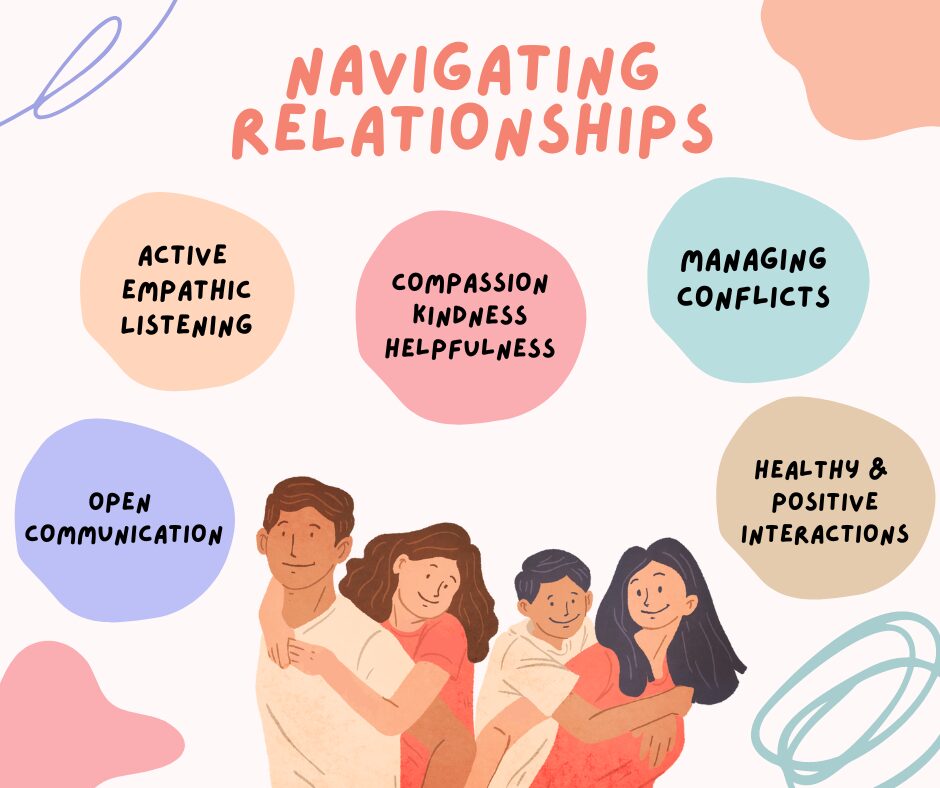
We can nurture open communication by being fully present and paying full attention to our children when they are talking with us – this will help them feel that we care about what they have to say, and make them feel heard and understood.  “I hear that you enjoyed school time today.” or “I hear that you felt sad today.” are some sample responses of how to apply listening skills that encourage our children to share more openly with us. This helps  us to better understand their thoughts, feelings and experiences. Nurturing this open communication with our children can create that space where they are able to process relationships and friendships – enhance cooperation, fairness, kindness, and helpfulness towards others, develop empathic listening, manage opposing views and conflicts, and recognize and regulate emotions.  This strengthens our relationships in the family, maintains healthy friendships in the school, and deepens their sense of community.  

Although this “next normal” is still full of uncertainty – and we can expect that there will be bumps, twists and turns this transition brings, we can lean on these social emotional skills to help us respond to the call of these ever-changing times. By opening up our emotions, thoughts, and incorporating social emotional learning into our daily practice, with intentionality, we model these skills that our children will gain through observation and active engagement; this empowers them to establish self-awareness, emotional regulation, empathy, positive communication in their interactions with others.  We continue to build their resilience, and to create a nurturing environment that supports their growth, development, and well-being throughout the different stages and challenges that life brings.

SOURCES:

Categories
Blog Everyday Thriving General Thrive at Work Thrive in School Wellbeing Practices

Feeling ‘Sabaw’? Here’s the Science Behind it & 5Ways to Overcome it

If you’re a student or young adult, you must have reached a point of disorientation
from having too much schoolwork to do or too many work engagements to finish. If you’re a parent, you may have either heard your child saying “Sabaw na ‘ko,” as if they could no longer listen to whatever you were about to say, or you may have felt “sabaw” yourself with all the things that need to get done around the house. Thing is, all of us must have experienced being sabaw at least once in our lives, and probably multiple times when we stay in an environment where there is too much going on.

So, why does being sabaw happen?

Being sabaw, or what we call a ‘cognitive overload’, happens when our brain cannot adapt to the amount of information given (often an amount that is too much), or to the too many tasks that need to be done at once. As a result, processing information and performing tasks becomes more difficult, and at worst, not even possible.

No matter how keen a person may be, they have a limit to how much they can process in a given amount of time. Even the most intelligent of people can process only so much.


When it comes to being sabaw, some respond with frustration while some may even respond to it lightly with humor (e.g., Nako, sabaw ka na naman, friend!). Regardless of what you feel about being sabaw, it can be reassuring to know that you don’t always have to be held back by it. So, here are five ways to overcome it:

Five ways to overcome being sabaw:

1. Try to stay away from distractions.

In the time of social media, it is so easy to be swept by the urge to check your phone, go to social media and check out what is interesting to see. Chances are, you may not immediately feel sabaw after browsing through your phone but you may feel it as soon as you get back to your important task, especially if what you had just consumed was heavy or engaging information. Eliminate other sources of distracting information by going to a peaceful environment, whether it’s a specific room in the house or a coffee shop with few to no distractions, and turn off/ silence your phone. Lastly, bring your phone back as a reward for completing a task.

2. Do one thing at a time.

Contrary to popular opinion, multiple studies have shown that multitasking is not very beneficial—it actually makes us less efficient and more prone to errors. The negative impact of multitasking to folding laundry while watching TV or listening to music may not be as felt as when you write an email while listening to a meeting. The disadvantage of multitasking is more clearly seen when tasks become more complex. One study had found that heavy multitaskers (those who believe that multitasking helps them with their performance) actually performed worse in the activity of multitasking than those who like doing one thing at a time. This is because the multitaskers had more difficulty organizing their thoughts and were slower in switching from one task to another—essentially, multitaskers are more highly like get into a state of sabaw in the midst of accomplishing tasks. So, learn to set other things aside and try to focus your energy and effort on one thing at a time.

3. Take breaks and don’t do other work in those breaks.

If you have freed yourself from distractions and learned how to do things one at a time, you may still find yourself feeling sabaw if you overuse your brain for a prolonged amount of time. Hence, taking a break is helpful regardless of how simple or how complex a task is. It’s just that you’re more likely to get sabaw sooner when you solve a series of calculus equations within an hour as compared to reading a light novel within the same duration. You can do anything during your break as long as it is not work. Meanwhile, the length of breaks that you need may depend on various factors such as your current health state (e.g. whether or not you’ve had enough rest, sleep, and energy), the complexity of the task, and the urgency of finishing the task. But if everything is kept constant, taking a break of 15-20 minutes every after 50-90 minutes is considered beneficial and can keep you from being
sabaw. Going beyond 20 minutes, of course, will not make you even more sabaw although it may affect other important priorities in your activity such as momentum and productivity.

4. Plot a schedule and write notes for reminders of activities that you need to get back to.

Sometimes the list of things that you have to accomplish can get very overwhelming. Even if you try to take breaks, you still get overwhelmed and fear that you’d hit that state of sabaw soon. If that does happen, then that is likely a result of too much mental activity consumed by the worrying of other activities that haven’t even started yet. To help bring you at peace and certainty, try to plot a schedule for the set of activities that you need to get done and put them on paper or in a digital note. Relying too much on our working memory for reminders and specific details can sometimes be disadvantageous given that our brain can only take in information at a certain capacity. Unnecessary worry and stress may ease when you have realistic schedules and plans in place.

5. Withdraw from other commitments or other activities.

There are many aspects in our lives that demand our attention, may it be school, work, family, community, and relationships. But sometimes, they can lead us to overcommitment. The initial consequence of overcommitting can be feeling sabaw at first, then burnout after. If you have done tip #4 and still find yourself overwhelmed, it may be possible that your schedule of activities and/ or commitments may be unrealistic and too tiring for you. In that case, learn how to let go by saying no, turning over the responsibility to someone else, ask for help to relieve the responsibility from you, or a combination of all of those. Our brains can only handle so much that when we force things, we may end up accomplishing less commitments than what we had initially expected because of too many sabaw moments and burnout.

References:

Supertaskers: Profiles in extraordinary multitasking ability
Executive control of cognitive processes in task switching
Give me a break

Categories
Blog Everyday Thriving Thrive at Work Wellbeing Practices

Steering a Ship Amidst Stormy Seas: How Anxiety Can Affect Executive Functions and What You Can Do About It

The COVID-19 pandemic has impacted our lives on an unprecedented scale.

With the social distancing measures and enhanced community quarantine, many people around the world have to contend with a “new normal”.  In a snap of a finger, our lives have suddenly changed. The old routines we used to have that put order into our lives and made us feel safe have to be set aside for new ways of living.  Our situation demands us to make dramatic adjustments in a very short span of time. We are compelled to come to terms with the loss of certain freedoms and continue carrying on despite uncertainty and fear.   On top of these, we experience the constant feelings of unease and worry, perhaps even pain and grief, over how COVID-19 has affected our lives and those of our loved ones. 

During this difficult time in our lives, we need to keep our wits about us. We need to be focused, flexible, and exercise frustration tolerance.  In other words, we need our executive functions to do its job so that we can adapt effectively. When we talk about executive functions, we refer to those set of higher skills we all have which help us plan and organize, solve problems, remember things, make decisions, keep our impulses and emotions in check, and achieve things we set out to do.

Our executive functions help us adapt to change.

However, when we are in a state of heightened or ongoing stress, or when our anxiety intensifies and gets too overwhelming, it affects our executive functions.  

The way our brain works is that the prefrontal cortex, or the part of the brain used for thinking and regulating/controlling, interact with the deeper structures of our brain called limbic system, which have to do with emotions and motivation. Whenever our emotions become too intense particularly when we are faced with something threatening or dangerous, and we are in state of constant stress, these deeper limbic structures tend to take over, overpowering the thinking, regulating parts of the brain. We shift to a feeling mode, rather than a thinking mode. The fight-flight-freeze response kicks in.  

How can anxiety and chronic stress affect the way our executive functions work?

  • Impulse and emotional control – We tend to react based on our feelings at the moment. We make rash decisions, some of which are driven by our fears. We get more irritable or become easily annoyed. Our emotions get the best of us. 
  • Working memory –  When we are very anxious, it’s very hard to concentrate and remember what we need to keep in mind. we could be making mental notes of things we need to do, but we lose track of what they are.  So we might be making a trip to the grocery store only to forget an important item or two we were meaning to buy.  Or, we want to remember a lot of things at the same time, like the different numbers to ways to access an online store or hospital, how to maintain proper hygiene, or what COVID-19 symptoms to look out for. But, because we are being bombarded with so much information day after day, our brain reaches its limit and we up “mentally losing” or forgetting the information we want to remember.  
  • Saliency determination – In other words, figuring out and focusing on what we think is important. When we are very anxious and stressed, we might lose sight of the big picture. Instead, we get tunnel vision. We have an increased vigilance about what’s threatening. This means what we pay more attention to the negative, worrisome information for instance those related to the COVID-19 pandemic, because it feels more important at the moment. However, we end up disregarding our positive or hopeful sources of information we need to cope in a healthy way.  
  • Task initiation or completion – When we get overwhelmed by anxiety, we tend to put things off, especially those that demand so much thinking and analyzing. So for those of us working from home, we might experience difficulty starting on a work-related email or report.  Sometimes, we set aside the chores or tasks we need to attend to, and prefer to distract ourselves with other activities. 
  • Flexibility – This refers to our capacity to shift our perspective, the ease in which we transition from an old to a new routine, and our ability to creatively problem solve and adapt. The rapid yet dramatic changes brought by the COVID-19 pandemic challenges our flexibility. Some of us might feel very stressed and uncomfortable having to stay home if we are used to an active social life. We feel inconvenienced and irritated by the sudden change in our routine. Others might have to learn new ways of using or maximizing technology, especially those working from home and managing work online.  We have to find new ways to keep busy, earn a living and stay healthy. And sometimes, it’s easier said than done, especially when our brains are already wired towards certain habits that we’ve grown accustomed to. 

So, how do we keep our wits about us to manage our day to day life despite living at a time of chronic stress and uncertainty?

How do we use our executive functions to stay anchored in the midst of a great storm? 

  • Do something calming. Instead of telling yourself to “Calm down!”, do something calming instead.  It’s important that you first find ways to reasonably tame your anxiety so that you can effectively apply executive function skills. Think about things you typically do that calm you down. It works better if these consists of healthy or health-promoting activities. Write this down in a list and pick from any of these activities whenever you feel overwhelmed. Another think you can do is make a new routine. Routines are also calming. Create a sense of predictability within your home by using routines or schedules for working, eating, sleeping, and other pleasurable, leisure activities. If you feel overwhelmed, take a step back from whatever you’re doing. Try to decrease the stimulation by going to a quiet room and do some slow breathing. Gaze softly at the movement of the leaves outside your window or the clouds passing by. If you feel agitated, try doing some slow, mindful movements.  
  • Activate your inner observer. Each of us has the ability for metacognition, which  means our awareness and understanding of our thought processes. By activating your inner observer, you track what is going on in your mind and become aware when you are already experiencing lapses in your executive functions or when you’re already letting your emotions get the best of you. This momentary pause will give you the opportunity to make a wiser choice about how to best respond, rather than react, to the given situation. 
  • Use strategies. If you recognize that stress and anxiety make it very hard for you to stay productive, remember things, or manage your home effectively, it’s okay. You don’t need to pressure yourself with mental calisthenics to overcome these weaknesses. Instead, why not use some strategies to help your brain along? For example:
    • If you feel yourself becoming more forgetful when you’re anxious, write things down or record this in your cellphone.
    • Use a calendar app for reminders if this works for you.
    • Color code tasks you’ve written down in your to-do list so you can easily see which are more urgent than others. 

If you feel like you’re getting stuck or you’ve ran out of solutions, gather more information or tips to give you more ideas.  Those working from home might find it hard to start on job-related tasks. You could begin with easier ones to get those wheels turning before moving on to the harder tasks.  

  • Use a growth mindset  and practicing self-compassion – You don’t need to beat yourself up over executive function lapses or mistakes. Instead, use these as opportunities to learn, to figure out what works for you and what doesn’t. In a way, whenever we are taken out of comfortable habits or routines and thrust into unfamiliar territory, this is actually a learning opportunity for all of us. Any chance to test our limits and creativity, to firm up our frustration tolerance, and discover things about ourselves outside of our comfort zone, is a learning opportunity.  More importantly, we should give ourselves generous doses of self-compassion – or being warm and kind towards ourselves when we make mistakes, fall short, and encounter personal shortcomings.  After all, we are all imperfect in some way or the other!

If you skimmed through the post, here’s a summary

Anxiety and stress can affect how your executive functions work. It interferes with your capacity to stay focused, organized, remember things, make decisions, finish tasks, and be a flexible problem solver.  You become reactive rather than responsive. In order to gain a handle on anxiety and allow your executive functions to work well for you, you first need to do something calming, pause from time to time and check your thoughts and feelings, use strategies to help you get around those weaknesses. And more importantly, use these challenges as learning experiences and temper these with a good dose of warmth and kindness towards yourself.  

Take care everyone! 

*Executive Functioning (EF) coaching is one of the clinical services offered by We Thrive. Contact us today to learn more.

Categories
Blog Everyday Thriving

Everyday Thriving: Father’s Day Edition

Psychological research across families from all ethnic backgrounds suggests that fathers’ affection and increased family involvement help promote children’s social and emotional development.

American Psychological Association

The concept of a modern day father has garnered a lot of interest not just within the context of day-to-day life but in research as well.

At We Thrive, we believe in the father’s important role in human development and the wellbeing of the family as a whole. And we also acknowledge that mental health and wellbeing needs of fathers are not as talked about as that of their children’s

This father’s day, we want to share some insights from one renaissance dad–our very own Dr. Carlos Pizarro.

Dr. Carlos has an established career as a dentist and a mental health clinician. Outside of work, Dr. Carlos is a family man, an active leader in church and non-profit organizations and he is also a musician. Learn more from his insights on fatherhood, self-care and skills for everyday thriving:

What are your practices for Everyday Thriving?

We Thrive celebrates all the men in our lives wearing different hats, our first superheroes, and guides, this day is for you. Happy Father’s Day!

Sources:

American Psychological Association. (2009, September 8). The changing role of the modern day father. http://www.apa.org/pi/families/resources/changing-father

Stambor, Z. (2005, December). Meet the renaissance dad. Monitor on Psychology36(11). http://www.apa.org/monitor/dec05/renaissance

Hazlegreaves, S. (2020, February 19). Why mental health for modern day dads is a hidden but fast-growing issue. Open Access Government. https://www.openaccessgovernment.org/mental-health-for-modern-day-dads/82686/

Categories
Blog Everyday Thriving News & Events Wellbeing Practices

The ABC’s of Resilience

Last month, Dr. Joanna Herrera delivered the commencement address for
Miriam College Middle School, where she shared key insights on building resilience with the graduating 7th graders.

Here is an excerpt of that address, highlighting the ABC’s of Resilience:

“You’ve probably heard the word resilience many times over the course of the pandemic. We are told that we need to develop our resilience. Resilience means the ability to bounce back from difficulties—like when you drop a ball on the ground, and it comes right back up instead of staying on the ground. How do we become resilient? The good news is that neuroscientists tell us that we can train our brains, our minds, to be resilient. If we practice resilience, it grows stronger and becomes part of who we are. So, let’s get to our ABC’s of resilience. 

The A of resilience is Awareness and Acceptance.

We talked about all those big feelings we’re having about the pandemic. We need to turn to our feelings with awareness and acceptance. Not pushing our feelings away, not blaming ourselves for having feelings, not being harsh to ourselves when we’re not feeling ok.

Resilience is not about feeling ok all the time. It’s more about being aware of our internal weather patterns—our moods and emotions and being compassionate to ourselves.

We can say to ourselves, I hear you my sadness, I hear you my boredom, I hear you my fear…let me take care of you. We might want to give our feelings some soothing breaths, in and out. Our breath is a powerful tool for calming feelings. When our feelings are calm, we can think more clearly and make better choices. And perhaps we can reach out to our parents, family members, friends and tell them about how we feel so we are not alone with our emotions.  

The B of resilience is Building Competency.

Awareness allows us to see where we are. Building competency means strengthening our muscles—that is mentally and psychologically, to adopt a mindset and perspective that help us grow. I have a favorite quote from Jon Kabat-Zinn, a famous Mindfulness teacher. He said,

We can’t stop the waves, but we can learn how to surf.

Many times, we are not in control of situations that come up in our lives, big situations just like this pandemic, or everyday things, like getting through schoolwork. But we have a choice to get on our surfboard and not drown. Adopting a growth mindset is an important competency for resilience. Growth mindset means, changing how we talk to ourselves when we make mistakes or face challenges. Instead of saying to ourselves, “I’m not as good as others”, “I won’t try because I might fail”, “I can’t do this, it’s too hard” we can say, “I can learn and practice,” “I will succeed with effort and finding the right strategy,” “If I fail, I can try again until I make it.” People who learn to talk to themselves in this way, become more successful in accomplishing their goals in life. Start practicing now. When negativity arises, open the door of possibility. Your mind has the power to change reality when you choose the right angle to see things from—that is the angle of growth and possibility. Lastly,

The C of resilience stands for Connection.

Strong connections with our friends, our families, our teachers, and even our human family around the world is so essential to our wellbeing. We as human beings are wired to connect, to empathize, to care. While this is a time for physical distancing, it is not a time for social distancing. On the other hand, it is a time for presence and compassion, making each other feel we are here, and we are together. Reach out for support when you’re feeling lonely. Make it a habit to have meaningful connections everyday with your family by putting your gadgets aside during mealtimes and be 100% present. Reach out to your friends who you think might be having a hard time, listen and simply be there.

When we feel connected with one another, we feel safe, calm, and collected. 

We can also practice connecting with our goals and our sense of purpose and take small actions to contribute to the greater good—it can be cheering up a friend, helping with chores at home, baking treats for your grandparents, offering a prayer for those who are sick.

Your small actions can have big impact. Do not underestimate your power to make this world a better place.  

As Dr. Jabby emphasized in her commencement address, resilience is a skill that can be learned and practiced. Want to learn more about resilience and other wellbeing practices? Reach out so we can help get you started.

Categories
Blog Wellbeing Practices

The Six P’s of Thriving through Turbulence

Between stimulus and response there is a space. In that space is our power to choose our response. In our response lies our growth and our freedom.

-Dr. Viktor Frankl (Austrian Neuropsychiatrist, Author, and Holocaust Survivor)

Over the past year that we have been continuing to face the demands of severe disruption and ongoing threats to our health and safety, it is inevitable (even if only at times) to find ourselves feeling battered by the winds and the waves of this pandemic storm. These turbulent times have brought the conversation about resilience to the forefront,  becoming a buzzword, with its accompanying misconceptions. Some common inaccurate notions of resilience are that it means “being ok all the time,” “toughening up in the face of adversity,” and “powering through.” These misconceptions can lead to an unhealthy relationship with our emotions and inner experiences, as we might push away or resist  connecting with our moments of vulnerability. As most theories on resilience would posit, acceptance of reality is key to resilience (On Emotional Intelligence, Harvard Business Review, 2015). Rose-colored thinking and sweeping emotions under the rug in order to “stay optimistic” does not amount to resilience. In fact, at times, it can actually lead to danger when we avoid facing down reality.  

Resilience is a practice of awareness, connection, and wise action. Instead of being mindlessly dragged by external and internal forces into habits of reactivity that undermine our ability to thrive, we stop to create what Dr. Frankl describes as “the space” from which we can become mindful and look deeper into the choices we make.

Resilience involves the intention and practice of putting ourselves in the zone of thriving where we can be our best self.

In essence, it involves learning to understand and befriend our nervous system so that we don’t unconsciously linger in our fight-flight-freeze zones, which then compromises our physical and mental health, as well as our relationships.

We cannot fight or avoid the storm, but we can develop the capability to inhabit a sense of calm and groundedness that protects us from giving in to impulsive and short-sighted actions. Reaching in to our true strength and deeper wisdom enables us to come out of the storm having evolved for the better.

We offer you these six P’s of thriving as a guide to neuro-scientifically informed practices that we can cultivate in our everyday lives. Most of these practices consist of micro-steps that are meant to build habits of conscious living.  We don’t rise to the level of our aspirations, we drop down to the level of our actions–that is how we embody our commitment to live our best life in whatever circumstances we find ourselves in.  

The Six P’s of Thriving through Turbulence

1. PAUSE

The ability to pause, step back, and reflect, enables us to shift perspectives, create options and choose wisely (Linda Graham, Bouncing Back: Re-Wiring Your Brain for Maximum Resilience and Wellbeing). Practice pausing by creating a routine that includes time for unplugging and relaxation. Taking mini-breaks during the work day help us restore and replenish our mental energy, thereby making us more productive than if we were to work non-stop. We can also pause through the practice of mindful breathing. Whenever your mind becomes scattered, use your breath as the means to take hold of your mind again.

2. PERSPECTIVE

The perspective we choose to take defines how we experience reality. Nothing exists outside of how we interpret or perceive what is happening around us. When our stress response is activated, the brain leans toward a negativity bias that shifts our focus on what’s not working well, thereby constricting our sense of possibility. We can practice perspective by asking ourselves What else is true? What reality am I taking for granted? Am I looking at the whole picture? How can I widen my perspective? What can I do right now? Among the things I can control, what can I take action on in the present?

3. PRESENCE

Presence means being open and kind toward ourselves and others. Establishing a compassionate internal connection with ourselves activates a self-soothing response that regulates us back into safety. Self-validation is a practice of presence that involves turning to our feelings and internal experiences with understanding and compassion. We can also be more intentional in giving our genuine presence to others through supportive listening, which means making space for others to feel held in our presence. It’s listening to understand instead of trying to fix what’s wrong. 

4. PURPOSE

According to Victor Stretcher, behavioral scientist and author of Life on Purpose,

“The strength of one’s life purpose—which involves a combination of living according to your values and goals, and striving to make a positive difference in the world—can be measured, and it correlates highly with psychological wellness and even markers of physical health and longevity.”

Crisis points can become turning points when we dare to look within, grounding our choices and actions in what truly matters to us. Instead of merely reacting to external circumstances, consciously connect with your intention and deeper purpose. A micro-practice in directing attention to purpose is through intention-setting, pausing to set an intention at the beginning of each day and returning to that intention again and again as we engage in our daily activities. 

5. PARTICIPATE

Research suggests that when we recognize our common humanity and show compassion, we are more likely to pull together and to solve issues that may be complex in nature. 

Helping or assisting others can empower us to overcome the gravity of helplessness and hopelessness. Practice participate through everyday acts of kindness. Research shows that when we practice kindness and generosity toward others, our brains light up in areas associated with pleasure and reward. Kindness is an act that benefits both the giver and receiver. 

6. POSSIBILITY

We can only fuel our efforts if we have the faith, vision, and imagination to get to our desired destination. While the temptation might be to focus on fear and everything going wrong, we can redirect our attention to cultivating a mindset that sees growth and possibilities beyond problems.

Resistance can block possibility.

When we resist reality, whether it’s an external situation  or the reality of our own feelings, our struggle increases. It’s important to gently and compassionately  observe our resistance, what are we resisting and how does the resistance affect us?

To the extent that we can, practice turning the mind towards acceptance and notice what opens up. We can also embody acceptance by smiling to what we are resisting or opening our palms as a gesture of willingness. 

The 6P’s of Thriving Through Turbulence has been an anchor for us at We Thrive—as a wellbeing guide we started to share even at the start of the pandemic last year (when we first started with 5P’s). We even talked about it in Bianca Gonzalez‘s Paano Ba ‘To series:

The 6P’s of Thriving through Turbulence is part of what we teach in our webinars and training sessions for organizations. You may download the free infographic here or contact us to learn more about We Thrive’s mental health and wellbeing services.