
Categories
Blog Everyday Thriving General Restorative Practices Wellbeing Practices

Sweat the Stress Out: The Science of Beating Burnout by Working Out 

Have you ever caught yourself spacing out while finishing a task at work, juggling multiple things at once, or even just feeling so monotonously stuck inside a routine? More often than not, we’ve all noticed ourselves feeling drained to the core while carelessly attending to our demands. Manifested as symptoms of exhaustion (i.e. physical and psychological), dissociation, as well as a lack of motivation, burnout commonly occurs among individuals with stressful roles and this work-related fatigue encompasses one’s well-being as it affects productivity, commitment, and morale (Celestin & Vanitha, 2017; Naczenski et al., 2017). The consequences of burnout might tempt us to engage in certain activities that might not be helpful to us (e.g. drinking, smoking, etc.) (Muteshi & Kamya, 2024). While there are different ways for us to poorly cope with this, there are alternative ways for us to positively fight it as well and such is through the productive movement of our bodies. Exercise, whether cardio, resistance training, or other forms, is actually a strong weapon against burnout and here are its benefits (Basso & Suzuki, 2016; Bretland & Thorsteinsson, 2015; Gerber et al., 2020; Naczenski et al., 2017): 

  • Clearer thinking 
  • More positive mood 
  • Lower stress levels 
  • Improved well-being 
  • Better sense of accomplishment 
  • Reduced emotional exhaustion 
  • Decreased perceived stress 

Exercise was also found to be a significantly helpful component in therapy-oriented approaches in order to recover from burnout (Ochentel et al., 2018). Furthermore, studies show that engaging in movements that are involved with rhythm, breath work, and grounding strategies can help calm our nervous systems down and make us more resilient in the face of stress (Porges & Dana, 2018). That said, we can view exercise as an accessible way to tolerate or cope with distress and its related feelings or phenomena such as burnout (Linehan, 2015). 

We don’t have to go to such physically strenuous lengths for us to recover from burnout. Studies have shown that even just a bit of exercise can help yield the benefits that were mentioned earlier (Basso & Suzuki, 2016; Star, 2023). Here are some types of exercises you can try out (Basso & Suzuki, 2016; Bretland & Thorsteinsson, 2015; Ochentel et al., 2018; Star, 2023): 

  • Cardio and aerobic – Running, cycling, brisk walking, swimming, 
  • Resistance training – Lifting weights, making use of bodyweight 
  • Social activities – Dancing, yoga, tai-chi
  • Sports – Individual or team sports 

Additionally, even doing these for just a short period of time can already release a significant amount of endorphins in order to improve our moods right away just on its own (Basso & Suzuki, 2016). When deciding on which activity/ies to do, it helps that you actually want to do or enjoy that type of exercise as this builds consistency in the long run (Star, 2023). So whether it’s dancing, swimming, strengthening your muscles through weights, or building stamina through cardio – know that you’ll more likely get further if you’re happy with what you’re doing. The world is your oyster! You’re not just limited to one type of exercise. For instance, doing cardio together with lifting weights actually maximizes the likelihood of you yielding positive results not just psychologically, but also physically (Bretland & Thorsteinsson, 2015). Thus, know that the type, intensity, and duration of exercise really depends on what works best for you. Lastly, it’s important that you tailor your workout to the status of your health, lifestyle practices, and personal preferences in order to build an exercise routine that is both safe and successful (Gerber et al., 2020). 

To beat burnout, of course, it is vital that we commit ourselves into doing so – even with what little motivation we have left. You might feel a little less confident and unmotivated at first before building these through time, or vise-versa, you may feel ready to start a new routine but might lose interest after a while. That’s okay and completely normal! Here are some tips that might help as you go through your journey (Bretland & Thorsteinsson, 2015; Celestin & Vanitha, 2017; Ochentel, Humphrey, & Pfeifer, 2018; Porges & Dana, 2018): 

  • Move forth with compassion: Allow yourself some kindness and patience as you start your fitness journey and know that progress is not linear. 
  • Baby steps: Try to build consistency until your routine becomes a habit – slowly yet surely, and the smallest effort on your most tiring days still does count. 
  • A healthy life is a happy life: Don’t forget that exercise must be accompanied by other healthy habits (e.g. proper rest, healthy diet, avoid unhealthy substances, etc.).
  • Switch it up when you feel stuck: Try new exercise routines or find a buddy or group to make work-outs seem more enjoyable and uplifting. 

Working out is merely a piece of the puzzle in the grander scheme of tools to help us take care of ourselves mentally and physically, yet has immensely impactful effects when done properly. Not only is it good for our body, it also helps us balance how we respond to stress by bringing us back down to what feels safe (Porges & Dana, 2018). Finally, seek the professional help you need should things get really tough (e.g. training coach, therapist, etc.). Remember, baby steps and your body will thank you tomorrow in ways that might surprise you.

References:

  • Basso, J. C., & Suzuki, W. A. (2016). The effects of acute exercise on mood, cognition, neurophysiology, and neurochemical pathways: a review. Brain Plasticity, 2(2), 127-152.
  • Bretland, R. J., & Thorsteinsson, E. B. (2015). Reducing workplace burnout: the relative benefits of cardiovascular and resistance exercise. PeerJ, 3, e891. 
  • Celestin, P., & Vanitha, N. (2017). From burnout to balance: Managing mental health in high-stress projects. 
  • Gerber, M., Schilling, R., Colledge, F., Ludyga, S., Pühse, U., & Brand, S. (2020). More than a simple pastime? The potential of physical activity to moderate the relationship between occupational stress and burnout symptoms. International Journal of Stress Management, 27(1), 53. 
  • Linehan, M. M. (2015). DBT skills training handouts and worksheets (2nd ed.). Guilford Press. Muteshi, C., Ochola, E., & Kamya, D. (2024). Burnout among medical residents, coping mechanisms and the perceived impact on patient care in a low/middle income country. BMC Medical Education, 24(1), 828. 
  • Naczenski, L. M., de Vries, J. D., van Hooff, M. L., & Kompier, M. A. (2017). Systematic review of the association between physical activity and burnout. Journal of occupational health, 59(6), 477-494. 
  • Ochentel, O., Humphrey, C., & Pfeifer, K. (2018). Efficacy of exercise therapy in persons with burnout. A systematic review and meta-analysis. Journal of sports science & medicine, 17(3), 475. 
  • Porges, S. W., & Dana, D. (2018). Clinical applications of the Polyvagal Theory: The emergence of polyvagal-informed therapies. Norton. Star, K. (2023). Mental health benefits of exercise: For your body and brain. Verywell Mind. https://www.verywellmind.com/mental-health-benefits-of-exercise-2584094
Categories
Blog Everyday Thriving Thrive at Work Wellbeing Practices

Steering a Ship Amidst Stormy Seas: How Anxiety Can Affect Executive Functions and What You Can Do About It

The COVID-19 pandemic has impacted our lives on an unprecedented scale.

With the social distancing measures and enhanced community quarantine, many people around the world have to contend with a “new normal”.  In a snap of a finger, our lives have suddenly changed. The old routines we used to have that put order into our lives and made us feel safe have to be set aside for new ways of living.  Our situation demands us to make dramatic adjustments in a very short span of time. We are compelled to come to terms with the loss of certain freedoms and continue carrying on despite uncertainty and fear.   On top of these, we experience the constant feelings of unease and worry, perhaps even pain and grief, over how COVID-19 has affected our lives and those of our loved ones. 

During this difficult time in our lives, we need to keep our wits about us. We need to be focused, flexible, and exercise frustration tolerance.  In other words, we need our executive functions to do its job so that we can adapt effectively. When we talk about executive functions, we refer to those set of higher skills we all have which help us plan and organize, solve problems, remember things, make decisions, keep our impulses and emotions in check, and achieve things we set out to do.

Our executive functions help us adapt to change.

However, when we are in a state of heightened or ongoing stress, or when our anxiety intensifies and gets too overwhelming, it affects our executive functions.  

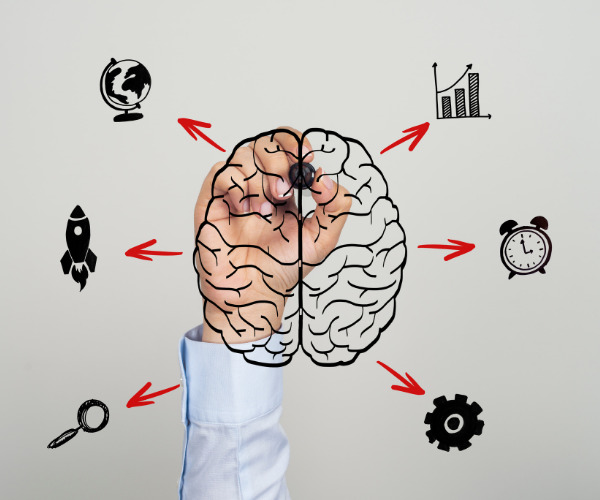
The way our brain works is that the prefrontal cortex, or the part of the brain used for thinking and regulating/controlling, interact with the deeper structures of our brain called limbic system, which have to do with emotions and motivation. Whenever our emotions become too intense particularly when we are faced with something threatening or dangerous, and we are in state of constant stress, these deeper limbic structures tend to take over, overpowering the thinking, regulating parts of the brain. We shift to a feeling mode, rather than a thinking mode. The fight-flight-freeze response kicks in.  

How can anxiety and chronic stress affect the way our executive functions work?

  • Impulse and emotional control – We tend to react based on our feelings at the moment. We make rash decisions, some of which are driven by our fears. We get more irritable or become easily annoyed. Our emotions get the best of us. 
  • Working memory –  When we are very anxious, it’s very hard to concentrate and remember what we need to keep in mind. we could be making mental notes of things we need to do, but we lose track of what they are.  So we might be making a trip to the grocery store only to forget an important item or two we were meaning to buy.  Or, we want to remember a lot of things at the same time, like the different numbers to ways to access an online store or hospital, how to maintain proper hygiene, or what COVID-19 symptoms to look out for. But, because we are being bombarded with so much information day after day, our brain reaches its limit and we up “mentally losing” or forgetting the information we want to remember.  
  • Saliency determination – In other words, figuring out and focusing on what we think is important. When we are very anxious and stressed, we might lose sight of the big picture. Instead, we get tunnel vision. We have an increased vigilance about what’s threatening. This means what we pay more attention to the negative, worrisome information for instance those related to the COVID-19 pandemic, because it feels more important at the moment. However, we end up disregarding our positive or hopeful sources of information we need to cope in a healthy way.  
  • Task initiation or completion – When we get overwhelmed by anxiety, we tend to put things off, especially those that demand so much thinking and analyzing. So for those of us working from home, we might experience difficulty starting on a work-related email or report.  Sometimes, we set aside the chores or tasks we need to attend to, and prefer to distract ourselves with other activities. 
  • Flexibility – This refers to our capacity to shift our perspective, the ease in which we transition from an old to a new routine, and our ability to creatively problem solve and adapt. The rapid yet dramatic changes brought by the COVID-19 pandemic challenges our flexibility. Some of us might feel very stressed and uncomfortable having to stay home if we are used to an active social life. We feel inconvenienced and irritated by the sudden change in our routine. Others might have to learn new ways of using or maximizing technology, especially those working from home and managing work online.  We have to find new ways to keep busy, earn a living and stay healthy. And sometimes, it’s easier said than done, especially when our brains are already wired towards certain habits that we’ve grown accustomed to. 

So, how do we keep our wits about us to manage our day to day life despite living at a time of chronic stress and uncertainty?

How do we use our executive functions to stay anchored in the midst of a great storm? 

  • Do something calming. Instead of telling yourself to “Calm down!”, do something calming instead.  It’s important that you first find ways to reasonably tame your anxiety so that you can effectively apply executive function skills. Think about things you typically do that calm you down. It works better if these consists of healthy or health-promoting activities. Write this down in a list and pick from any of these activities whenever you feel overwhelmed. Another think you can do is make a new routine. Routines are also calming. Create a sense of predictability within your home by using routines or schedules for working, eating, sleeping, and other pleasurable, leisure activities. If you feel overwhelmed, take a step back from whatever you’re doing. Try to decrease the stimulation by going to a quiet room and do some slow breathing. Gaze softly at the movement of the leaves outside your window or the clouds passing by. If you feel agitated, try doing some slow, mindful movements.  
  • Activate your inner observer. Each of us has the ability for metacognition, which  means our awareness and understanding of our thought processes. By activating your inner observer, you track what is going on in your mind and become aware when you are already experiencing lapses in your executive functions or when you’re already letting your emotions get the best of you. This momentary pause will give you the opportunity to make a wiser choice about how to best respond, rather than react, to the given situation. 
  • Use strategies. If you recognize that stress and anxiety make it very hard for you to stay productive, remember things, or manage your home effectively, it’s okay. You don’t need to pressure yourself with mental calisthenics to overcome these weaknesses. Instead, why not use some strategies to help your brain along? For example:
    • If you feel yourself becoming more forgetful when you’re anxious, write things down or record this in your cellphone.
    • Use a calendar app for reminders if this works for you.
    • Color code tasks you’ve written down in your to-do list so you can easily see which are more urgent than others. 

If you feel like you’re getting stuck or you’ve ran out of solutions, gather more information or tips to give you more ideas.  Those working from home might find it hard to start on job-related tasks. You could begin with easier ones to get those wheels turning before moving on to the harder tasks.  

  • Use a growth mindset  and practicing self-compassion – You don’t need to beat yourself up over executive function lapses or mistakes. Instead, use these as opportunities to learn, to figure out what works for you and what doesn’t. In a way, whenever we are taken out of comfortable habits or routines and thrust into unfamiliar territory, this is actually a learning opportunity for all of us. Any chance to test our limits and creativity, to firm up our frustration tolerance, and discover things about ourselves outside of our comfort zone, is a learning opportunity.  More importantly, we should give ourselves generous doses of self-compassion – or being warm and kind towards ourselves when we make mistakes, fall short, and encounter personal shortcomings.  After all, we are all imperfect in some way or the other!

If you skimmed through the post, here’s a summary

Anxiety and stress can affect how your executive functions work. It interferes with your capacity to stay focused, organized, remember things, make decisions, finish tasks, and be a flexible problem solver.  You become reactive rather than responsive. In order to gain a handle on anxiety and allow your executive functions to work well for you, you first need to do something calming, pause from time to time and check your thoughts and feelings, use strategies to help you get around those weaknesses. And more importantly, use these challenges as learning experiences and temper these with a good dose of warmth and kindness towards yourself.  

Take care everyone! 

*Executive Functioning (EF) coaching is one of the clinical services offered by We Thrive. Contact us today to learn more.

Categories
Blog Everyday Thriving News & Events Wellbeing Practices

The ABC’s of Resilience

Last month, Dr. Joanna Herrera delivered the commencement address for
Miriam College Middle School, where she shared key insights on building resilience with the graduating 7th graders.

Here is an excerpt of that address, highlighting the ABC’s of Resilience:

“You’ve probably heard the word resilience many times over the course of the pandemic. We are told that we need to develop our resilience. Resilience means the ability to bounce back from difficulties—like when you drop a ball on the ground, and it comes right back up instead of staying on the ground. How do we become resilient? The good news is that neuroscientists tell us that we can train our brains, our minds, to be resilient. If we practice resilience, it grows stronger and becomes part of who we are. So, let’s get to our ABC’s of resilience. 

The A of resilience is Awareness and Acceptance.

We talked about all those big feelings we’re having about the pandemic. We need to turn to our feelings with awareness and acceptance. Not pushing our feelings away, not blaming ourselves for having feelings, not being harsh to ourselves when we’re not feeling ok.

Resilience is not about feeling ok all the time. It’s more about being aware of our internal weather patterns—our moods and emotions and being compassionate to ourselves.

We can say to ourselves, I hear you my sadness, I hear you my boredom, I hear you my fear…let me take care of you. We might want to give our feelings some soothing breaths, in and out. Our breath is a powerful tool for calming feelings. When our feelings are calm, we can think more clearly and make better choices. And perhaps we can reach out to our parents, family members, friends and tell them about how we feel so we are not alone with our emotions.  

The B of resilience is Building Competency.

Awareness allows us to see where we are. Building competency means strengthening our muscles—that is mentally and psychologically, to adopt a mindset and perspective that help us grow. I have a favorite quote from Jon Kabat-Zinn, a famous Mindfulness teacher. He said,

We can’t stop the waves, but we can learn how to surf.

Many times, we are not in control of situations that come up in our lives, big situations just like this pandemic, or everyday things, like getting through schoolwork. But we have a choice to get on our surfboard and not drown. Adopting a growth mindset is an important competency for resilience. Growth mindset means, changing how we talk to ourselves when we make mistakes or face challenges. Instead of saying to ourselves, “I’m not as good as others”, “I won’t try because I might fail”, “I can’t do this, it’s too hard” we can say, “I can learn and practice,” “I will succeed with effort and finding the right strategy,” “If I fail, I can try again until I make it.” People who learn to talk to themselves in this way, become more successful in accomplishing their goals in life. Start practicing now. When negativity arises, open the door of possibility. Your mind has the power to change reality when you choose the right angle to see things from—that is the angle of growth and possibility. Lastly,

The C of resilience stands for Connection.

Strong connections with our friends, our families, our teachers, and even our human family around the world is so essential to our wellbeing. We as human beings are wired to connect, to empathize, to care. While this is a time for physical distancing, it is not a time for social distancing. On the other hand, it is a time for presence and compassion, making each other feel we are here, and we are together. Reach out for support when you’re feeling lonely. Make it a habit to have meaningful connections everyday with your family by putting your gadgets aside during mealtimes and be 100% present. Reach out to your friends who you think might be having a hard time, listen and simply be there.

When we feel connected with one another, we feel safe, calm, and collected. 

We can also practice connecting with our goals and our sense of purpose and take small actions to contribute to the greater good—it can be cheering up a friend, helping with chores at home, baking treats for your grandparents, offering a prayer for those who are sick.

Your small actions can have big impact. Do not underestimate your power to make this world a better place.  

As Dr. Jabby emphasized in her commencement address, resilience is a skill that can be learned and practiced. Want to learn more about resilience and other wellbeing practices? Reach out so we can help get you started.