Categories
Blog Everyday Thriving General

IG: Instant Gratification and Social Media

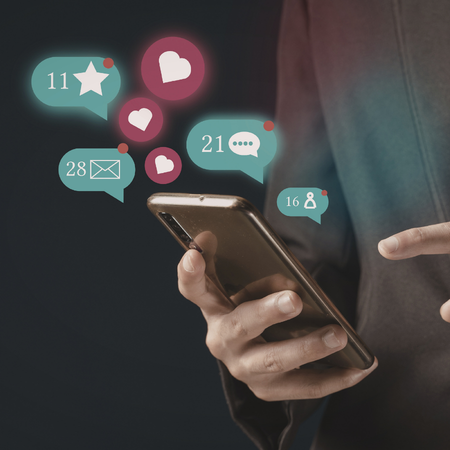
Ding! Someone liked your post. Ding! You have a new message. These familiar notifications

from the different social media platforms may often spark a small rush of excitement. What
people might not know is that these alerts are doing more than just updating us—they trigger the release of dopamine in our brains, which is the reward system and creating a pleasurable sensation (UC Davis Health, 2024). Over time, this cycle can condition us to crave such interactions, reinforcing us to check for likes, comments, and shares. When these signals of approval are absent, however, the opposite effect may occur. Instead of pleasure, people may experience feelings of rejection, inadequacy, or self-doubt.

To better understand these dynamics, it is important to first define social media, then examine how it intersects with instant and delayed gratification. By doing so, we can better understand
the potential impacts social media has on mental health.

Social media refers to a collection of online platforms that allow individuals to interact, connect, and share content within digital networks (Bashir & Bhat, 2017). Examples include Facebook,
Instagram, TikTok, YouTube, and X (formerly Twitter).

Researchers define social media as a system that enables people to create, exchange, and engage with diverse forms of content such as messages, photos, videos, and articles (Ahmed, Ahmad, Ahmad, & Zakaria, 2019). It allows for individuals to maintain relationships, build communities, and share ideas regardless of distance.

However, while social media brings undeniable benefits in terms of connectivity and information-sharing, it also affects one’s mental health. The contents of these platforms are curated in such a way that triggers dopamine to be released and leads to instant gratification.

The effects of social media are wide, influencing how people perceive themselves, interact with others, and make daily decisions. Many studies have highlighted both positive and negative outcomes. On one hand, social media can support mental health by providing access to social support networks, educational resources, and opportunities for creative self-expression. On the other hand, its design and constant availability may foster dependency and compulsive use.

A central reason why social media feels so compelling is its connection to dopamine. Dopamine is a neurotransmitter that plays a key role in motivation, learning, and reward-seeking behavior. Each “like,” comment, or share triggers a small dopamine release, producing a sense of satisfaction called instant gratification (Flex, 2023). Over time, this repeated reinforcement conditions users to continue engaging, hoping for the next rewarding interaction.

The danger is that this process can lead to an endless cycle of checking, posting, and seeking validation (Flex, 2023). Users may start to measure their self-worth by online approval, making them more vulnerable to negative emotions when engagement is low.

Going deeper, what is Instant gratification? This refers to the tendency to prefer immediate rewards over larger but delayed benefits (Goldfield, 2025). In the context of social media, this increases the temptation of instant gratification by offering continuous and easy access to small rewards. This desire for instant gratification affects a person’s decision-making process, creating the choice between immediate pleasures and future benefits (Yin & Shen, 2024). Given the age of social media and technology, most individuals tend to go for fast paced rewards. What makes social media more concerning is that it presents an endless supply of these rewards, making it difficult to exercise restraint.

When people consistently prioritize immediate rewards, several consequences can arise. First, people tend to become more impulsive (Flex, 2023). Rather than taking time to weigh long-term benefits, individuals may opt for “quick fixes.” A person might find it increasingly difficult to resist urges, leading to habits like compulsive scrolling or checking phones at inappropriate times. In some cases, this can escalate into problematic use, where social media begins to interfere with sleep, productivity, or face-to-face relationships.

Second are the emotional effects where individuals who rely heavily on social media for validation may become more vulnerable to mood swings, irritability, or even anger when the desired engagement fails to appear (Flex, 2023). Over time, this lack of emotional regulation can contribute to stress and dissatisfaction.

Social media is uniquely positioned to fuel instant gratification because of its design. Platforms employ algorithms that deliver personalized and fast-paced content, maximizing user engagement. Some of the main features that encourage this gratification include:

  • Likes, Shares, and Comments: These act as immediate markers of approval, giving users a sense of recognition and belonging.
  • Messages and Notifications: Alerts about direct messages or mentions increase feelings of connectedness, providing social reassurance.
  • Short-form Content (e.g., TikTok, Instagram Reels, YouTube Shorts): Quick, entertaining videos deliver immediate stimulation and are often consumed in rapid succession.

While these features are not harmful in isolation, prolonged use may contribute to a range of negative effects, such as (Naslund, et. al., 2020).:

  • Fear of Missing Out (FOMO)
  • Social comparison and envy
  • Burnout and fatigue from constant engagement
  • Sleep disruption due to late-night scrolling
  • Anxiety and depression linked to validation-seeking
  • Exposure to cyberbullying and online harassment
  • Strained offline relationships
  • Dissatisfaction with body image

These outcomes underscore the importance of learning to balance the use of social media.

While social media is not inherently bad, its impact depends on how it is used. Like many tools, it can be beneficial when approached with moderation and harmful when consumed excessively. Some ways to counteract the pull of instant gratification is by intentionally cultivating delayed gratification.

Here are some ways which one can promote delayed gratification in terms of social media use:

  1. Slowing Down and Taking Breaks
    Pausing from social media creates mental space to reflect on habits and choices. Breaks can weaken the automatic cycle of checking for notifications and allow individuals to re-engage with
    activities that provide long-term satisfaction.
  2. Setting Social Media Boundaries
    Boundaries can include time limits, app restrictions, or “tech free” hours during the day. By reducing availability, users can protect their focus and emotional well-being.
  3. Limiting Short-form Content
    Choosing to consume longer forms of media—such as articles, documentaries, or podcasts—can help retrain attention spans and reduce reliance on constant novelty.
  4. Practicing Mindfulness
    Mindfulness involves cultivating present-moment awareness without judgment. When applied to social media, mindfulness helps individuals notice urges, reflect on whether to act on them, and engage more intentionally. Over time, this increases self-control and reduces dependency on dopamine-driven reinforcement (Flex, 2023).

Social media has transformed human interaction, offering opportunities for connection, entertainment, and knowledge sharing. At the same time, it poses risks of dependency on instant gratification. The dopamine-driven cycle of likes, comments, and short-form content can fuel impulsivity, emotional instability, and even mental health struggles.

Yet, social media itself is not the enemy—it is our relationship with it that determines its impact. By slowing down, setting boundaries, choosing more mindful forms of engagement, and practicing delayed gratification, individuals can enjoy the benefits of social media while safeguarding their wellbeing. In doing so, we shift from being passive consumers of digital validation to intentional consumers.

References:

  • Bashir, H., & Bhat, S. A. (2017). Effects of social media on mental health: A review. International Journal of Indian Psychology, 4(3), 125-131.
  • Flex, A. (2023, July 5). The rise of instant gratification culture: How smartphones and social media contribute. Medium. https://medium.com/@neonmaxima/the-rise-of-instant-gratification-culture-how-smartphones-and-social-media-contribute-33bfa3a43ab4
  • Goldfield, G. (2025, March 4). I want it now! The psychology of instant gratification. Psychology Today. https://www.psychologytoday.com/us/blog/no-more-fomo/202503/i-want-it-now-the-psychology-of-instant-gratification
  • Naslund, J. A., Bondre, A., Torous, J., & Aschbrenner, K. A. (2020). Social media and mental health: benefits, risks, and opportunities for research and practice. Journal of technology in behavioral science, 5(3), 245-257.
  • Sadagheyani, H. E., & Tatari, F. (2021). Investigating the role of social media on mental health. UC Davis Health. (2024, May 10). Social media’s impact on our mental health and tips to use it safely. Cultivating Health. https://health.ucdavis.edu/blog/cultivating-health/social-medias-impact-our-mental-health-and-tips-to-use-it-safely/2024/05
  • Yin, B., & Shen, Y. (2024). Development and validation of the compensatory belief scale for the internet instant gratification behavior. Heliyon, 10(1).

Categories
Blog Everyday Thriving General Restorative Practices Wellbeing Practices

Sweat the Stress Out: The Science of Beating Burnout by Working Out 

Have you ever caught yourself spacing out while finishing a task at work, juggling multiple things at once, or even just feeling so monotonously stuck inside a routine? More often than not, we’ve all noticed ourselves feeling drained to the core while carelessly attending to our demands. Manifested as symptoms of exhaustion (i.e. physical and psychological), dissociation, as well as a lack of motivation, burnout commonly occurs among individuals with stressful roles and this work-related fatigue encompasses one’s well-being as it affects productivity, commitment, and morale (Celestin & Vanitha, 2017; Naczenski et al., 2017). The consequences of burnout might tempt us to engage in certain activities that might not be helpful to us (e.g. drinking, smoking, etc.) (Muteshi & Kamya, 2024). While there are different ways for us to poorly cope with this, there are alternative ways for us to positively fight it as well and such is through the productive movement of our bodies. Exercise, whether cardio, resistance training, or other forms, is actually a strong weapon against burnout and here are its benefits (Basso & Suzuki, 2016; Bretland & Thorsteinsson, 2015; Gerber et al., 2020; Naczenski et al., 2017): 

  • Clearer thinking 
  • More positive mood 
  • Lower stress levels 
  • Improved well-being 
  • Better sense of accomplishment 
  • Reduced emotional exhaustion 
  • Decreased perceived stress 

Exercise was also found to be a significantly helpful component in therapy-oriented approaches in order to recover from burnout (Ochentel et al., 2018). Furthermore, studies show that engaging in movements that are involved with rhythm, breath work, and grounding strategies can help calm our nervous systems down and make us more resilient in the face of stress (Porges & Dana, 2018). That said, we can view exercise as an accessible way to tolerate or cope with distress and its related feelings or phenomena such as burnout (Linehan, 2015). 

We don’t have to go to such physically strenuous lengths for us to recover from burnout. Studies have shown that even just a bit of exercise can help yield the benefits that were mentioned earlier (Basso & Suzuki, 2016; Star, 2023). Here are some types of exercises you can try out (Basso & Suzuki, 2016; Bretland & Thorsteinsson, 2015; Ochentel et al., 2018; Star, 2023): 

  • Cardio and aerobic – Running, cycling, brisk walking, swimming, 
  • Resistance training – Lifting weights, making use of bodyweight 
  • Social activities – Dancing, yoga, tai-chi
  • Sports – Individual or team sports 

Additionally, even doing these for just a short period of time can already release a significant amount of endorphins in order to improve our moods right away just on its own (Basso & Suzuki, 2016). When deciding on which activity/ies to do, it helps that you actually want to do or enjoy that type of exercise as this builds consistency in the long run (Star, 2023). So whether it’s dancing, swimming, strengthening your muscles through weights, or building stamina through cardio – know that you’ll more likely get further if you’re happy with what you’re doing. The world is your oyster! You’re not just limited to one type of exercise. For instance, doing cardio together with lifting weights actually maximizes the likelihood of you yielding positive results not just psychologically, but also physically (Bretland & Thorsteinsson, 2015). Thus, know that the type, intensity, and duration of exercise really depends on what works best for you. Lastly, it’s important that you tailor your workout to the status of your health, lifestyle practices, and personal preferences in order to build an exercise routine that is both safe and successful (Gerber et al., 2020). 

To beat burnout, of course, it is vital that we commit ourselves into doing so – even with what little motivation we have left. You might feel a little less confident and unmotivated at first before building these through time, or vise-versa, you may feel ready to start a new routine but might lose interest after a while. That’s okay and completely normal! Here are some tips that might help as you go through your journey (Bretland & Thorsteinsson, 2015; Celestin & Vanitha, 2017; Ochentel, Humphrey, & Pfeifer, 2018; Porges & Dana, 2018): 

  • Move forth with compassion: Allow yourself some kindness and patience as you start your fitness journey and know that progress is not linear. 
  • Baby steps: Try to build consistency until your routine becomes a habit – slowly yet surely, and the smallest effort on your most tiring days still does count. 
  • A healthy life is a happy life: Don’t forget that exercise must be accompanied by other healthy habits (e.g. proper rest, healthy diet, avoid unhealthy substances, etc.).
  • Switch it up when you feel stuck: Try new exercise routines or find a buddy or group to make work-outs seem more enjoyable and uplifting. 

Working out is merely a piece of the puzzle in the grander scheme of tools to help us take care of ourselves mentally and physically, yet has immensely impactful effects when done properly. Not only is it good for our body, it also helps us balance how we respond to stress by bringing us back down to what feels safe (Porges & Dana, 2018). Finally, seek the professional help you need should things get really tough (e.g. training coach, therapist, etc.). Remember, baby steps and your body will thank you tomorrow in ways that might surprise you.

References:

  • Basso, J. C., & Suzuki, W. A. (2016). The effects of acute exercise on mood, cognition, neurophysiology, and neurochemical pathways: a review. Brain Plasticity, 2(2), 127-152.
  • Bretland, R. J., & Thorsteinsson, E. B. (2015). Reducing workplace burnout: the relative benefits of cardiovascular and resistance exercise. PeerJ, 3, e891. 
  • Celestin, P., & Vanitha, N. (2017). From burnout to balance: Managing mental health in high-stress projects. 
  • Gerber, M., Schilling, R., Colledge, F., Ludyga, S., Pühse, U., & Brand, S. (2020). More than a simple pastime? The potential of physical activity to moderate the relationship between occupational stress and burnout symptoms. International Journal of Stress Management, 27(1), 53. 
  • Linehan, M. M. (2015). DBT skills training handouts and worksheets (2nd ed.). Guilford Press. Muteshi, C., Ochola, E., & Kamya, D. (2024). Burnout among medical residents, coping mechanisms and the perceived impact on patient care in a low/middle income country. BMC Medical Education, 24(1), 828. 
  • Naczenski, L. M., de Vries, J. D., van Hooff, M. L., & Kompier, M. A. (2017). Systematic review of the association between physical activity and burnout. Journal of occupational health, 59(6), 477-494. 
  • Ochentel, O., Humphrey, C., & Pfeifer, K. (2018). Efficacy of exercise therapy in persons with burnout. A systematic review and meta-analysis. Journal of sports science & medicine, 17(3), 475. 
  • Porges, S. W., & Dana, D. (2018). Clinical applications of the Polyvagal Theory: The emergence of polyvagal-informed therapies. Norton. Star, K. (2023). Mental health benefits of exercise: For your body and brain. Verywell Mind. https://www.verywellmind.com/mental-health-benefits-of-exercise-2584094
Categories
Blog Everyday Thriving General Thrive at Work Thrive in School

ADHD Diagnosis: Complexities and Caveats

The Philippines has made significant strides in mental health awareness, thanks to professionals, advocates, and service users’ efforts. Initiatives such as the Philippine Mental Health Act (R.A. 11036) and the recognition of the rights of psychosocial disabilities under the Magna Carta for Disabled Persons (R.A. 7277) have played pivotal roles in this progress. Advocacy groups are also pushing for legislation like the Neurodivergent People’s Rights Act (H.B. 9787).

Despite these advancements, stigma and misunderstanding surround neurodevelopmental disorders, particularly Attention Deficit Hyperactivity Disorder (ADHD). This is a developmental disorder characterized by patterns of hyperactivity, inattention, or a combination of the two. A diagnosis is given based on the severity of symptoms, level of impairment, and the presence of symptoms since childhood. Globally, ADHD affects 5-7.2% of youth and 2.5-6.7% of adults ,,; but Philippine figures are unfortunately scarce and outdated.

Consider a young boy in his Grade 1 classroom, labeled as “makulit,” “pasaway,” and even “bad,” while he struggles with symptoms of ADHD that go unrecognized. Similarly, imagine a woman in a bustling high-rise building, where her difficulties staying organized lead to exclusion from important email correspondences and social gatherings, all because her colleagues are unaware of her ADHD diagnosis.

Recognizing ADHD as a genuine challenge and not a character flaw, is vital for supporting individuals and dispelling misconceptions.This condition, when properly diagnosed, can be life-saving, paving the way for individuals to alleviate suffering and reclaim their power. But however well-intentioned, there is still a risk of overdiagnosis- an issue that is particularly prevalent in the realm of ADHD, but also within the realm of mental health diagnoses at large. Overdiagnosis can occur due to various factors, ranging from clinician practices to caregiver influences, but this often looks like overprescription of medications and unnecessary interventions. In the case of ADHD, changes in criteria in the

Diagnostic and Statistical Manual of Mental Disorders between its fourth and fifth editions have contributed to this concern- it added examples of symptoms seen in adolescents and adults, lessened impairment criteria, and revised the age of onset.

We must also remember that for children, a certain level of kulit is normal and developmentally appropriate. It is a quintessential part of childhood, after all — to dash around, create chaos, and indulge in one’s imagination. However, what distinguishes ADHD diagnosis is the severity and persistence of symptoms over time to the point that there is impairment.

Context also may play a role in facilitating overdiagnoses and misdiagnoses. While legislative progress and heightened awareness have improved access to care, our “digital by default” age has introduced new challenges, further complicating the diagnostic process for mental health disorders. For example, during the pandemic, the proliferation of misleading TikTok videos about ADHD posed a significant risk, as many individuals were facing attention challenges. A study revealed that over half of these videos were misleading, with non-healthcare professionals being the primary uploaders, potentially leading to widespread misinformation and self-diagnosis among their viewers.

On the other hand, many individuals may go undiagnosed until much later, their struggles well-masked by societal expectations and coping mechanisms. There exist gendered differences in the diagnosis of ADHD: boys are significantly more diagnosed with ADHD compared to girls due to differences in presentation. Girls with ADHD often exhibit the inattentive type, which may not manifest as disruptive behavior and consequently may be overlooked for treatment unless their symptoms significantly impact their daily functioning.

And with any diagnosis, whether physical or not, early intervention is crucial. Effective treatment during childhood can significantly improve symptoms and overall functioning, leading to better outcomes. Unfortunately, if left untreated until adulthood, ADHD can result in chaotic lifestyles, other co-occurring mental disorders, and challenges in various aspects of life.

The journey towards an ADHD diagnosis can be unexpectedly complex. For individuals who resonate with ADHD symptoms, every step of the way demands cautious decision-making. It is crucial to be discerning with the information you consume and the healthcare providers that you trust. Ensure that they are equally diligent.

Self-reflection is also essential. Clarify your “why” behind seeking a diagnosis—It could be that receiving ADHD treatment might help you lead a much more fulfilling life. It could also be that you want relief from years of overcompensation. Whatever your “why” is, seeking a comprehensive assessment is essential in this process to tailor-fit treatment to your unique brain. It is not a one-size-fits-all diagnosis, however general the diagnostic manual may make it appear to be; a detailed picture of how your mind works, pinpointing your strengths and challenges, will help specify what you need.

Seeking consultations from various professionals, such as clinical psychologists and psychiatrists, can offer valuable insights and interventions for managing ADHD. Therapy is a crucial component of tailored interventions—it provides individuals with a safe space to learn more about themselves, as well as equips them with essential skills and strategies to cope with their symptoms. Additionally, executive function coaching can further empower individuals with ADHD to navigate daily challenges effectively and achieve their goals. Executive function coaching focuses on enhancing skills like organization, time management, and task prioritization- these are skills that are often affected by ADHD symptoms. By addressing these areas, your quality of life may be significantly enhanced.

Despite the leaps and bounds in mental health perceptions, access, and service delivery, there is still much work to be done. Whether for ourselves or others, there is no time like the present to advocate for better education on mental health concerns like ADHD. Indeed, it is an ongoing journey to challenge misconceptions, develop discernment, and embrace the complexities of these issues. However, it is essential to see the merit in all this effort, to recognize that finally receiving the proper help can save lives. By advocating for improved access to accurate diagnosis and comprehensive treatment, we can empower individuals with ADHD to finally thrive in their communities.

For Executive Functioning (EF) coaching and other clinical services, contact us at clinic@wethriveinc.com.

Sources:

https://lawphil.net/statutes/repacts/ra2018/ra_11036_2018.html
http://hrlibrary.umn.edu/research/Philippines/RA%207277%20-%20Magna%20Carta%20of%20Disabled%20Persons.pdf
https://hrep-website.s3.ap-southeast-1.amazonaws.com/legisdocs/basic_19/HB09787.pdf
Posner J, Polanczyk GV, Sonuga-Barke E. Attention-deficit hyperactivity disorder. Lancet. 2020;395(10222):450–462. doi: 10.1016/S0140-6736(19)33004-1.
 Song P, Zha M, Yang Q, Zhang Y, Li X, Rudan I. The prevalence of adult attention-deficit hyperactivity disorder: A global systematic review and meta-analysis. Journal of Global Health. 2021;11:04009. doi: 10.7189/jogh.11.04009.
Thomas R, Sanders S, Doust J, Beller E, Glasziou P. Prevalence of attention-deficit/hyperactivity disorder: a systematic review and metaanalysis. Pediatrics. 2015;135(4):e994–e1001. doi: 10.1542/peds.2014-3482.
 Merten, E. C., Cwik, J. C., Margraf, J., & Schneider, S. (2017). Overdiagnosis of mental disorders in children and adolescents (in developed countries). Child and adolescent psychiatry and mental health, 11, 1-11.
Substance Abuse and Mental Health Services Administration. DSM-5 Changes: Implications for Child Serious Emotional Disturbance [Internet]. Rockville (MD): Substance Abuse and Mental Health Services Administration (US); 2016 Jun. Table 7, DSM-IV to DSM-5 Attention-Deficit/Hyperactivity Disorder Comparison. Available from: https://www.ncbi.nlm.nih.gov/books/NBK519712/table/ch3.t3/ 
American Psychiatric Association. (2022). Neurodevelopmental disorders. In Diagnostic and statistical manual of mental disorders (5th ed., text rev.).
Yeung, A., Ng, E., & Abi-Jaoude, E. (2022). TikTok and attention-deficit/hyperactivity disorder: a cross-sectional study of social media content quality. The Canadian Journal of Psychiatry, 67(12), 899-906.
Bruchmüller, K., Margraf, J., & Schneider, S. (2012). Is ADHD diagnosed in accord with diagnostic criteria? Overdiagnosis and influence of client gender on diagnosis. Journal of Consulting and Clinical Psychology, 80(1), 128–138. https://doi.org/10.1037/a0026582 
 Ginsberg, Y., Quintero, J., Anand, E., Casillas, M., & Upadhyaya, H. P. (2014). Underdiagnosis of attention-deficit/hyperactivity disorder in adult patients: a review of the literature. The primary care companion for CNS disorders, 16(3), 23591.