
Categories
Blog Everyday Thriving Wellbeing Practices

Eating to enrich life: understanding and responding to emotional eating

In We Thrive, we work with people becoming their best selves by working with different aspects of who they are. There are the big-picture things: our sense of purpose, for example, which in Dr. Gabrielle Pfund’s research is composed of things such as how our future plans match our interests, how engaging we feel life is as a whole, and so on (Psychology Today, 2023). But there are also the big things when you zoom into that picture: the finer details of life, emerging from moment to moment, which compose the movements towards what we want life to be. These include the patterns of our thoughts, emotions, and behaviors, but also the things which give us the energy to, well, move. Specifically, we get this energy through food, “a fundamental human need that influences both physiological and emotional states” (Hamburg, Finkenauer, & Schuengel, 2014). Nutrition looks different from person to person, but generally speaking, the task of ascertaining life’s movement can be more difficult than it has to be when our bodies aren’t getting the food and drink it needs (MSD Manual, 2023). And as we’ve probably all experienced, those aforementioned patterns of thought, emotion, and behavior can lead us into patterns of eating that can deprive rather than enrich us. In this article, we will talk a bit about what such a pattern of eating is; how we might end up moving in this direction; and what we can do to direct, rather than be directed by, our eating habits.

What is “emotional eating”?

Eating is, as nutritionist Amelia R. Sherry puts it, “an intrinsically emotional experience” (Psychology Today, 2022). Hamburg, Finkenauer, & Schuengel expressed this intuition in concrete terms: “eating behavior goes beyond nutrition and alleviating hunger; family, friends, and cultural heritage shape individual food preferences” (Hamburg, Finkenauer, & Schuengel, 2014). All of life, both the pleasant and the unpleasant, is threaded with the experience of eating. So the term “emotional eating”, while widely used, does not necessarily give us the clearest idea, and might also give the wrong impression that eating in response to our feelings is necessarily a bad thing. Choosing to eat can be a perfectly reasonable way of grounding us, whether by supplementing our present positive emotional states, reliving a positive memory associated with certain foods, or dealing with the occasional difficulty (Rachael Hartley Nutrition, 2016).

The difference between “good” or “bad” emotional eating is in the word “choice”. Whether responding to our emotions by eating deprives or nourishes us depends on the intentions we have (or haven’t) set when we eat. Besides determining how nutrient-dense our diets are, how do we clarify our intentions with eating? Here are some helpful guide questions:

  • How aware are we of the reasons why we choose a particular food at a particular time?
  • Are we eating in a way that aligns with a particular goal we have, such as a health goal?
  • When faced with stressful situations, have we considered whether there may be better ways of coping or resolving these situations other than with food? 
  • To what extent do we actually savor or enjoy the food we are eating, when we do choose to eat at that moment?
  • As a whole, does our experience of eating delight us, or leave us with a lingering sense that something is not quite right?

What moves us towards “eating emotionally”?

“Emotional eating” is also known by at least two other names: “stress eating”, and “comfort eating”. These terms might be preferable, because it gives a better sense of the context in which these patterns of eating emerge. At the minimum, when people use the term “emotional eating”, they are generally referring to food intake as a means of grounding us when we feel overwhelmed, disrupted, or out-of-balance — in other words, eating as self-soothing (Psychology Today, 2023). If, while going through the guide questions, you realize that the intent of your emotional eating appears to be mostly about self-soothing, then you may be emotional eating in a way that might not be serving your best interests long-term. But this happens to almost everyone, and it is not necessarily about willpower. The research of Dr. Tatjana Van Strien found at least three determinants for emotional eating (van Strien, 2018):

  • Poor interoceptive awareness. This means a person has difficulty distinguishing feelings of hunger and satiety, which can lead to difficulties with determining whether one has eaten too little or too much. For example, this can be due to dietary factors such as regularly eating foods that are high in sugar, which can exacerbate hunger because of the rapid increases in blood glucose (Penaforte et al., 2013).
  • Poor emotion regulation strategies. This means, for example, that a person becomes over-reliant on a particular coping mechanism (in this case, food) to deal with stressful situations. It can also mean that emotional eating becomes the result of an inappropriate coping mechanism, such as when avoidance of stressful situations ultimately leads to more of the stress occurring later on, making one more likely to rely on emotional eating.
  • Disruption of the hypothalamic-pituitary-adrenal (HPA) axis. Among other things, the HPA axis is responsible for regulating appetite. Under normal circumstances, the stress response would be a loss of appetite, but due to various factors (e.g. incredibly stressful experiences, childhood trauma, abuse, or other underlying health conditions affecting the HPA axis), this is reversed and the stress response instead leads to increased appetite.

Keeping these three in mind, we can reflect on a few more questions:

  • What might be causing your urge to eat at a particular time? Is it because of what or how you may be used to eating? 
  • What difficult or stressful situations are you currently experiencing that may be better served by something other than food?
  • Aside from providing nutrition or sustenance, in what ways has food been present in your life growing up? Did you have an abundance of food or a scarcity of it? 
  • When you think of food, what memories are usually associated with it? Were there certain negative and possibly intense experiences in your life which food used to help you get through?

How do we direct our eating?

Eating plays a vital role, not just in the maintenance of regular bodily functioning, but in our journey towards living a purpose-driven life. But eating can either deprive us or enrich us with the energies, both physiological and psychological, necessary to live out such a life. So how do we eat in a way that is more enriching? Depending on your answers to the questions mentioned earlier, co-authors Dr. Gia Marson and Dr. Danielle Keenan-Miller offers some ideas for how best you can set the direction for the way food moves your life (Psychology Today, 2023):

  • Acceptance. This means becoming more accepting of your body and how it reacts to food. This means less judgment, which often leads to guilt and shame, and more kindness, which can lead you to a better sense of how the food actually feels for you.
  • Awareness. This means tuning into the emotional nature of eating and noticing what kinds of emotions emerge alongside the desire to eat.
  • Avoid reacting impulsively. This means when difficult and negative emotions emerge, as they do in emotional eating, we take a pause rather than immediately reaching out to food as we have habituated ourselves. This will give you some room to consider how else you might be able to respond to these emotions.

For mental health support services, email us at resilientteams@wethrivewellbeing.com or sign-up for sessions with our mental health clinicians.

References:

  1. https://www.psychologytoday.com/us/blog/fulfillment-at-any-age/202305/what-gives-your-life-a-sense-of-purpose 
  2. https://www.msdmanuals.com/home/disorders-of-nutrition/overview-of-nutrition/overview-of-nutrition 
  3. https://www.ncbi.nlm.nih.gov/pmc/articles/PMC3907771/ 
  4. https://www.psychologytoday.com/intl/blog/positive-food-parenting/202212/when-emotional-eating-can-be-normal-and-even-healthy 
  5. https://www.rachaelhartleynutrition.com/blog/2016/11/emotional-eating-is-okay 
  6. https://www.psychologytoday.com/us/blog/the-binge-eating-prevention-plan/202301/emotional-eating-is-all-about-emotions-or-is-it 
  7. https://www.ncbi.nlm.nih.gov/pmc/articles/PMC5918520/ 

https://www.ncbi.nlm.nih.gov/pmc/articles/PMC3627933/
Categories
Blog Everyday Thriving Thrive at Work

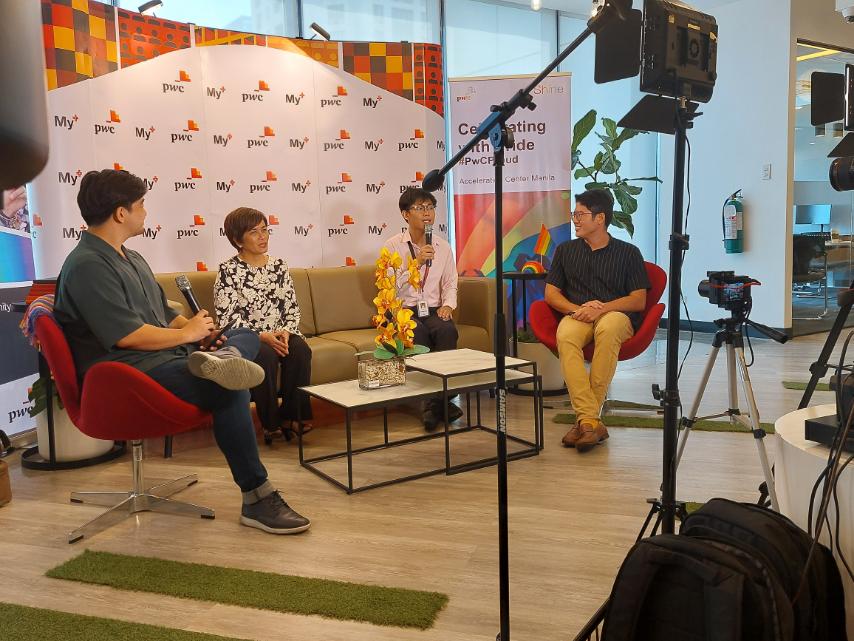
Celebrating Pride Month with PwC

It has been such a delight to take part in the #PwCACManila‘s Pride Month celebration!

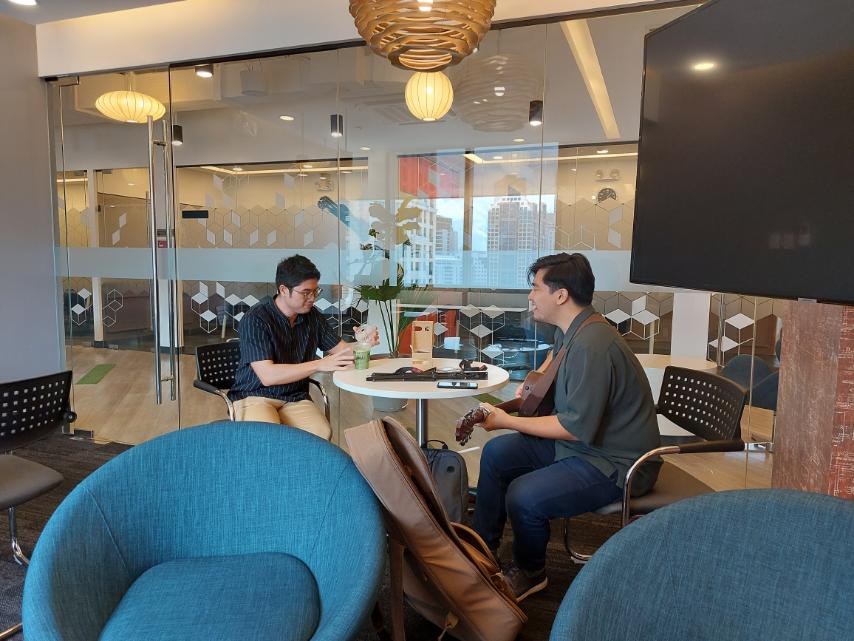
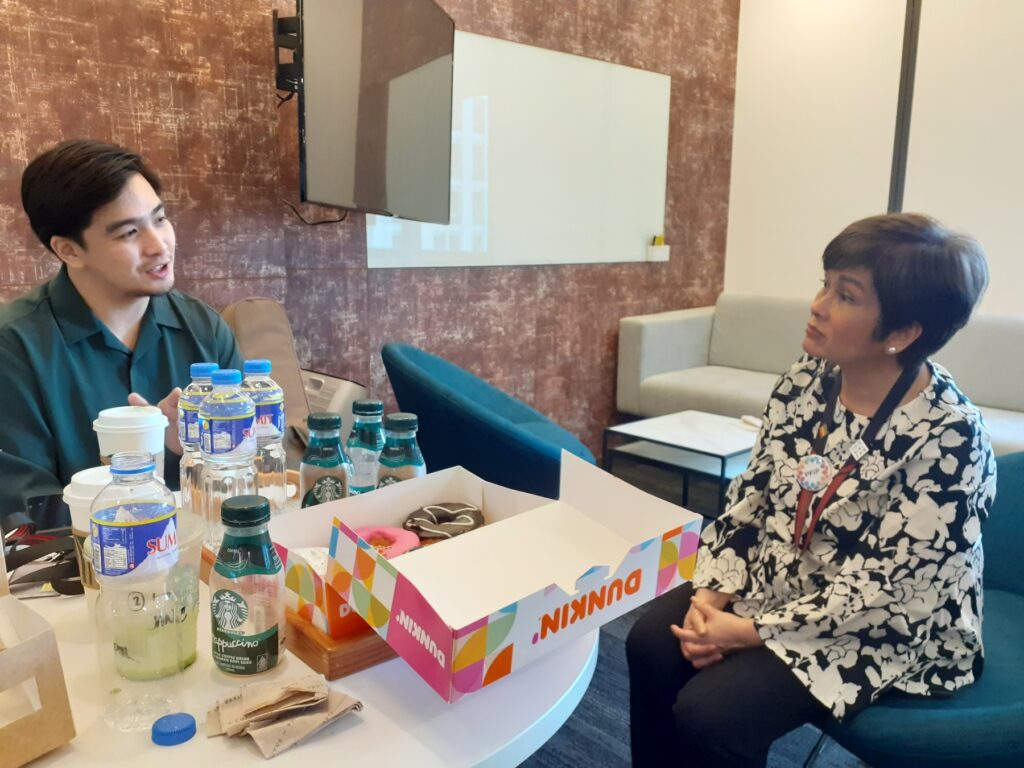
We Thrive consultants Jan Castañeda and Mike Shimamoto sat down with KC Cadiz (PwC Talent Development for Emotional Intelligence Leader) and Ronnel Franco (Shine member) for a wellness session entitled Cultivating a Culture of Care for LGBTQ+ People in our Families.

It was a meaningful session with some psychoeducation, sharing of insights and communal singing.

Take a look at some of the event photos below:

Photo credits: PwC Acceleration Center Manila and We Thrive Team
Categories
Blog

Coming out as a starting point for authenticity

In We Thrive, cultivating “authenticity” is a core component of our work. That said, there is vibrant debate across various disciplines over what exactly it is: for example, is authenticity something that is always there and waiting to be “discovered”, something that “emerges” through our various experiences, or some magnificent combination of both? (Psychology Today, 2023) But as a working definition, we can think of authenticity as a process of making the “whats” and “hows” of life work in tandem with the “whys” of life. Adding some specificity, it is the extent to which we are “consistent” (i.e. ensuring “external characteristics” and “internal values” match); are in “conformity” (i.e. ensuring life’s broad strokes meet whatever standards we set for ourselves); are able to “connect” (i.e. how our relationships to a place, a community, or historical milieu align with our sense of self); and have “continuity” (i.e. how much of our sense of self changes or is retained over time) (Dammann, Friederichs, Lebedinski, and Liesenfeld, 2020). Put more succinctly, authenticity “requires us to embrace the reality of our freedom and be responsible for how we choose to live” (Sutton, 2021). To be able to live a life that is consistent, in conformity, is connected, and has continuity, we must exercise an awareness of life’s movements and, to the extent possible, ensure that these movements work in harmony.

Whenever Pride Month rolls in every June, the idea of “authenticity” inevitably comes up. For LGBTQ people, one marker often used to evaluate whether we are living authentically is disclosure of one’s sexual orientation and gender identity (SOGI) — that is, “coming out”. Many LGBTQ people see coming out as a cornerstone to the lifelong task of embracing this responsibility over life and maintaining the harmony of life’s hows and whys. And wonderful as it might be, and as important as it is in our collective imaginations, it needs to be said that it is not the end-all and be-all of authenticity as an LGBTQ person. You do not have to be “out” in order to be true to yourself. So the intention here is not to give undue privilege to coming out, but to ask what coming out might contribute to our own journeys of living authentically. 

Ultimately, it is on each of us to pay attention to what life is specifically asking from us — to “listen to those messages”, as the therapist Andrea Matthews explains, “listening long enough and deeply enough to really suss out the most essential parts and then begin to act as needed” (Matthews, 2023). Whether coming out is what life demands of us in the present is on us to ascertain, and with much necessary struggle. But thankfully, that difficulty is at least a good sign: as the professor of psychology Dr. Stephen Joseph puts it: “the most authentic people, because they know themselves so well, recognize their struggles in living authentically” (Joseph, 2020).

Even if life does ask this from us, coming out can be deeply frustrating. We may have to come out in bits and pieces: to one friend but not another, with a sibling but not necessarily with a parent, and so on. In these scenarios, LGBTQ people can be caught up in an exhausting balancing act of shifting between one’s “personas” from one context to the next.

We may feel unable to come out at all because of what may be real risks to our wellbeing and safety, whether that be threats of violence or serious disruptions of important relationships such as those in our families or religious communities. We may even struggle with “coming in” — that is, recognizing and accepting oneself as LGBTQ — whether because of internalized negative ideas about being LGBTQ (e.g. “LGBTQ people are promiscuous”), perceived conflicts with core beliefs (e.g. “same-sex relationships are sinful”), and any number of barriers to our ability to embrace our unique experience of SOGI.

Whatever the case, our response to our circumstances must have at least two features: a loving-kindness; and a gentle recognition that these struggles allow us opportunities for renewal that can surprise us in the way it moves us closer to authenticity than our preconceived notions of coming out ever could.

Speaking of renewal, like other aspects of life, our experience of SOGI is always undergoing this process: we learn more about the nature of our attraction to others; who we are as men, women, or some other gender category; and what influences how we respond to relationships. For example, while the rule of thumb is that sexual orientation is generally stable over a lifetime, some very clever research has shown it can also display a good deal of fluidity, such as in studies that looked at differences in its expression based on birth sexes (Mock and Eibach, 2012) or specific timescales (Diamond, Dickenson, and Blair, 2016). This fluidity is also the case for gender identity (Katz-Wise, 2020), and is readily seen both historically and in the present time both in our own culture and in the surrounding cultures of Southeast Asia (Peletz, 2006). Such fluidity is undoubtedly fascinating in and of itself. But more importantly, it raises many points of reflection: for example, how much of our experience of authenticity is invested in our experience of SOGI, given its potential fluidity? (This question certainly applies to many other areas of life!) Applying this question to coming out: how much of the movements of life — our aspirations, beliefs, talents, interests, and capacities for truth in our relationships — is invested in our coming out, given how fluid coming out can also be?

There are many ways we can break this question down further. But as a starting point for what is ultimately a lifelong process, we can briefly apply some practical points of reflection on authenticity offered by the clinical social worker Zahara Williams:

  • Does coming out allow you to be “in tune with your values and passions”? For example, is being more open about your SOGI directed towards your personal commitment to the principle of honesty? Or does being more open about your SOGI also translate to being more open to embracing interests and desires which norms surrounding gender and sexuality would otherwise stop you from pursuing?
  • Does coming out contribute to a feeling of “being fulfilled?” For example, would being more open about your SOGI open up avenues in your life that allow you and others a fuller experience of who you are and what your life has to offer?
  • Does coming out help you “navigate life with purpose?” For example, would greater honesty about your experience of being an LGBTQ person allow you to act with more honesty about what you want out of life?
  • Is coming out for you “prioritizing what brings you peace”? For example, would disclosing your SOGI, whether or not this is initially difficult or distressing, ultimately give you the peace of mind you need to move through life with more ease and without so many considerations of people’s responses?
  • Does coming out give you more “tenacity and flexibility?” For example, would facing the challenge of coming out as LGBTQ embolden you to face courageously all the other challenges life offers you? (Psych Central, 2022)

To emphasize a previous point, coming out is a “lifelong process”, and our answers to the questions like what gives us a sense of fulfillment or peace are themselves very fluid. You may have also discovered that there were just as many other questions as there were answers which emerged. Perhaps while looking back at your own experience, as I did while writing this article, you realized that there was a time before coming out where the various affections of life came less naturally then than it does now. You may also have noticed that, despite the very real difficulties that entered into life as a result of coming out, there also came very real joys. And perhaps there were things which you would not expect to be at all related to disclosing one’s SOGI — in my case, these were my renewed religious pieties and an enthusiasm for sports — which now have such a profound influence on the movements of your life after coming out.

If these questions seem difficult, that is because they are. But as we see from some of these questions, coming out can be a starting point for a fuller experience of life’s truths. Using the components of authenticity identified earlier on: does coming out allow us to direct the movements of life in ways that allow us to live a life that manifests consistency, conformity, connection, and continuity? Whether or not we choose to come out, what is important is that we are able to exercise that sensitivity to the movements of life so that we are able to be true to ourselves in the present moment.

Whatever the case, We Thrive aspires to be your ally. Whether it’s about coming out, navigating your relationships with others, and figuring out how your SOGI fits into other aspects of life in a beautiful way, we want to be with you in your journeys.

To learn more about how our different activities and programs can contribute to your wellbeing as an LGBTQ person, email us at resilientteams@wethrivewellbeing.com.

References:

  • https://www.psychologytoday.com/us/basics/authenticity
  • https://www.frontiersin.org/articles/10.3389/fpsyg.2020.629654/full
  • https://positivepsychology.com/authentic-living/
  • https://www.psychologytoday.com/us/blog/traversing-the-inner-terrain/202305/how-to-live-an-authentic-life
  • https://www.psychologytoday.com/us/blog/what-doesnt-kill-us/202007/are-authentic-people-more-mindful
  • https://pubmed.ncbi.nlm.nih.gov/21584828/
  • https://www.health.harvard.edu/blog/gender-fluidity-what-it-means-and-why-support-matters-2020120321544
  • https://psych.utah.edu/_resources/documents/people/diamond/Stability%20of%20sexual%20attractions%20across%20different%20timescales.pdf
  • https://www.jstor.org/stable/10.1086/498947
  • https://psychcentral.com/lib/ways-of-living-an-authentic-life
Categories
Blog Everyday Thriving General Wellbeing Practices

Social Emotional Parenting for the Next Normal

The past three years of pandemic have been quite challenging for children and adults alike.  As students adjusted to online classes and distance learning modalities, parents adjusted to work from home settings where the lines between work and home were blurred in a sea of online meetings in shared spaces at home, while juggling work, parenting and multiple responsibilities.  Many parents were thrust into an extra role of being their children’s “home schooling teacher” – supervising their children’s learning, troubleshooting tech issues during online classes, being the videographer + editor for their children’s video recorded homework, picking up and submitting modules from school, on top of the stress of working from home, and coping with their own personal concerns – health, uncertainties in the midst of a pandemic. Parents had to grapple with their overwhelming worries and fluctuating emotions, as they tried to support their children’s academic and socio-emotional needs.  

This is to acknowledge that parents pour out their time and effort, their heart, mind and soul into raising their children: It is never easy – during pre-pandemic, pandemic, and “next normal” times – the range of emotions both parents and children face in these disruptions and transitions shifts from day to day, sometimes hour to hour.

After these past three years of lockdowns, quarantines and limited movements, we are all finally taking steps forward in this “next normal”.   Students are returning to full face to face or hybrid (face to face + online) learning modes.  Parents can breathe a bit easier with our “homeschooling” load lightened, although we may have some concerns or fears about the adjustments our children have to go through – “This will increase my child’s exposure to Covid and other viruses.”; “After these years of being stuck at home, will my child be able to re-adjust to interacting with other kids again?”; “After all these years of online classes, are there learning gaps in my child’s education?  Can they readapt again to regular in-person classes?”  These fears are valid and understandable.  As parents, you can process these fears when you tap into your social and emotional skills, and you can also model these skills for your children to use as they navigate this transition.

According to the Collaborative for Academic, Social and Emotional Learning (CASEL), “social and emotional learning (SEL) is an integral part of education and human development. SEL is the process through which all young people and adults acquire and apply the knowledge, skills, and attitudes to develop healthy identities, manage emotions and achieve personal and collective goals, feel and show empathy for others, establish and maintain supportive relationships, and make responsible and caring decisions.”

We can learn, and practice social emotional knowledge, attitudes, skills and strategies together with our children. This can pave the way for positive life experiences, with many benefits to practicing social emotional learning (SEL) – improved performance in school and work, better management of emotional distress, fostering healthy relationships with one’s self and others.

Being a parent is a journey of self-discovery – we come face to face with our own emotions, beliefs, strengths and weaknesses as we raise our children.  By recognizing and acknowledging how thoughts, feelings and actions are interconnected in a healthy way, within ourselves, and within our own children – – this guides us in the way we make decisions, and helps our children to develop more insights into their internal experiences and external actions.    When we encourage our children to share about their day, and actively listen to them, children will open up to share their feelings and thoughts.  When they encounter some awkwardness as they move from online interactions with friends to face-to-face interactions, we can support them by teaching them to use “I” statements as they identify feelings (“I felt shy when I met my classmates again.” ; “I felt weird seeing a big classroom filled with people again, I miss being by myself in a quiet room” ; “I felt happy to see all my friends and to talk with them after these years of just chatting or video calls online.”).  

You can encourage them to share about their feelings by opening up the conversations with some “kumustahan” questions: “Would you like to share about how school has been today?”; “Would you like to talk about how your day went today?”.  This approach will help them to understand and unpack what feeling excited, happy, worried or sad is about, and they are better able to manage their emotions.  We can also encourage them to engage in activities that promote self-reflection – such as journaling or sharing the highs and lows of their day – “What is one thing you are thankful for today?  What is one thing that you felt could have been better today?”. The more our children discover their sense of self, the more this nurtures their self-esteem.

Understanding the interrelations of feelings, thoughts and actions can lead parents and children to regulating these through self-management.  During changes and transitions, there will be a lot of mixed emotions that our children may go through. When our children are feeling overwhelmed and emotionally upset (dysregulated), we can try practicing co-regulation with them.  Co-regulation, sometimes called mutual regulation,  involves a parent or caregiver stepping in to help a child to identify, manage and process their intense emotions.  When a child’s emotions are fueled by high energies, we avoid matching their high energy, and try to do emotional modeling – we model the calm behavior we would like to see in our child, by using a warm, soothing tone of voice, instead of mirroring their upset emotions.  

We can share emotional regulation strategies with them – such as relaxation breathing exercises, mindfulness exercises – quiet time, focusing on the present moment, muscle relaxation, body scan, five senses exercise, using the “feelings wheel” (a tool used to help us define specific emotions we are feeling – for kids age 4-11), and for teens and adults).  We can also use mobile apps: Headspace and Insight Timer have a number of tracks that can help you and your child practice mindful breathing. These emotional regulation strategies help children and adults regain control when they’re feeling upset or overwhelmed.  

We take note that what works for us as adults may not always work for our children.  We need to match the emotional regulation strategy with the needs and developmental age and stage of our child.  It might be hard to get a 2-3 year old toddler to do meditation, but maybe we can try practicing mindfulness of the 5 senses with them: “What do you see?  What do you hear? What do you smell?  What do you taste? What do you feel in your hands? in your feet? How does your body feel right now?”. By understanding one’s emotional triggers, more impulse control can be practiced. Practicing these self-management skills can help us and our children to evaluate our decisions and actions in challenging situations.  We can ask our children to share about their concerns, or problems they may be experiencing – we can also encourage them to think of possible solutions to their problems, the pros and cons, as well as the impact of these on people they deal with day to day.  

When parents assess their goals, social situation, and foster understanding of self, they are able to develop responsible decision making skills, which leads to positive choices. Our actions as parents have an impact on our children; children are very observant and they can pick up on our behavior.  When we are mindful of the modeling they see in us, and in our pro-active choices, our children develop an innate sense of taking ownership of choices they make. Sometimes, our children may approach us and ask us – “Mom / Ma / Dad / Pa, what would you do in this situation?”  While our tendency as parents oftentimes is to give them advice on what to do, we can consider pausing for a while and giving them the space to come up with their own decision.  

The “stop light approach” can be helpful here – Red = stop and pause, Yellow = take a breath, Green = think through the options and make your decision. “I hear you have this situation right now – what are the things that need to be worked out? What options or choices do you have right now? How do you think you can help in this situation?”. This nurtures in them the ability to take some time to slow down, think through different options, consider the consequences of their actions, and make decisions based on positive values, empathy and fairness.  This empowers our children to make responsible choices that consider their well-being and the well-being of others. 

We live in communities, cultures, and societies, and we share this social setting with our children.  With a return to in-person school settings, they develop a keen awareness of the need to build relationships and strong friendships.  Part of our community fabric includes weaving an understanding of various races, genders, cultures, ages, religions – cultivating in our children a respectful approach towards differences, and empathic understanding of the world we live in today.  When students return to in-person classes, they will be sharing stories of their pandemic experiences with their classmates, and while there are many common experiences, they may have to confront different realities and socio-economic difficulties that many people endured.  

As your child shares with you these stories, this can be a conversation prompt to promote perspective taking: “How do you think that felt like for your friend?”, to promote showing concern for others’ feelings: “You sound happy to know your friend felt excited to be with classmates again.”, to promote empathy and compassion: “You feel sad when you heard about your friend’s troubles.”.  This can also open exploration of opportunities for serving the community in their own small ways, and doing their part in creating healthy, safe and positive spaces in the community.

Seclusion from their friends and classmates during the pandemic can take its toll on our children, as they ease back into being with friends, we can support them by checking-in daily on how they are coping with this resumption of in-person interactions, and actively listening to their concerns, worries and feelings.   

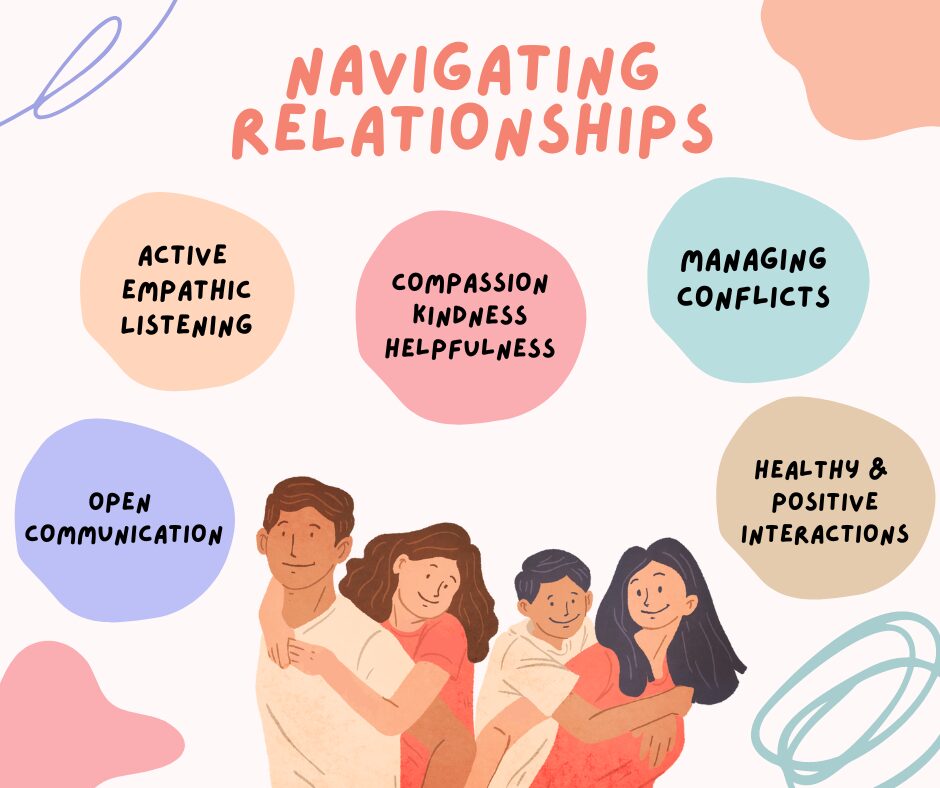
We can nurture open communication by being fully present and paying full attention to our children when they are talking with us – this will help them feel that we care about what they have to say, and make them feel heard and understood.  “I hear that you enjoyed school time today.” or “I hear that you felt sad today.” are some sample responses of how to apply listening skills that encourage our children to share more openly with us. This helps  us to better understand their thoughts, feelings and experiences. Nurturing this open communication with our children can create that space where they are able to process relationships and friendships – enhance cooperation, fairness, kindness, and helpfulness towards others, develop empathic listening, manage opposing views and conflicts, and recognize and regulate emotions.  This strengthens our relationships in the family, maintains healthy friendships in the school, and deepens their sense of community.  

Although this “next normal” is still full of uncertainty – and we can expect that there will be bumps, twists and turns this transition brings, we can lean on these social emotional skills to help us respond to the call of these ever-changing times. By opening up our emotions, thoughts, and incorporating social emotional learning into our daily practice, with intentionality, we model these skills that our children will gain through observation and active engagement; this empowers them to establish self-awareness, emotional regulation, empathy, positive communication in their interactions with others.  We continue to build their resilience, and to create a nurturing environment that supports their growth, development, and well-being throughout the different stages and challenges that life brings.

SOURCES:

Categories
Blog Thrive at Work Wellbeing Practices

Help at Work: Identifying workplace stress and the support you need

In We Thrive, we understand work as vital to the whole person. In the course of work, we learn to “regulate” by meeting challenges and its accompanying pressures head-on; to “relate” by working together with different people with different histories and perspectives; and to “reflect towards wise action” by considering how our work aligns with what is truly important to us. When pursued with mindfulness and compassion, work helps us grow not just in our careers but in our ability to live out lives as well-rounded human beings.

But of course, work has its issues.

Despite the lessons which the COVID-19 pandemic should have taught us about self-care and self-compassion, we remain tangled with a work ethic that prioritizes “productivity” at the expense of everything else. Unfortunately, this work ethic also bred a resistance to, and even fear of, seeking help, so used are we to the idea of “toughing it out”.

Despite increasing visibility of the importance of mental health, we are still uncertain about how this might play out within companies and industries. And on the level of the individual, we are still working  out, in the aftermath of a global health crisis, something as basic as what constitutes a legitimate need for assistance.

Here, we will look at one way to think about the kind of pressure you experience in the workplace, and the kind of help that you (and your workplace) may consider. Throughout this discussion, we will also be directed by this question: “Is my work nurturing my growth, or impeding it?”

Defining the pressure you need help for

There are sources of pressure, or “stress”, that are common across organizations and industries. The finer details may differ across fields, but these can be categorized into two broad categories:

  1. Work content, which are the various tasks involved and its accompanying costs in time, effort, and expertise. Some potential stressors under this category can include inappropriate workloads, where there may be too much or too little demands; the meaningfulness of the work, or the extent to which the job is aligned with the person’s values or sense of purpose; and autonomy, or the extent to which a person can exercise control over the work they do.
  2. Work context, which are the environmental and socio-cultural aspects of the job. These can include thing like the nature of relationships between colleagues, which can vary in levels of support, transparency, and general good humor; organizational culture, which can refer to policy structures and management styles that buttress the organization; and the sense of belonging within the larger work community, which refers to the extent to which a person might feel included or excluded from one’s peers or the extent to which one feels that their presence and contributions are actually valued. (WHO, 2020; Mental Help, 2015)

The response to these stressors is unique to each person, dependent not just on how intense or persistent the stressful experience is, but also on a person’s particular condition. A stressful event that might be considered “mild” for one person, which may improve functioning, might be “severe” to another, and disrupt functioning (Yaribeygi et al., 2017). But how do we tell the difference? We can do this by using two distinct categories of stress: “eustress” and “distress”.

Working with “eu-stress”

The first category of stress is eustress: the kind of stress which motivates us to face challenges successfully, learn new skills and perspectives, and provides opportunities to direct their actions towards our goals and our values. (Albort-Morant et al., 2020).

Broadly speaking, while there is definitely pressure, there is vitality. This can look like the following:

  • You feel energized;
  • You feel more focused;
  • You feel confident you know what you’re doing (or at least you’re confident you can learn);
  • You are excited by what you do; and
  • You sense your productivity increasing (Shafir, 2020; Tocino-Smith, 2019).

The work may be more difficult, but the movement towards accomplishing the task elicits feelings of pleasure and a sense that one is both working well and working towards something worthwhile for themselves and for the organization.

In a phrase: eustress nurtures growth.

The help we might need here would be less about relieving pressure and more about maximizing it: how can we maximize this opportunity for growth?

In the workplace, this might mean strengthening the following areas:

  • Ensuring access to mentors or peers who can offer emotional support or concrete advice for effectively addressing a challenge;
  • Providing appropriate flexibility to accommodate people’s particular work needs, such as work schedules, deadlines, or work spaces;
  • Building relationships between employees that ensure that people are not afraid of making mistakes or speaking up about their needs;
  • Setting clear work expectations so people know exactly what they’re working towards; and so on (Peart, 2019).

Working with “di-stress”

The second general category of stress that you may (unfortunately) be more familiar with is called distress. This is the opposite of eustress: instead of motivation, energy, and a sense of purpose, there may instead be dissatisfaction, fatigue, and a lack of direction. In this situation, the strain has either fallen too short of, or more often has far surpassed, the person’s threshold. Too little stress leads to boredom, lethargy, and a propensity for catastrophizing challenges faced because there has been inadequate opportunity to learn ways to cope with and savor challenges (Szalavitz, 2011). Too much stress though and the system can be overwhelmed, unable to effectively keep up, leading to disruptions in basic life functions such as sleep and a whole host of diseases (LeBlanc and Marques, 2019).

Again speaking broadly, in contrast to eustress, distress can be understood as being sapped of vitality. This can look like the following:

In this scenario, greater attention needs to be placed on relieving the pressure and addressing the manifestations of the distress: how do we return to a condition conducive for growth?

Going back to the workplace, this might mean the following:

  • Ensure that any changes to job demands are made to ensure employees actually have the time and the opportunity to practice self-care; 
  • Address the actual sources of the distress at work, including but not limited to lack of career advancement, conflicting work demands, workloads and timelines that force employees to go over and beyond their supposed job schedules, inadequate salaries and benefits, and so on;
  • Provide mental health support is both available and accessible to employees; and
  • Ensure adequate support from mentors, management, and other peers (APA, 2018; CCOHS, 2023).

When do I (and my workplace) need more help?

Returning to our first question, we understand that growth is nurtured when there is both adequate pressure (“eustress”) and adequate rest. Considering the latter, we can ask ourselves whether we are getting the rest we need — and whether our workplaces allow us to engage in such without reprisal or penalty. One useful model for understanding “rest” comprehensively, in its active and passive forms, looks at seven different kinds:

  1. Physical Rest, such as sleep, good eating habits, and exercise;
  2. Mental Rest, such as engagement with non-work-related intellectually-stimulating activities such as reading and games;
  3. Spiritual Rest, such as activities which respond to your religious callings or other callings to a higher purpose, including prayer, charitable works, and so on;
  4. Emotional Rest, such as being able to express our emotions authentically in safe and compassionate environments;
  5. Sensory Rest, such as relieving ourselves from over-stimulation by keeping away our mobile and other computer devices;
  6. Social Rest, such as by engaging in pleasurable social activities or in pleasurable solitude; and
  7. Creative Rest, such as through different artistic endeavors (Skowron, 2022).

A rule of thumb is to check in with ourselves and if in the past two weeks that if we are either a) we are unable to get adequate rest or b) if our best efforts at getting adequate rest is insufficient to relieve our present experience of distress, then this would be a signal to start seeking help. Similarly, if an organization finds itself unable to adequately and promptly support their employees’ wellbeing needs needs for rest, then the organization itself may want to consider getting help as well.

As a final point, despite what our present culture of work tells us, seeking professional help is not a sign of weakness. Speaking to organizations, to seek help rather than to just allow our employees to “tough it out” is a sign not only of courage and strength, but a sign that we are truly taking mental health seriously — and that despite the pressures, our workplaces are places where people’s growth can be nurtured.

For mental health support services for organizations, email us at resilientteams@wethrivewellbeing.com or contact us to sign-up for sessions with our mental health clinicians. 

References:

  1. https://www.who.int/news-room/questions-and-answers/item/ccupational-health-stress-at-the-workplace 
  2. https://www.mentalhelp.net/stress/types-of-stressors-eustress-vs-distress/ 
  3. https://www.ncbi.nlm.nih.gov/pmc/articles/PMC7013452/ 
  4. https://www.ncbi.nlm.nih.gov/pmc/articles/PMC5579396/
  5. https://www.choosingtherapy.com/eustress-vs-distress/ 
  6. https://positivepsychology.com/what-is-eustress/ 
  7. https://hbr.org/2019/11/making-work-less-stressful-and-more-engaging-for-your-employees
  8. https://healthland.time.com/2011/12/20/the-goldilocks-principle-of-stress-too-little-is-almost-as-bad-as-too-much/ 
  9. https://www.health.harvard.edu/blog/how-to-handle-stress-at-work-2019041716436
  10. https://health.clevelandclinic.org/effects-of-working-too-much/
  11. https://www.betterhealth.vic.gov.au/health/healthyliving/work-related-stress#rpl-skip-link  
  12. https://www.apa.org/topics/healthy-workplaces/work-stress 
  13. https://www.ccohs.ca/oshanswers/psychosocial/stress.html 
  14. https://www.psychologytoday.com/intl/blog/a-different-kind-of-therapy/202212/the-7-kinds-of-rest-you-need-to-actually-feel-rejuvenated
Categories
Blog Everyday Thriving General

Words of wisdom from the moms at We Thrive

Mother’s Day is right around the corner so we rounded up the best advice that the moms from our We Thrive team could share and here’s what they had to say:

Raise the child you have, not the child you or others think you should have.

See your children for who they are and for their strengths, gifts and capabilities. See the best things about and make them feel really seen and heard. Rather than looking at what they are not doing, or are doing wrong, or belaboring who they are not, the invitation is to accept and celebrate our children for who they are. In so doing, hopefully our children learn to appreciate and value themselves the way we as loving parents, try to see them.

Ninin Sumpaico-Jose

As a first time mom, it helps me to remember that just like my baby, I am growing and learning too. It makes sense that I’m still figuring things out. Acknowledging my own development as a mother gives me more self compassion and gratitude for the gift of growing with my baby everyday.

Triza Guerrero-Cheng

There’s a lot of unsolicited advice, but the best I got were random advice after I gave birth to my first child – Sleep while your baby sleeps; At night, breastfeed in side-lying position, roll your baby to your other side when changing sides; and other breastfeeding-related concerns.

Most moms would say that the first months are the hardest, but going through it all with 3 kids, I must say that the hardest is keeping your identity in place while finding the balance between being a mother, wife, a house manager, and a career woman all at the same time. Most will ask how to balance time from all the responsibilities, but what I usually say is, you can’t. You can’t do all things in one sitting, some things just have to wait. And as much as possible, ask for help. Other responsiblities such as housework and teaching the kids can be better done by other people, like a househelp and a tutor. What matters most is the quality of time you give to your kids.


I only have 2 simple advice – enjoy the mealtimes with your family, and sleep well.

Dr. Janice A. Camarillo

A dear friend once told me “Remember to give yourself as much love and compassion as you give your child.”

I’ve had to keep this advice in mind everyday especially knowing that moms (actually women in general), have a greater tendency to put the needs of others ahead of themselves. In order for me to show up at my best and be truly present as a mom, I have to ensure that I take care of myself too. That means being okay with taking breaks, making room for mistakes, asking for help, saying ‘no’ to a lot of things, sitting with a lot of discomfort and trusting that it’ll be okay despite the uncertainties.

Paula Garcia-Ramos

Best advice I got in my later years as a mom: 😂
If you hate yourself, you probably need rest.❤️
If you hate everyone else, you probably need a snack.🥰

Advise i can give to other moms:
“Ni calvo, ni con dos pelucas.”
( Not bald, no wigs)
Which means balance, equanimity, equilibrium and not to sweat the small stuff.❤️

Margarita “Tucci” Reyes

And here’s a look back at the interview we did with Techie Duran-Dy on everyday thriving as a mom.

Categories
Blog Everyday Thriving General

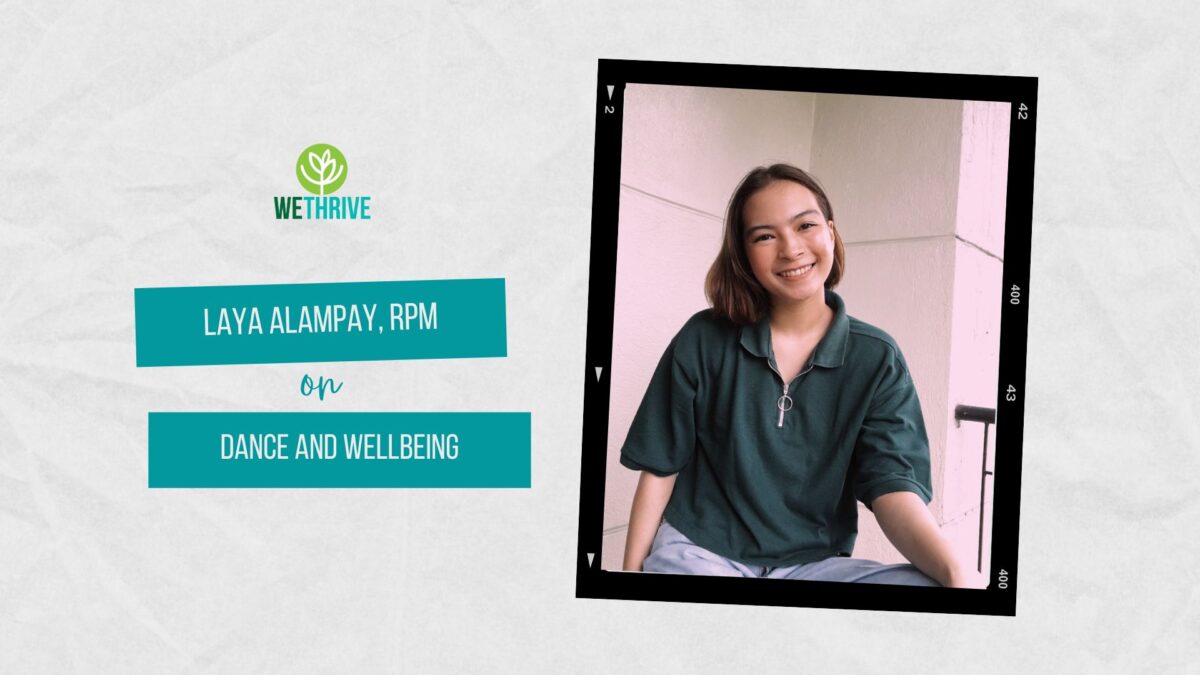
Happy International Dance Day!

It’s International Dance Day and we’re turning the spotlight on Laya Alampay as she shares her insights on dance and wellbeing.

Laya is a We Thrive clinician, Ateneo MA student and part time lecturer, UP Streetdance alum and member of The Crew

Here’s a bonus video!

https://www.instagram.com/reel/CiCwR_ErH7q/?utm_source=ig_web_button_share_sheet
Categories
Blog Everyday Thriving General

Would’ve, Could’ve, Should’ve

Everyday we make choices—from the most mundane to possibly life changing. While some decisions are easier to make than others, some require that we take time and consider all of our options. When things don’t turn out the way we want them, we sometimes get this sinking feeling when thinking of what we could’ve done differently or the opportunity that may have been lost because of our decision. When things don’t go as we expected we may feel disappointed and even regret.

While regret and disappointment at times can look the same, we experience them differently. Regret is this feeling of “I should’ve known better”. It makes us think of what we could’ve done to prevent the outcome. Disappointment is when the outcome is less favorable than what we had originally thought.

Unlike regret, disappointment is a more general emotion as we can still feel disappointed of outcomes that are outside of our control. To give an example:


Disappointment: I was disappointed when the film I wanted to see didn’t live up to my expectations.
Regret: I regret spending so much money on meaningless things.

With regret, we are focused on our role in the decision making process whereas in disappointment we can feel disappointed in the outcome regardless of our role in the situation. Feelings of regret and disappointment can be overwhelming. The following
are some ways that we can do to handle these emotions:

1. Acknowledge that you are feeling these emotions.

Think of your emotions as a compass to how you feel in a given situation. Regret and disappointment are uncomfortable emotions, but they are not bad. It’s easy for us to get stuck in our head thinking of what could’ve been or just ignore these emotions altogether. But, ignoring these emotions can make us feel lost and it leaves us not knowing what to do next.

In contrast, acknowledging our emotions can give us a clearer
picture of the situation. As uncomfortable as it may be, it’s our body
communicating to us how we feel at that moment. By acknowledging
these emotions without judgment, we allow ourselves to view things more objectively. Not only will it help us in the decision making process, but it also gives information on what we can do when we are faced with a similar situation.

2. Forgive yourself for your decisions when things don’t go as expected.

We make choices based on what we know at a given time. Nobody
is perfect — we make mistakes, we fall, we have shortcomings. It may be difficult to forgive yourself when things don’t turn out as you expected, but just as you had a choice in the past, you can still make better choices moving forward.

3. Apologize to other people who may be affected.

Sometimes the consequences of our decisions not only affect us, but
it also affects other people. Making amends with other people can be
difficult at times, but we can start with acknowledging that we have
caused pain to someone because of our actions, and letting them know
that we feel remorse about what happened.

4. Take it as an opportunity to learn

It’s easy to fall into the “would’ve, could’ve, should’ve’s” knowing
what we know now. Instead of ruminating on what we could’ve done
differently, we can use the knowledge that we know now and make
different choices when we are faced with a similar situation in the future.

It’s a daunting realization to have that in every decision we make, we somehow let go of all the other possibilities that may happen. It’s even more daunting when we think about what could’ve happened if we chose differently — especially when the outcome isn’t what we wanted. Our reality may be different than what we had hoped
but we can make better choices moving forward.

References:

  • Cherry, K. (2022, February 14). How to cope with regret. Verywell Mind. https://www.verywellmind.com/how-to-cope-with-regret-5218665
  • Neff, K. (2015, February 21). Embracing our common humanity with self-compassion. Self-Compassion. https://self-compassion.org/embracing-our-common-humanit
    y-with-self-compassion/
  • What self-compassion is not: Self-esteem, self-pity, indulgence. (2021, July 26). Self-Compassion. https://self-compassion.org/what-self-compassion-is-not-2/
  • Roese, N. J., & Vohs, K. D. (2012). Hindsight bias. Perspectives on Psychological Science, 7(5), 411-426. https://doi.org/10.1177/1745691612454303
  • Zeelenberg, M., van Dijk, W. W., S.R.Manstead, A., & Der Pligt, J. (1998). The experience of regret and disappointment. Cognition and Emotion, 12(2), 221-230.https://doi.org/10.1080/026999398379727
Categories
Blog News & Events Thrive at Work

We Thrive x Trend Micro for Women’s Month 2023

In the last week of #WomensMonth2023 we were so thrilled to have partnered with Trend Micro for an incredible talk! It was an honor to share insights and connect with such a passionate audience for Women’s Month. Thank you for having us Trend Micro Careers Philippines !

Here are some photos from the event:

Photo credits: Trend Micro Careers Philippines Facebook Page
Categories
Blog Everyday Thriving Thrive at Work Thrive in School

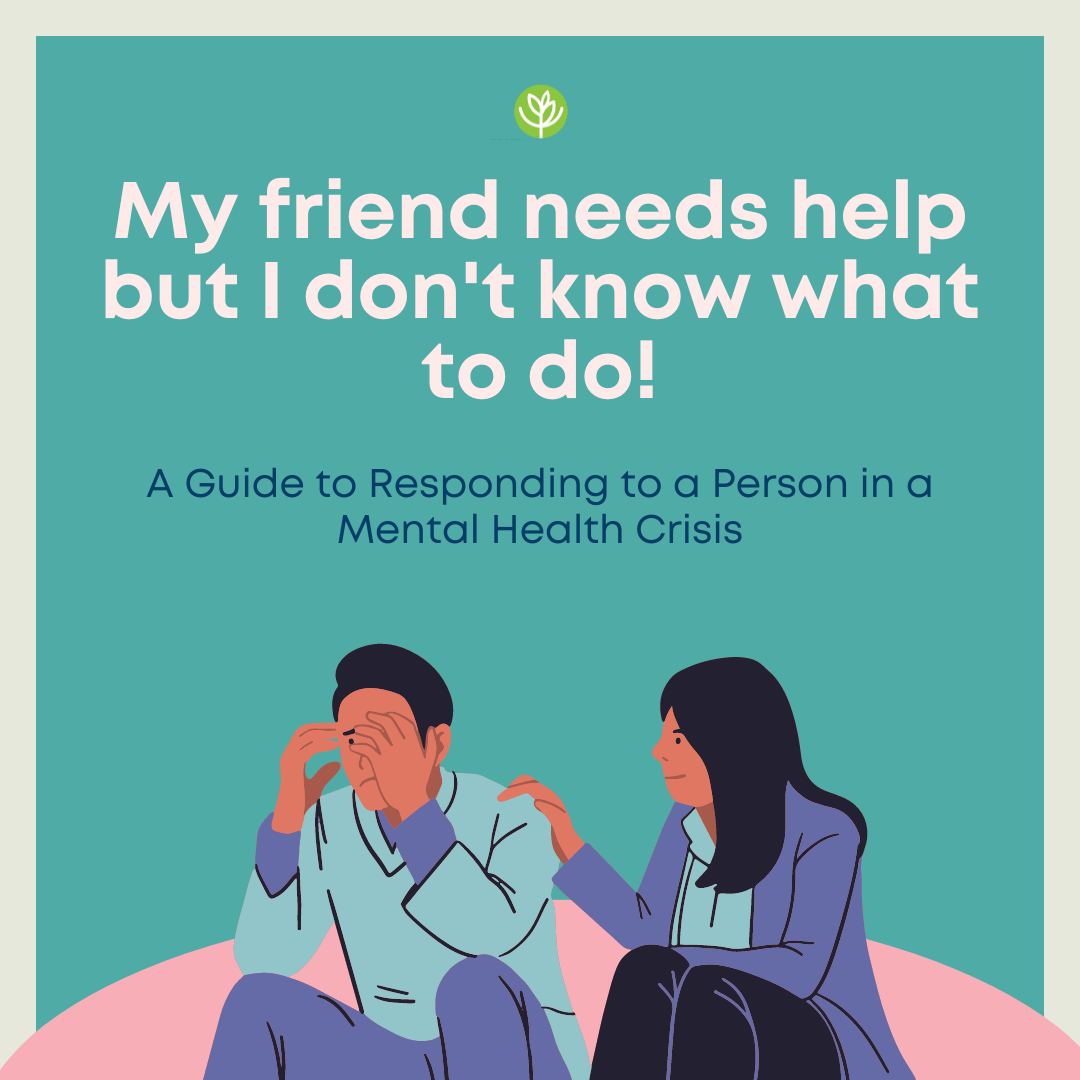
Helping Out a Friend Through a Mental Crisis Using ALGEE

Have you ever heard of the statement “That’s what friends are for”? It implies the role of a friend as someone you can count on to help you out. So when a friend reaches out and opens up about a problem, it seems natural to listen, comfort, and support them as best as you can. But there are times when you may not feel confident enough to help them. You may feel like you don’t understand the problem very well because you have not experienced it, or you have probably dealt with a similar problem before but could not understand why your friend is struggling with it. Sometimes, the idea of saying something wrong and making things worse for your friend is daunting in and of itself. Fortunately, there is one way for you to help your friend in times of mental distress.

So how can I help my friend out?

Like with medical concerns, you can provide first aid for mental health concerns.

Mental Health First Aid (MHFA) is done to help someone experiencing a mental health crisis when professional help is not yet available. ALGEE is a tool that is used to provide MHFA. It won’t teach you how to become your friend’s personal therapist, but it will help you provide them with the support they need to cope with what they are going through in that moment of crisis.

ALGEE is an acronym that stands for the following: Assess for risks of suicide or harm; Listen without judgment; Give reassurance and information; Encourage appropriate professional help; and Encourage self-help and other support strategies.

How do you use ALGEE?

ALGEE can be done in any order, depending on what you think your friend needs at the moment. Below is an overview of how you can approach and what you can expect to happen in each step. 

1. ASSESS for risk of suicide and harm

This step involves observing for any signs that would tell that a person is in distress. Such signs can be a sudden change in behavior or an unusual reaction to a particular topic or situation. You should also be alert to mentions or jokes of your friend contemplating suicide, as well as self-harm behaviors such as cutting, engaging in excessive substance use (such as alcohol, cigarettes, or drugs), or doing risky activities that can harm them physically.

If you find out that your friend is actively hurting themself or has plans to commit suicide, then it is important to persuade them to get help as soon as possible.

2. LISTEN without judgment

People who are in distress want to be heard. That’s why it is important to give them the opportunity to say what they want to say uninterrupted. Keep an open mind about what they are saying, even when you do not agree with them. Avoid making speculations or giving advice, unless your friend specifically asks for your opinion on the matter.

Show that you are actively listening by keeping an open and receptive body posture (that is, arms and legs uncrossed and palms resting comfortably on the lap or desk) and maintaining eye contact. You can also make appropriate verbal responses to show that you understand and follow what they are saying. Responses may be in the form of reinforcements (“I see.” or “Uh-huh.”), acknowledgements (“That’s tough.” or “I can imagine how confusing it is to be in that situation.”), questions (“What did you do to cope with that situation?”), and reflections (“This is what I heard from you. Am I understanding it correctly?”). If you’re talking with your friend through text or chat, you may need to rely more on verbal responses to better understand each other.

3. GIVE reassurance and information

In an effort to cheer your friend, you may sometimes find yourself telling them that everything will be okay or that they can do things if they only believe in themselves. However, people in distress may feel so overwhelmed and hopeless that they cannot see their situation improving or believe that they can act on their problems. To give reassurance, you need to make them see the possibility. You can do this by providing evidence and information. Are there ways to deal with their problem that they may not have thought of? Have there been situations that contradict a negative thought that’s been running through their mind? Helping them find evidence that there are things that can be done is an effective way of instilling hope in them.

There may be times when your friend thinks that undesired feelings or behaviors, such as lashing out at other people or being too afraid to speak in public, are their fault. However, such feelings or behaviors may actually be symptoms of a particular mental illness or of significant distress that could lead to a mental illness if untreated. Thus, it is important to emphasize that mental illness is real and the symptoms they are experiencing can be treated with the right help.

4. ENCOURAGE appropriate professional help

The earlier your friend gets help, the more likely they can recover. Find out what kind of support your friend needs at the moment and help them find professionals, agencies, organizations, or institutions that can make things a little easier for them.

If they need psychological help, there are various mental health services and programs available. Some universities and organizations offer free therapy sessions, although they may be limited in terms of slots or the number of sessions that can be availed. For long-term and more intensive help, paid therapy sessions in clinics and hospitals may be necessary. You can check out the directory of mental health facilities in the country created by #MentalHealthPH here. Additionally, 24/7 crisis lines come in handy whenever there is a need to overcome a mental crisis or to prevent a suicide attempt. A list of these hotlines can be found here. Regardless of whether payment is involved, simply being able to attend therapy is already a huge step towards healing.

5. ENCOURAGE self-help and other support strategies

Mental health services aren’t always available, and this can be a problem when your friend experiences a panic attack or suddenly feels overwhelmed by suicidal thoughts. Knowing how to deal with these emergencies helps them develop the skills to cope with crises on their own. Coping strategies such as breathing, grounding, and self-soothing techniques are useful during panic attacks. Utilizing tools for mindfulness and emotion regulation also helps practice control and lessen chaotic situations caused by outbursts. Exercising, spending time with friends and families, and engaging in hobbies and other recreational activities can help improve one’s quality of life. For some mindfulness breathing exercises, you can check out Circle of Hope’s Hingalangin videos on their Facebook page.

To see a demonstration of ALGEE, you can watch this roleplay video on YouTube.

Are there things I should consider when using ALGEE?

As a mental health first aid tool, the main purpose of ALGEE is not to diagnose your friend or solve their problem, but to help determine their needs and provide appropriate support. While your closeness can help your friend be more comfortable opening up to you, it is important to always be objective, express empathy, and abide by the principle of “Do no harm.”

Here are ways that you can do this.

  1. Keep what is said confidential, unless help from other people is necessary.

It takes courage for a person to open up about their struggles. Some people refuse to share what they are going through for fear of exposing themselves to the wrong people. Reaching out to you means that they trust you to keep what they have said only to yourself. Before going through ALGEE, it is best to set up a time and a place to talk to your friend privately. This will give your friend a chance to be vulnerable in a safe space. However, keep in mind that if there is a high risk that your friend would commit suicide, ensuring their safety by asking for help from other people and authorities is necessary.

  1. Do not force your friend to share their problems with you.

Sometimes, people are just not ready to talk about their problems. If your friend outright tells you that they do not want to talk, do not force them to. Instead, encourage them to talk to someone that they trust or assure them that you are available to listen to them whenever they are ready. You can also simply ask them what they need at the moment. Show them that there is someone who is willing to listen and help, and they have the option to choose who or when they seek help.

  1. Refrain from invalidating them or trivializing what your friend is going through.

Some people keep their worries to themselves because they believe that no one would hear them out or make the effort to understand them. When your friend opens up to you, listen well and try to see the situation from their perspective. If there are things they said that you do not agree with, do not reject or dismiss what they are feeling or thinking about. If you think that their problems are too simple, remember that every person is affected by situations differently. What may be easy for you may be too much for them. Likewise, if you have experienced a similar problem and have resolved it successfully, take note that what may have worked for you may not work for them. Thus, when providing help and support, consider their strengths and weaknesses.

  1. Give your friend the control that they need through options.

One of the reasons why people usually feel distressed is because they feel that they cannot control their situation. Thus, if solutions are imposed on them, the feeling of having a lack of control will increase. If you have a solution in mind, ask first if they are open to hear advice. If they are, assure them that your advice is simply a suggestion and is open to modifications until they find one that they are comfortable with.

  1. Improvise, adapt, and overcome.

There are times when it can’t be helped to expect something from your friend or from the situation. However, it is important to be open to the possibility that things may not go your way. Something may keep your friend from getting help despite your agreement or keep the situation from improving as you both hope. Identify the challenges, seek alternatives, and try again. And remember, it’s okay to make mistakes!

  1. Watch out and prepare yourself for compassion fatigue.

While being there for a friend during their toughest times is admirable, there are times when their problems, emotions, and negative thoughts can get to you too. When you feel overwhelmed with helping your friend or are starting to feel affected by what they’re going through, you may be experiencing compassion fatigue. It is important to be mindful of the symptoms of compassion fatigue and to prepare yourself to prevent it or address it when it comes. Remember to take a break if you have to and to take care of yourself first every once in a while. It’s also important to not be too hard on yourself if things don’t go as well as you hope. If your friend deserves compassion, then don’t you deserve some as well? You can practice some self-compassion exercises to help you combat compassion fatigue.

Using ALGEE is a great way to create a mental checklist of what you can do to help out a friend during a mental crisis. However, this does not mean that you have to strictly abide by it or be overly concerned if you skip a step. The most important thing about helping a friend is being there for them and showing them that you care.

References:

  • Altta Wellbeing. (2019, September 30). ALGEE – 5 letters, 1 life saved every time. https://wellbeing.altta.co.uk/algee/
  • Jorm, A. (2016). Key Elements of Mental Health First Aid. Alan J Fisher Centre for Public Mental Health. http://cpmh.org.za/wmhd/wp-content/uploads/2016/08/Key-Elements.pdf
  • Martinelli, K. (2023, February 20). How to Support a Friend With Mental Health Challenges. Child Mind Institute. https://childmind.org/article/support-friend-with-mental-health-challenges/
  • Mental Health Foundation. (n.d.). How to support someone with a mental health problem. https://www.mentalhealth.org.uk/explore-mental-health/articles/how-support-someone-mental-health-problem
  • Thurrott, S. (2021, June 11). Watch for These Key Warning Signs of Compassion Fatigue. Banner Health. https://www.bannerhealth.com/healthcareblog/teach-me/watch-for-these-key-warning-signs-of-compassion-fatigue